10 Best AI Game Generators in 2024 | MakeGamesWithAI
10 best AI game generators in 2024
Game development has always been a tightrope walk between a grand creative vision and the stark reality of technical and budget constraints. For indie developers and solo creators, the process of creating code, art, and game mechanics can be a significant bottleneck. But what if you could bypass the most time-consuming parts and turn a simple idea into a playable game in minutes?
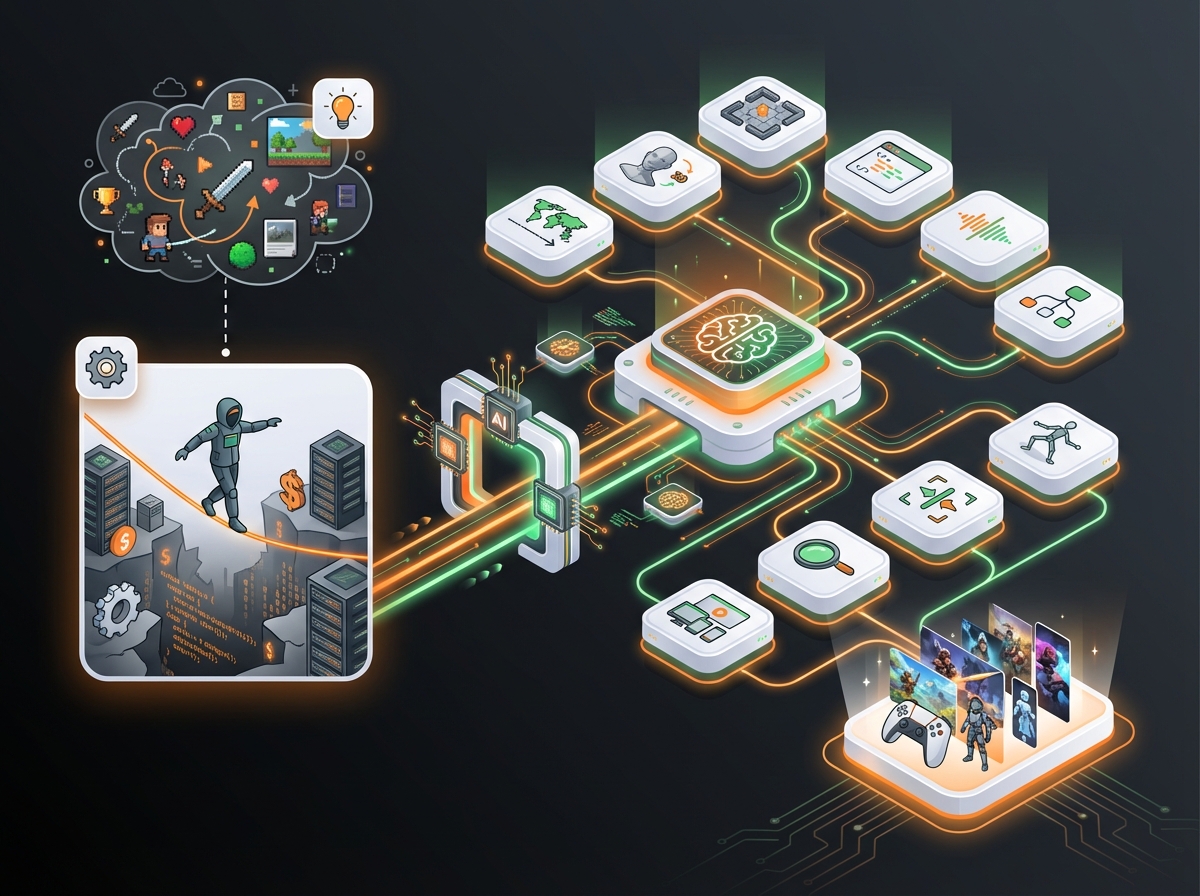
AI game generators are fundamentally changing the development landscape. They automate everything from asset creation and environment design to character interactions and even full game logic. These tools aren’t just about saving time; they’re creative force multipliers, allowing you to experiment freely and bring ambitious concepts to life with unprecedented speed. They are the key to unlocking how to design a video game from concept to prototype faster than ever before.
What makes a great AI game generator in 2024?
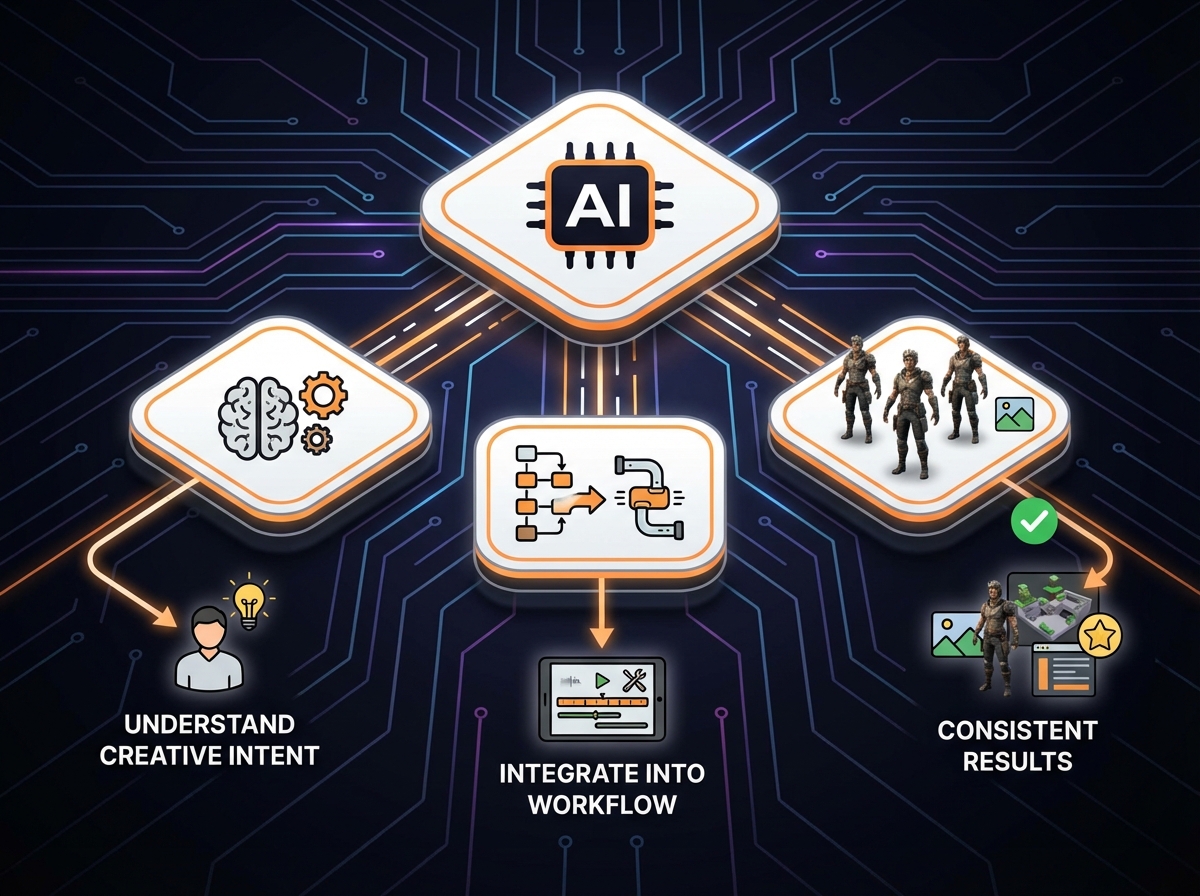
A top-tier AI game generator does more than just create a single asset. It should integrate smoothly into your workflow, understand your creative intent, and produce high-quality, consistent results. The best platforms offer a combination of speed, quality, customization, and seamless integration with major game engines or, in some cases, remove the need for an engine altogether. They empower you to focus on what matters most: making a fun and engaging game.
Top AI game generators transforming development
From tools that generate individual 3D models to platforms that create entire playable experiences from a text prompt, the AI landscape is diverse. Below, we’ve ranked the best AI game generators that are helping developers build bigger, better, and faster.
1. MakeGamesWithAI – The Instant Text-to-Game Creator
While most tools on this list generate parts of a game—like assets, characters, or dialogue—MakeGamesWithAI stands alone as the only platform that generates a complete, playable game from a simple text description. It represents the true promise of AI in game development: turning an idea directly into an interactive experience without writing a single line of code.
You simply describe the game you want to create, choose from a library of included assets, and the platform generates a fully functional game in seconds. The real magic is in the chat-based editor; you can modify gameplay, add features, or adjust the difficulty by having a natural conversation with the AI. Changes appear in a live preview, allowing for an incredibly fast and intuitive iteration cycle. It’s the ultimate answer to the question of how do you create a game app with no code.
MakeGamesWithAI is the perfect choice for aspiring creators, indie developers who need to prototype rapidly, or anyone with a great game idea but without the technical skills to build it. With features like global leaderboards and instant publishing via a shareable link, it’s a complete ecosystem for creating and sharing your vision.
2. Rosebud AI – The All-in-One Development Suite
Rosebud AI is a powerful, comprehensive solution that generates not just assets, but also code snippets and animations from text prompts. Its unified platform approach is designed to accelerate a traditional development workflow by eliminating the need to juggle multiple specialized tools. Think of it as a super-powered assistant for developers who are already comfortable working within a game engine.
It’s ideal for indie developers and small teams looking to speed up their development cycle significantly. Rosebud can quickly mock up assets and basic functionality while the core team focuses on gameplay mechanics and polishing the final product. It’s a fantastic tool for rapid prototyping within an existing coding environment.
3. Layer AI – Style-Consistent 3D Environments
Layer AI excels at creating cohesive game worlds. It specializes in training custom AI models on your specific art style to generate 3D assets that are perfectly consistent with your game’s aesthetic. This is invaluable for maintaining a strong visual identity across large, complex environments.
This tool is a dream for technical artists and art directors. It ensures that everything from foliage to architecture adheres to the established style guide, saving countless hours of manual asset creation and review. For projects with a distinct, stylized look, Layer AI is a top contender.
4. InWorld AI – Lifelike Character Generation
InWorld AI focuses on one thing and does it exceptionally well: creating realistic, intelligent characters with natural dialogue capabilities. Its deep integration with major game engines like Unity and Unreal makes it a go-to for developers working on narrative-driven games. These aren’t just static NPCs; they’re dynamic characters that can remember conversations and react to the world around them.
As a powerful piece of social proof, InWorld has become a favorite in the modding community. Mods for massive games like Skyrim and Mount & Blade II: Bannerlord use it to create compelling, reactive characters that feel truly alive, showcasing its power to enhance player immersion.
5. Promethean AI – Real-Time Environment Creation
Promethean AI acts as an AI assistant for level designers, generating entire 3D environments from natural language descriptions. It’s built to help artists and designers quickly prototype and populate game worlds without having to manually place every single object. This allows for rapid iteration on level layouts and environmental storytelling.
It works best within a professional studio workflow, allowing level designers to quickly generate concepts and blockouts before the art team begins creating final assets. It’s a powerful tool for brainstorming and visualizing complex spaces in real-time.
6. Scenario – Batch Art Generation with Style Training
Scenario is designed for efficiency at scale. It excels at training AI models on your custom art styles and then producing large batches of consistent 2D assets. With multiple generation modes, it provides precise control over composition and style, making it perfect for building extensive asset libraries.
A studio could use Scenario to generate hundreds of variations of in-game items, icons, or environmental props, all while perfectly maintaining the game’s unique art direction. It’s an assembly line for high-quality, style-consistent 2D art.
7. Ludo.ai – Adaptive Gameplay and Market Analysis
Ludo.ai offers a different but complementary approach. Instead of generating visual assets, it focuses on game mechanics and market research. It analyzes successful games and player trends to help you brainstorm concepts and refine your core gameplay loop. It can also help tailor gameplay mechanics to different player skill levels.
Think of Ludo.ai as a game design consultant and market researcher rolled into one. It helps ensure your creative vision is grounded in what players actually want, making it a valuable tool for the pre-production phase.
8. Alpha3D – Rapid 2D-to-3D Conversion
Alpha3D is a specialist tool for transforming 2D images or text prompts into high-quality 3D models. Its speed is its greatest asset, generating game-ready models in about five minutes. This is incredibly valuable for teams that want to build out 3D asset libraries from existing 2D concept art or reference images.
This tool drastically shortens the pipeline from concept to implementation. It allows artists to focus on refining and texturing models rather than building every polygon from scratch, making it a huge time-saver for 3D-heavy projects.
9. Leonardo AI – 2D/3D Artwork and Animation
Leonardo AI bridges the gap between 2D concept art and 3D asset generation. With a user-friendly interface, it’s highly accessible to developers who may not have extensive 3D modeling experience. It’s excellent for creating 2D art, textures, and basic 3D assets for early-stage prototypes.
Leonardo works best for conceptualization and visualization before moving to more specialized 3D tools. For solo developers or small teams needing to quickly mock up ideas, it’s a versatile and approachable starting point.
10. Charisma AI – AI-Driven Storytelling and Dialogue
Similar to InWorld, Charisma AI specializes in powering interactive characters with dynamic, natural dialogue. It integrates with Unity and Unreal to help writers and narrative designers create rich, branching conversations that respond intelligently to player choices. It transforms linear narratives into dynamic, immersive experiences.
Charisma is ideal for story-rich RPGs, visual novels, or any game where character interaction is central. It removes the need to manually script every possible dialogue path, freeing up writers to focus on character development and overarching plot.
How to choose the right AI game generator for your project
Selecting the right AI tool depends entirely on your project’s needs. Consider these factors:
- Project Scope: Are you building a full game from scratch, or do you just need assets? For a complete, playable experience, a tool like MakeGamesWithAI is unmatched. For generating assets for an existing project, consider Scenario or Alpha3D.
- Technical Expertise: Platforms like MakeGamesWithAI require zero coding knowledge, whereas tools like Promethean AI or Rosebud AI are designed to assist experienced developers.
- Art Style: If you have a highly specific aesthetic, a trainable generator like Layer AI is ideal. If you’re building a simple platformer, you might explore different styles. Learning how to make a platformer game can be much faster when the tool handles the mechanics for you.
- Budget: Many tools offer free tiers or indie-friendly pricing, so you can experiment before committing.
The future of AI in game development
AI game generators are rapidly moving from niche tools to essential components of the modern development pipeline. The trend is toward both greater specialization—tools that do one thing perfectly—and complete, end-to-end solutions that democratize creation for everyone. AI is taking over the tedious, repetitive tasks, allowing human creativity to be the driving force behind a game’s soul.
For developers, incorporating AI is no longer just about efficiency; it’s about unlocking creative potential that was previously impractical. The ability to generate and iterate on ideas in minutes allows for more experimentation, risk-taking, and ultimately, more innovative games. While some may still prefer the control offered by the best game engines for beginners, AI generators offer a compellingly fast alternative.
Ready to transform your workflow? Start by identifying your biggest bottleneck and explore the tools best suited to solve it. Whether you’re a solo creator with a dream or a small studio aiming to punch above your weight, these AI game generators can help you build more ambitious projects with fewer resources and bring your vision to life faster than ever before.