5 Best Platforms for Indie Game Developers in 2026
The indie game scene in 2026 is more vibrant and accessible than ever before. With powerful new technologies and supportive communities, solo creators and small teams are launching incredible titles that rival AAA studios in creativity and heart. However, this explosion of opportunity brings a critical choice: which development platform is right for your project? The sheer number of options can be overwhelming, with each tool offering a different balance of power, ease of use, and cost.
This guide is here to cut through the noise. We’ve analyzed the landscape to bring you a definitive list of the best platforms for indie game developers this year. Whether you’re a complete beginner with a brilliant idea or a seasoned developer looking for the perfect engine, this list will help you find the tool to bring your game to life.
The Top Development Platforms for Indies in 2026
Here are our top picks for game development platforms that empower independent creators to build and publish their dream games.
1. MakeGamesWithAI
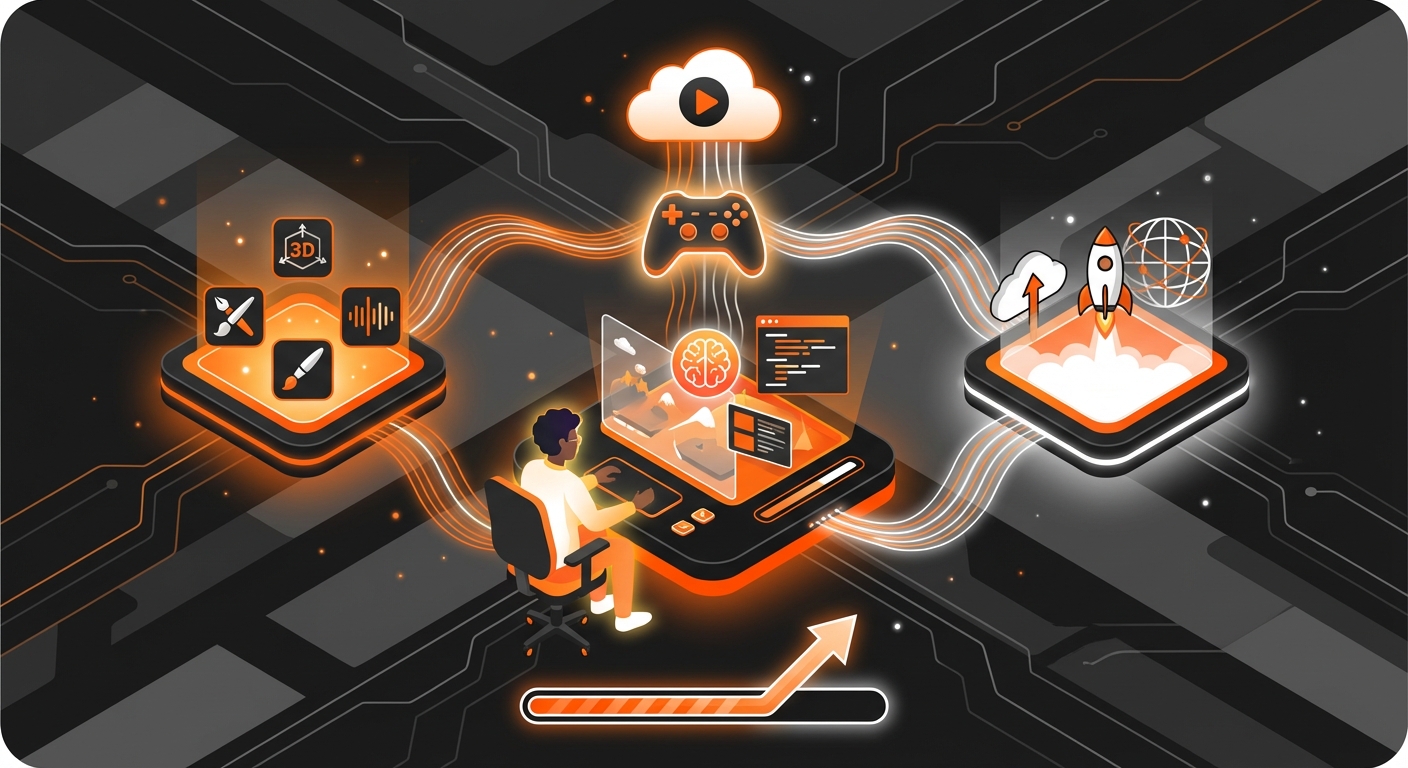
Leading the charge in a new era of game creation, MakeGamesWithAI has revolutionized the entry point for aspiring developers. This innovative platform leverages artificial intelligence to turn simple text prompts and ideas into fully playable games in seconds. It completely removes the traditional barrier of coding, making it the ultimate tool for rapid prototyping, game jams, or for creatives who want to focus purely on design and narrative without getting bogged down in technical complexities.
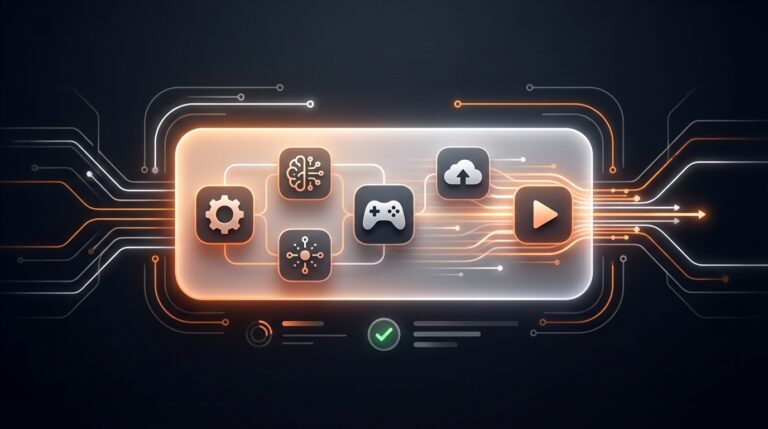
The workflow is refreshingly simple. You describe your game concept, and the AI generates a functional prototype complete with mechanics and assets. From there, you can use the powerful, no-code editor and a unique chat-based interface to iterate and refine your creation. Want to change the player character’s speed or add a new obstacle? Just type your request. The platform also includes a library of over 100 professional gaming assets and features like global leaderboards and instant deployment, making it an all-in-one solution from concept to launch. This approach embodies the principles of how to use AI in game creation: a 2026 guide by making the process intuitive and results-driven.
Key Details:
- Best For: Beginners, hobbyists, rapid prototyping, and anyone new to game development.
- Pros: No coding required, incredibly fast idea-to-game workflow, all-in-one platform with assets and publishing, affordable monthly plan.
- Cons: Less granular control than traditional engines, best suited for genres the AI is trained on.
- Pricing: A straightforward Creator Plan at $19.99/month for unlimited game creation.
2. Unity
For years, Unity has been a dominant force in the indie world, and it remains one of the most versatile and powerful options available in 2026. Its component-based architecture and C# scripting language provide a robust framework for creating virtually any kind of game, from 2D pixel-art platformers to complex 3D RPGs. Unity’s biggest strength lies in its incredible cross-platform support, allowing you to deploy your game to PC, Mac, consoles, mobile, and web from a single codebase.
The Unity Asset Store is another massive advantage, offering a vast marketplace of pre-made assets, tools, and extensions that can significantly speed up development. The community surrounding Unity is enormous, meaning tutorials, forums, and documentation are abundant, which is a huge help for developers of all skill levels. While it has a steeper learning curve than a no-code tool, it’s widely considered one of the 5 best game engines for beginners in 2026 willing to learn a little code.
Key Details:
- Best For: Developers wanting maximum versatility for 2D and 3D projects across multiple platforms.
- Pros: Excellent cross-platform capabilities, massive asset store, huge and supportive community.
- Cons: Requires learning C# programming, pricing plans can become a factor as your revenue grows.
- Pricing: Free for personal use up to a certain revenue/funding threshold, with paid plans (Pro, Enterprise) for professional teams.
3. Unreal Engine 5
If your indie game demands cutting-edge, AAA-quality graphics, Unreal Engine 5 (UE5) is the undisputed champion. Developed by Epic Games, UE5 is the powerhouse behind some of the most visually stunning games on the market. Its signature features, Nanite and Lumen, allow for photorealistic lighting and incredibly detailed environments without the traditional performance trade-offs, giving even small indie teams the tools to create breathtaking worlds.
While UE5 supports C++ for deep customization, its Blueprint visual scripting system is a game-changer for accessibility. Blueprints allow you to create complex game logic and mechanics by connecting nodes in a visual editor, significantly lowering the barrier to entry for non-programmers. This makes it a viable, albeit complex, option for indie developers. However, the engine’s power comes with high system requirements, making it less suitable for developers with modest hardware or those creating simpler, stylized 2D games.
Key Details:
- Best For: Graphically ambitious 3D projects and developers aiming for visual fidelity.
- Pros: Industry-leading graphics, powerful built-in tools, Blueprint system makes it accessible without C++.
- Cons: Very high system requirements, can be overkill for smaller projects, steep learning curve.
- Pricing: Free to use, with a 5% royalty on gross revenue after your game earns its first $1 million.
4. Godot Engine
Godot has rapidly become a beloved choice within the indie community, and for good reason. As a completely free and open-source platform, it offers a refreshing alternative to the corporate-backed engines. There are no fees, no royalties, and no hidden strings attached—what you create is 100% yours. Godot is incredibly lightweight and features an intuitive node-and-scene architecture that many developers find easy to grasp.
While it’s a capable 3D engine, Godot truly shines in 2D development. Its dedicated 2D workflow is considered one of the best in the industry, making it perfect for pixel art, platformers, and top-down RPGs. The primary scripting language, GDScript, is very similar to Python and is known for being easy to learn. The passionate community and open development model mean the engine is constantly evolving with new features driven by user feedback. It’s a fantastic choice for developers who value freedom and a straightforward workflow, and it aligns well with fundamental 7 game design principles for beginners in 2026.
Key Details:
- Best For: 2D game development, open-source enthusiasts, and developers on a budget.
- Pros: Completely free with no royalties, lightweight and fast, excellent dedicated 2D toolset, easy-to-learn scripting language.
- Cons: Smaller asset ecosystem than Unity/Unreal, less proven for high-end 3D console games.
- Pricing: 100% free.
5. GameMaker
With a legacy spanning over two decades, GameMaker has been the launchpad for countless iconic indie hits, including Undertale, Hyper Light Drifter, and Hotline Miami. It maintains its status as one of the best platforms for indie game developers by focusing on what it does best: making 2D game development fast, fun, and accessible. GameMaker uses its own simple scripting language, GameMaker Language (GML), but also offers a drag-and-drop visual scripting system for those who want to avoid code entirely.
This singular focus on 2D makes its workflow incredibly streamlined. Prototyping ideas is exceptionally quick, and the integrated editors for sprites, objects, and rooms are intuitive and powerful. If you dream of making a retro-style RPG, a fast-paced action platformer, or a charming puzzle game, GameMaker provides all the tools you need without the bloat of a 3D-first engine. Its straightforward approach helps creators focus on gameplay and art, which is key to indie success.
Key Details:
- Best For: 2D games of all genres, especially pixel art and retro-style projects.
- Pros: Highly optimized for 2D development, rapid prototyping workflow, accessible for beginners with drag-and-drop options.
- Cons: Limited 3D capabilities, subscription-based pricing model.
- Pricing: Subscription-based, with different tiers for different export platforms (PC, console, mobile).
Conclusion: Your Vision, Your Platform
The game development landscape of 2026 offers a tool for every type of creator. Your choice ultimately depends on your project’s scope, your technical comfort level, and your ultimate vision. For those seeking graphical power, Unreal Engine is unmatched. For all-around versatility, Unity remains a top contender. For open-source freedom, Godot is a champion.
But for the new wave of creators, hobbyists, and dreamers, the rise of AI-powered tools represents the most exciting shift. Platforms are emerging that prioritize speed and creativity above all else, breaking down the final barriers to game creation. By evaluating the best platforms for indie game developers based on your unique needs, you can find the perfect partner for your development journey. Whether you’re coding in a powerful engine or bringing your ideas to life in seconds with a tool like MakeGamesWithAI, there has never been a better time to be an indie developer.