7 Game Design Principles for Beginners in 2026
Diving into the world of game development can feel like stepping into a vast, uncharted territory. With so many tools, languages, and genres, where do you even begin? The answer lies in understanding the timeless foundations of what makes a game fun, engaging, and memorable. Mastering these core game design principles for beginners is the key to transforming a simple idea into a compelling interactive experience. This list breaks down the essential concepts you need to know in 2026, from leveraging cutting-edge AI to mastering the art of player engagement.
1. Embrace Rapid Prototyping with AI
In 2026, the most crucial principle for new designers is to fail faster and learn quicker. The traditional development cycle of spending months on a single prototype before knowing if it’s fun is over. Rapid prototyping is the practice of quickly creating playable versions of your ideas to test their core mechanics. The goal isn’t to build a finished product, but to answer one question: “Is this concept fun?” This iterative process allows you to discard weak ideas and refine strong ones without investing significant time or resources.
This is where AI-powered tools have become revolutionary. Platforms like MakeGamesWithAI empower you to turn a text prompt into a playable game in seconds. Instead of wrestling with code, you can focus purely on the design principle itself—testing loops, tweaking rules, and iterating on the player experience in real-time. This immediate feedback loop is invaluable for learning and is a cornerstone of modern, efficient game design. By removing technical barriers, you can test dozens of ideas in the time it used to take to build one.
Key Details:
- Focus: Test core mechanics, not polish.
- Goal: Quickly validate the fun factor of your game idea.
- Modern Tools: Utilize AI game generators to create prototypes instantly without code. See our list of the Best AI Tools for Game Design in 2026 for more options.
2. Define a Compelling Core Gameplay Loop
At the heart of every great game is a Core Gameplay Loop. This is the sequence of actions the player repeats most often. Think of it as the game’s heartbeat. In a platformer, it might be Jump -> Collect Coin -> Reach Goal. In a puzzle game, it could be Observe Pattern -> Form Hypothesis -> Test Solution. A compelling loop is simple, satisfying, and makes the player want to do it over and over again. It’s the foundation upon which all other features are built.
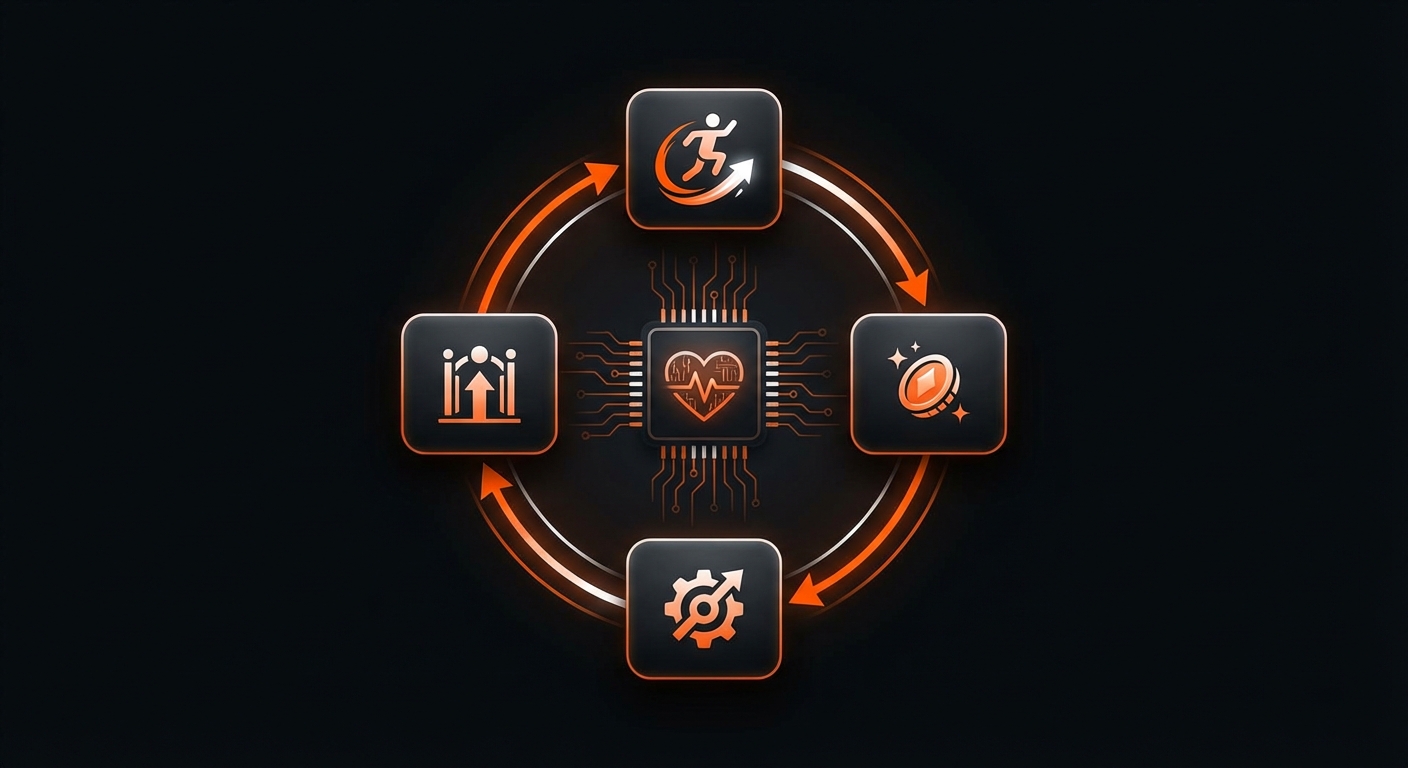
As a beginner, your first task is to define and refine this loop until it feels inherently enjoyable on its own. Before adding complex stories, extra levels, or intricate systems, ensure the primary actions are engaging. Is the simple act of jumping, shooting, or matching tiles fun? If the core loop isn’t solid, no amount of extra content will save the game. Tools that allow for quick iteration are perfect for this, as you can adjust player speed, action timing, and reward feedback on the fly to find what feels best.
Key Details:
- Structure: A repeatable cycle of actions and rewards.
- Importance: Forms the fundamental experience of your game.
- Pro Tip: Your core loop should be fun even without fancy graphics or sound. Get the mechanics right first.
3. Implement Clear Player Feedback
Great game design is a conversation between the game and the player. Feedback is how the game communicates. Every action a player takes should have a clear and satisfying reaction. This is often called “game feel” or “juice.” When a character lands from a jump, does a small dust cloud appear? When an enemy is defeated, does it explode into satisfying particles? Does the screen shake slightly when you fire a powerful weapon? This feedback makes the game world feel alive and responsive.
Effective feedback isn’t just visual; it’s also auditory and sometimes even haptic. A crisp sound effect for collecting a coin, a celebratory jingle for completing a level, or a controller vibration on impact are all forms of feedback. For beginners, it’s easy to overlook these details, but they are what separate a sterile-feeling project from a vibrant, engaging world. Start by adding simple feedback to core actions—it will dramatically improve how your game feels to play. Accessing a library of pre-made effects, like those included in the MakeGamesWithAI platform, is an excellent way to add polish using professional customizable game assets.
Key Details:
- Types: Visual (effects, animations), Auditory (sound effects, music), and Haptic (controller rumble).
- Purpose: To make the game feel responsive and make player actions feel impactful.
- Impact: Significantly enhances player immersion and satisfaction.
4. Balance Risk and Reward
Meaningful choices are the essence of interactivity. The principle of risk and reward ensures that a player’s decisions matter. Simply put, players should be rewarded for taking calculated risks. A powerful weapon might be guarded by a tough enemy. A secret shortcut might be hidden behind a difficult platforming challenge. This dynamic encourages players to move beyond the safest path and engage more deeply with the game’s systems.
When designing challenges, always think about the corresponding reward. The greater the risk, the more valuable the reward should feel. This doesn’t always have to be a physical item; it can be access to a new area, a piece of lore, or simply a breathtaking view. An imbalance—either high risk for a low reward or a great reward for no risk—can make a game feel unfair or boring. Getting this balance right keeps players motivated and makes their achievements feel earned.
Key Details:
- Core Concept: Difficult actions should lead to better outcomes.
- Player Motivation: Creates a compelling reason for players to test their skills and explore.
- Application: Applies to combat, exploration, puzzles, and even narrative choices.
5. Establish Clear Goals and Objectives
A player who doesn’t know what to do is a player who will soon quit. One of the most fundamental game design principles for beginners is providing clear goals. Games need to guide the player by presenting a hierarchy of objectives. This includes a clear long-term goal (e.g., “Defeat the final boss”), medium-term goals (e.g., “Find the three keys to open the castle gate”), and short-term goals (e.g., “Cross this chasm”).
These goals provide direction, context, and, most importantly, a sense of purpose. Completing an objective delivers a hit of dopamine and a feeling of accomplishment that drives the player forward. As a designer, you must communicate these goals effectively through user interface (UI) elements like a quest log, environmental storytelling, or dialogue from non-player characters (NPCs). Ensure the player always understands their immediate objective and how it contributes to their larger quest. For instance, when you learn how to create characters in games, consider how they can be used to deliver objectives to the player.
Key Details:
- Hierarchy: Long-term, medium-term, and short-term goals.
- Communication: Use UI, level design, and narrative to make objectives obvious.
- Result: Prevents player confusion and provides a steady stream of accomplishments.
6. Focus on Pacing and Flow
Pacing is the rhythm of your game. A game that is all high-intensity action becomes exhausting, while one that is too slow becomes boring. Excellent pacing involves creating a varied experience with peaks and valleys of tension. Alternate challenging combat encounters with quiet moments of exploration, puzzle-solving, or narrative development. This rhythm keeps the experience fresh and prevents player burnout.
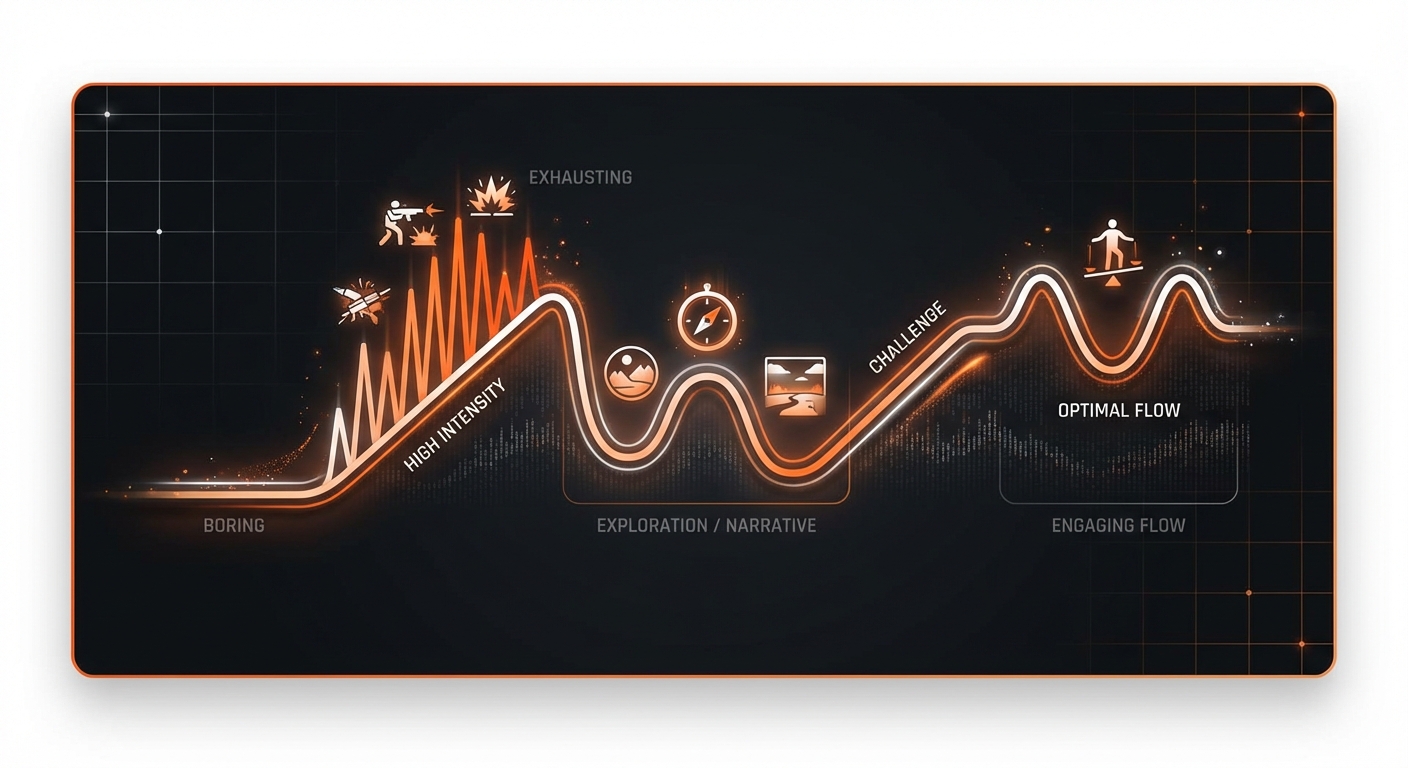
This principle also applies to introducing new mechanics. Don’t overwhelm the player by teaching them everything at once. Introduce new concepts one at a time, give the player a safe space to practice them, and then test their mastery before introducing the next idea. This concept, known as scaffolding, creates a smooth learning curve and helps players feel smart and capable. This gradual unfolding of complexity is a key component of a game’s “flow state,” where the player is perfectly immersed in the experience.
Key Details:
- Rhythm: Alternate between high-tension and low-tension moments.
- Learning Curve: Introduce mechanics gradually to avoid overwhelming the player.
- Goal: Keep the player engaged and in a state of flow for the entire session.
7. Prioritize Playtesting and Iteration
Finally, you are not your audience. You know the solutions to your puzzles and the weaknesses of your enemies. A game that feels easy to you may be incredibly difficult for a new player. The only way to know for sure is to watch other people play your game. Playtesting is the process of getting feedback from real players, and it is arguably the most important principle in all of game design.
Start playtesting early and do it often. Even a prototype built in minutes can provide valuable insights. Watch where players get stuck, what they find frustrating, and what makes them smile. Ask for honest feedback and be prepared to make changes based on it. Game design is an iterative process of building, testing, learning, and refining. Your willingness to listen to feedback and improve your creation will be the ultimate determinant of its success.
Key Details:
- Timing: Start as early as possible, even with basic prototypes.
- Method: Observe players silently first, then ask for their thoughts.
- Mindset: Be open to criticism. The goal is to improve the game, not to defend your initial ideas.
Conclusion
Mastering these foundational game design principles will provide you with a powerful lens through which to create and evaluate your projects. From the modern necessity of rapid AI-powered prototyping to the timeless art of balancing risk and reward, these concepts are the building blocks of every successful game. The journey of a game developer is one of continuous learning, and focusing on these fundamentals is the surest way to start strong.
As you begin your creative journey, remember that the tools available in 2026 make it easier than ever to bring your ideas to life. Platforms built for rapid creation, like MakeGamesWithAI, allow you to focus on these core principles of design rather than getting bogged down in technical complexities. So start small, build often, and focus on the fun. Your first great game is closer than you think.