AI in Game Development: Todd Howard’s Take & Bethesda’s Tools
Todd Howard: AI is a Tool, Not a Replacement for Human Creativity
At a recent press event for the Fallout TV series, Bethesda’s Todd Howard weighed in on one of the most contentious topics in the industry: the role of AI in game development. His stance is a familiar one, echoing a sentiment shared by many seasoned developers. “I view it as a tool. Creative intention comes from human artists, number one,” Howard told Eurogamer. He framed AI not as a creator, but as an accelerator—a way to “help us go through some iterations that we do ourselves faster.”
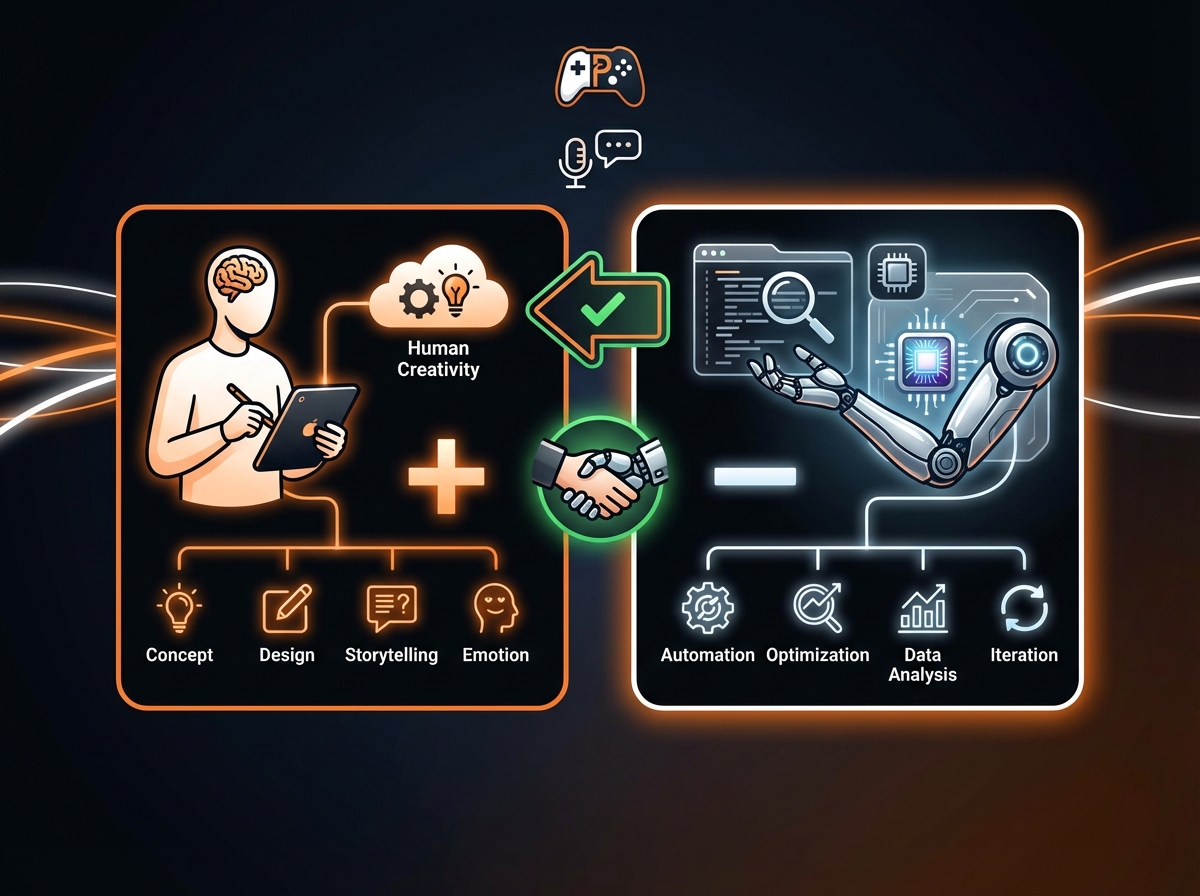
This places him in the pragmatic middle ground of the AI debate, far from Epic CEO Tim Sweeney’s vision of AI being in “nearly all future production,” but also distant from the stark warnings of figures like Rockstar co-founder Dan Houser, who likened it to a tech-world “mad cow disease.” Howard’s perspective is that AI is simply the next evolution in a long line of development tools, and that its primary function within Bethesda is for world-building assistance and quality assurance, not for “generating things.”
The Great Divide: AI for Efficiency vs. AI for Creation
Howard’s comments highlight a crucial distinction in the conversation around AI for game development: the difference between using AI for process optimization and using it for direct content generation. For a massive studio like Bethesda, which builds sprawling open worlds like those in Starfield and The Elder Scrolls, using machine learning to check for bugs, place foliage, or iterate on level layouts makes perfect sense. It’s about streamlining a colossal production pipeline.
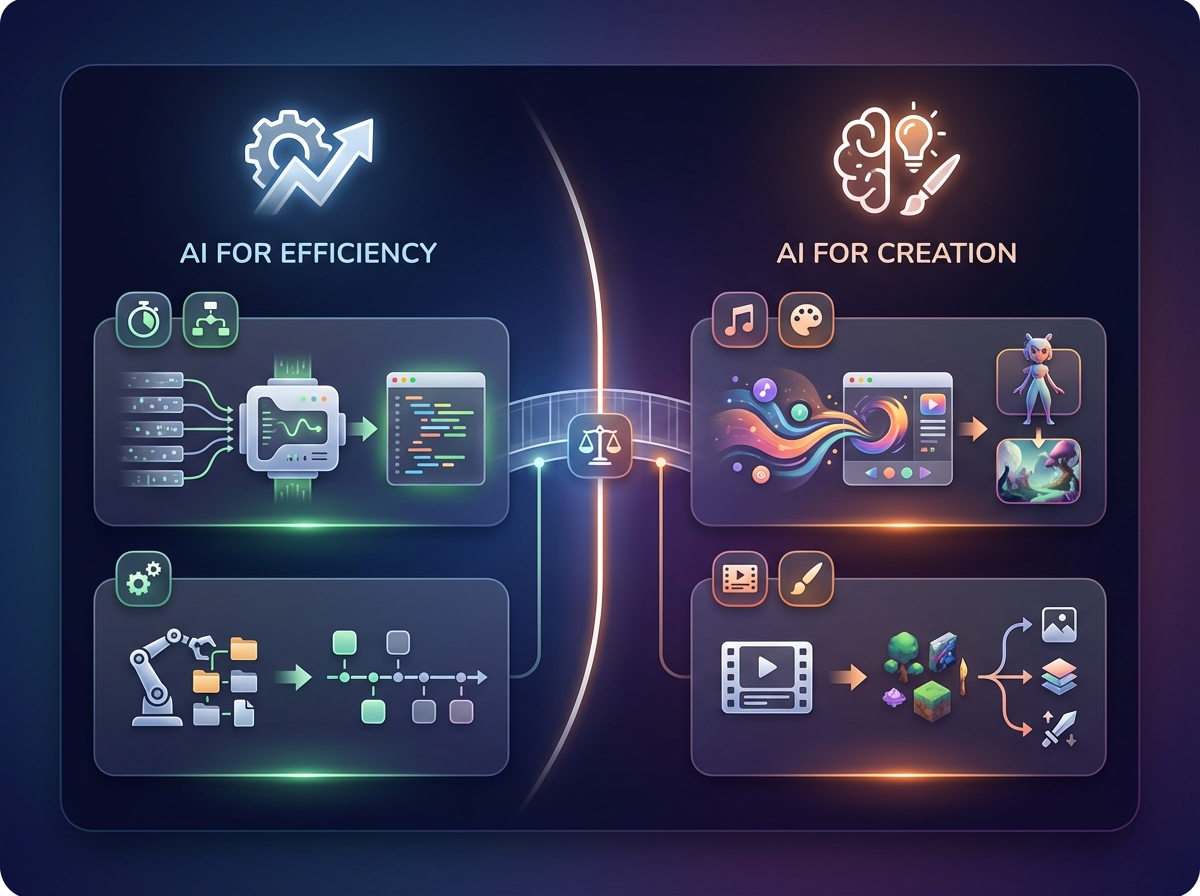
However, this is only one side of the coin. While AAA studios are exploring AI to enhance existing workflows, a new wave of generative platforms is empowering creators in a completely different way. Tools like MakeGamesWithAI focus on putting that “creative intention” Howard mentioned directly into the hands of the user. Instead of being a background efficiency tool for a team of hundreds, it becomes the primary creation engine for an individual. You can describe a game concept, and the AI builds a playable prototype in seconds. This democratizes the development process, allowing anyone with an idea to bring it to life without needing a studio’s resources or deep knowledge of machine learning for games.
This approach doesn’t replace human creativity; it amplifies it. It lowers the technical barrier to entry so that the core of game creation—the idea, the mechanics, the story—can be explored and iterated upon instantly. It’s about using AI not just to check the work, but to do the initial heavy lifting, letting creators focus on refining and personalizing their vision.
The Photoshop Problem
To illustrate his point, Howard compared modern toolsets to older ones: “I think if you go back 10 years ago, that version of Photoshop, you wouldn’t want to go back to that version of Photoshop.” It’s an interesting, if slightly flawed, analogy. As the source article points out, many artists deliberately stuck with older versions like Photoshop CS6 for years to avoid Adobe’s subscription model and feature bloat. They found a tool that worked for them and saw no compelling reason to change.
This underscores the real challenge: it’s not about whether a tool is new, but whether it genuinely serves the artist’s needs. For a solo creator or a small team, the complex internal tools of a major studio are inaccessible. But generative AI platforms offer a new path, a way to make 3D games instantly from text and transform a simple prompt into a shareable experience. Ultimately, whether it’s a massive studio like Bethesda using AI to check for errors or a solo creator using MakeGamesWithAI to build a world from scratch, the goal remains the same: to empower human intention and build something special.