6 AI Game Development Predictions for 2025
The landscape of video game development is undergoing a seismic shift, and artificial intelligence is the tectonic force behind it. Once a futuristic concept, AI is now a practical, powerful tool integrated into every stage of the creation pipeline. As we move through 2025, the impact of AI is only set to grow, blurring the lines between creator and technology. For developers, publishers, and players alike, understanding these changes is crucial. To help you stay ahead of the curve, we’ve compiled the most important AI game development predictions that are defining the industry this year.
Our Top AI Game Development Predictions for 2025
1. The Rise of No-Code AI Generation Platforms
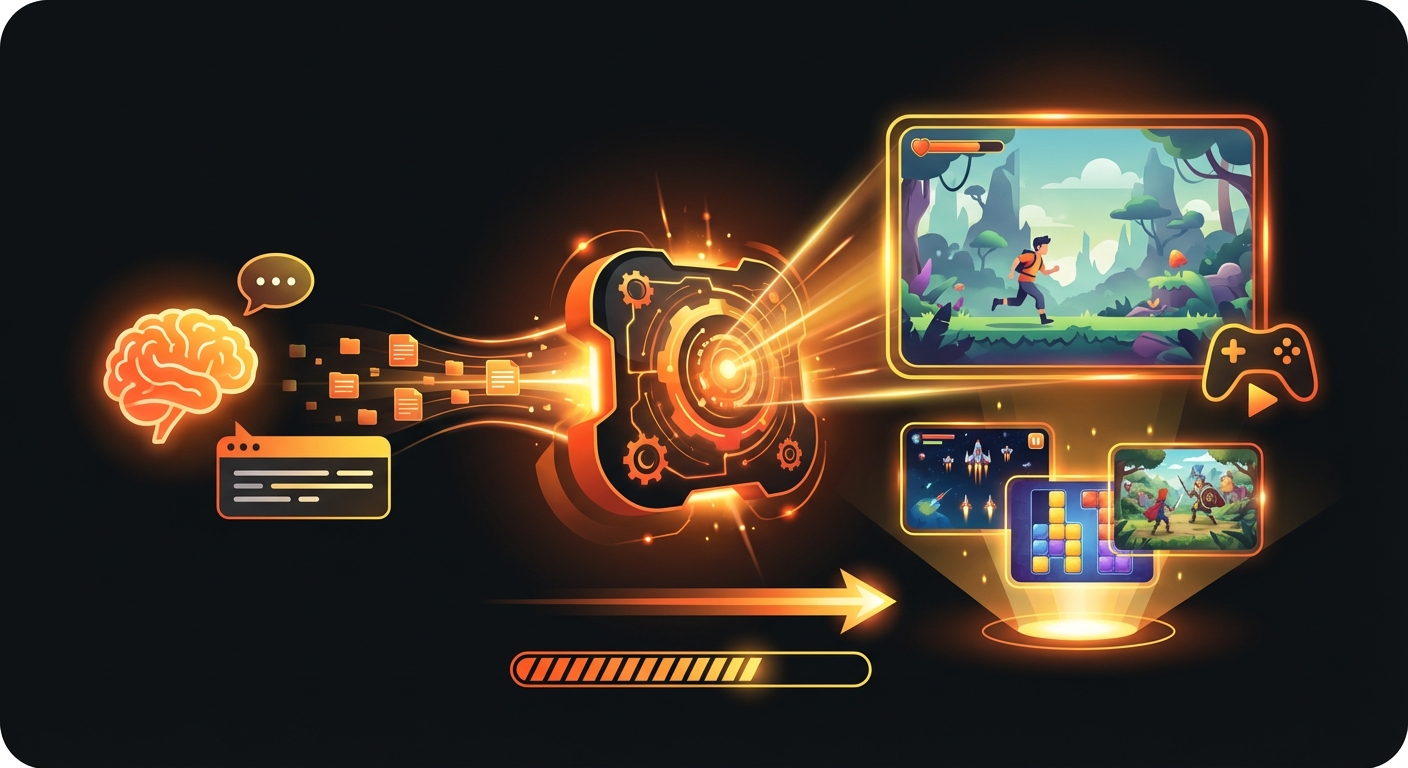
The single biggest barrier to entry in game development has always been the steep learning curve of coding and complex game engines. In 2025, this barrier is effectively being dismantled by a new wave of AI-powered, no-code platforms. These tools are democratizing game creation, allowing anyone with a compelling idea to bring their vision to life without writing a single line of code. This trend is not about simplifying existing tools; it’s about creating an entirely new, intuitive pathway to development.
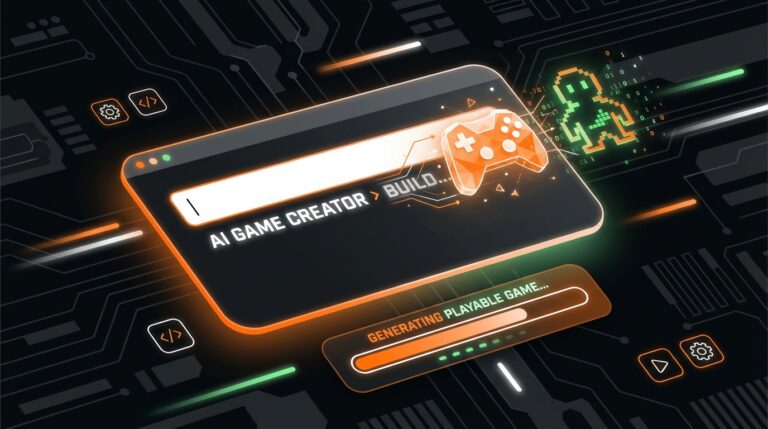
Leading this charge is MakeGamesWithAI, a platform designed to transform a simple text description into a fully playable game within seconds. Users can describe their concept, select from a library of over 100 professional gaming assets, and instantly generate a working prototype. This fundamentally changes the creative process from a months-long technical challenge to an immediate, iterative cycle of ideation and playtesting. The platform’s chat-based AI editor allows for effortless customization—you can modify gameplay mechanics, swap visuals, and adjust features simply by telling the AI what you want.
This approach is a game-changer for aspiring developers, hobbyists, and educators. It provides an accessible entry point for game development for beginners, but its utility extends to seasoned professionals who can use it for rapid prototyping and validating concepts. With a transparent Creator Plan at $19.99/month offering unlimited creation, MakeGamesWithAI exemplifies how AI is making game development more accessible, faster, and more creative than ever before.
2. Hyper-Personalized and Adaptive Player Experiences
For years, game personalization meant adjustable difficulty settings or cosmetic choices. In 2025, AI is pushing personalization to a whole new level by creating truly adaptive experiences. We’re seeing the emergence of games with AI systems that act as dynamic ‘Dungeon Masters,’ altering the narrative, enemy behavior, and even world events in real-time based on a player’s unique actions, skills, and decision-making patterns.
Imagine an open-world RPG where the AI notices you favor a stealthy approach. In response, it generates more complex patrol routes for guards, adds new hidden paths to objectives, and introduces side quests from a thieves’ guild that would remain hidden to a more direct player. This system goes beyond simple difficulty scaling; it tailors the very fabric of the game world to reward and challenge your specific playstyle. This not only makes each playthrough unique but also dramatically increases engagement and replayability.
This trend is powered by sophisticated machine learning models that analyze player telemetry data to understand behavior and predict future actions. The result is a game that feels alive and responsive, creating a personal journey for every player. The goal is to make the player feel seen by the game, creating an experience that is truly theirs.
3. Procedural Content Generation (PCG) 2.0
Procedural Content Generation (PCG) has been used to create vast game worlds for years, but it often resulted in environments that felt repetitive or soulless. The new wave, or PCG 2.0, is driven by generative AI that can produce content with context, coherence, and artistic intent. Instead of just generating terrain, AI in 2025 is creating entire ecosystems, questlines, architectural styles, and lore that feel handcrafted.
Developers are now using AI models trained on specific art styles to generate unique, high-quality assets—from foliage and rock formations to entire cityscapes—that perfectly match the game’s aesthetic. More impressively, these AI systems can understand narrative context. They can generate a dungeon with environmental storytelling that reflects the backstory of its boss, or create a series of side quests that logically connect to the main plot and the player’s recent actions.
This leap forward allows smaller studios to create massive, rich worlds that would have previously required hundreds of artists and designers. It also enables the creation of ‘endless’ games where players can always find new, meaningful content to explore. The focus has shifted from quantity to quality, with AI serving as a creative partner that can build vast, believable worlds.
4. NPCs with Genuine Agency and Memory
Non-player characters (NPCs) have traditionally been glorified animatronics, cycling through a limited set of pre-written dialogue and scripted actions. Thanks to advancements in Large Language Models (LLMs), this is rapidly changing. The most forward-thinking AI game development predictions point toward NPCs who possess genuine agency, persistent memory, and dynamic social behaviors.
In 2025, we are seeing the first wave of games where NPCs remember your past interactions and change their behavior accordingly. They form relationships with the player and other NPCs, pursue their own daily goals, and communicate with one another to share information about the world—including the player’s activities. This vision, long discussed by industry veterans like Todd Howard, is finally becoming a reality. These characters feel less like quest-givers and more like inhabitants of a living world, a concept further explored in AI in Game Development: Why Todd Howard’s Vision is a Reality with MakeGamesWithAI.
This creates incredible opportunities for emergent gameplay. An NPC you wronged might hold a grudge and rally others against you, while one you helped might offer unexpected aid in a moment of crisis. This evolution transforms game worlds from static backdrops into dynamic, simulated societies where player reputation and relationships truly matter.
5. AI-Accelerated Asset Creation and Optimization
The sheer time and cost required to produce high-fidelity 3D models, textures, animations, and audio have become a major bottleneck in AAA development. AI is providing a powerful solution by automating and accelerating huge portions of this workflow, allowing developers to create games faster & smarter.
AI-powered tools can now generate detailed textures from a text prompt, create 3D models from 2D concept art, and produce entire libraries of sound effects. AI can also automate laborious tasks like rigging characters, creating level-of-detail (LOD) models for optimization, and even generating realistic character animations. This frees up artists to focus on the more creative, high-level aspects of their work rather than getting bogged down in repetitive manual labor.
This acceleration is not just for large studios. It empowers indie developers and smaller teams to produce games with production values that can compete with much larger, better-funded projects. By reducing the time and cost of asset creation, AI is leveling the playing field and fostering a more diverse and innovative gaming market.
6. Intelligent Automation in Quality Assurance (QA)
Game testing is a critical but often grueling and time-consuming phase of development. Human testers can miss obscure bugs, and balancing complex game systems is incredibly difficult. In 2025, AI agents are revolutionizing QA by providing intelligent, automated testing that goes far beyond simple bug-finding scripts.
These AI agents can be trained to play a game like a human, exploring every corner of the world, testing every gameplay mechanic, and attempting to ‘break’ the game in creative ways. They can run thousands of playthroughs simultaneously, flagging not only crashes and glitches but also gameplay imbalances, exploits, and level design flaws. The data collected from these AI testers provides developers with invaluable insights into how players will interact with their game long before release.
This allows for a more polished, stable, and balanced final product. By catching issues early and automating the more tedious aspects of testing, AI enables human QA teams to focus on more nuanced feedback, such as the overall player experience and fun factor.
The Future is Collaborative
These AI game development predictions for 2025 paint a clear picture: AI is not here to replace human creativity but to amplify it. From democratizing creation for newcomers with platforms like MakeGamesWithAI to empowering AAA studios with tools for building more dynamic and immersive worlds, AI is becoming the ultimate co-pilot in game development. The future is a collaborative one, where technology handles the tedious and technical, freeing human developers to focus on what they do best: imagining and crafting unforgettable experiences.