The Future of AI Game Development: A 2025 Guide
The video game industry is standing on the precipice of its most significant transformation yet. For decades, artificial intelligence was a background player—powering the pathfinding of a minotaur in a maze or the tactics of an enemy fleet. But now, in 2025, we’re witnessing a paradigm shift. The future of AI game development is no longer about just making smarter enemies; it’s about fundamentally redefining the roles of creator and player, turning the very fabric of game creation into a dynamic, collaborative process between human and machine.
This evolution is moving at a breakneck pace, promising worlds that are more alive, stories that are truly personal, and development processes that are accessible to everyone. In this guide, we’ll break down the core pillars of this revolution, exploring how AI is set to build the next generation of interactive entertainment.
Why the Future of AI in Gaming Matters
For years, creating a video game involved steep learning curves, massive teams, and multi-million dollar budgets. This high barrier to entry meant countless creative ideas never saw the light of day. The coming wave of AI-powered tools changes this equation entirely.
This matters because it represents the democratization of game development. The focus is shifting from deep technical expertise in coding and 3D modeling to pure creative vision. AI acts as the ultimate collaborator, handling the technical heavy lifting so that storytellers, artists, and designers can bring their worlds to life. This means more diverse games from more diverse creators, leading to a richer, more vibrant gaming landscape for everyone.
Key Pillars Shaping AI-Driven Game Creation
The evolution of AI in gaming isn’t a single breakthrough but a convergence of several powerful technologies. Let’s explore the key pillars that are constructing this new reality.
1. Generative AI: The Ultimate World-Builder
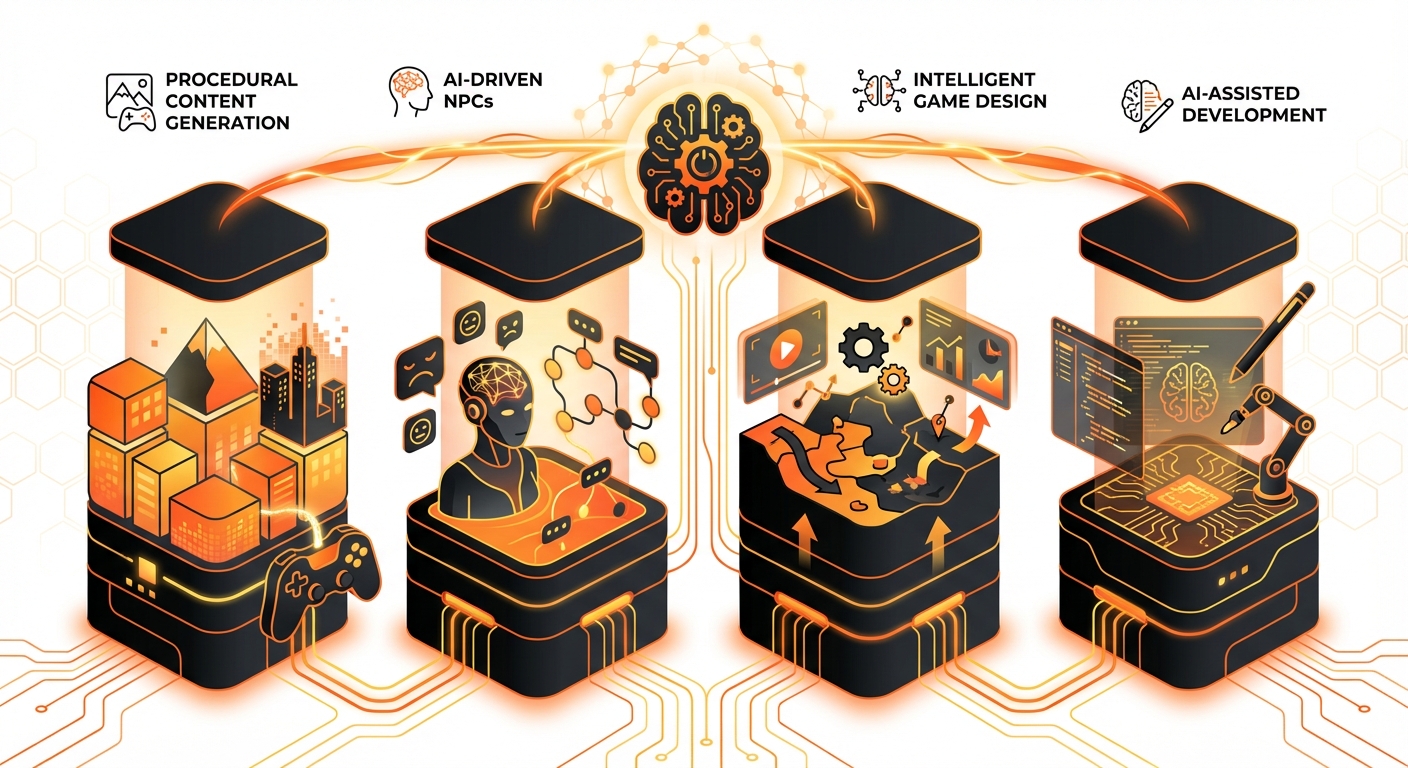
Generative AI is the engine driving much of this change. It’s the technology that allows machines to create original content—from text and images to complex 3D models and entire game levels—based on simple human prompts. This goes far beyond the procedural content generation (PCG) of the past, which often relied on pre-made components arranged by algorithms.
In 2025, generative AI is capable of:
- Instant Asset Creation: Developers can now describe an asset in plain language—”a rusty, moss-covered sword glowing with a faint blue light”—and have a game-ready 3D model generated in minutes. This drastically cuts down on asset production time, a major bottleneck in traditional development.
- Dynamic Environments: Imagine a game world that is never the same twice. Generative AI can build and modify levels in real-time based on a player’s actions, creating a truly endless and unpredictable experience. An entire forest could grow or wither based on the game’s narrative.
- Holistic Content Generation: The most advanced systems can generate not just visuals, but also accompanying music, sound effects, and even basic quest structures, ensuring a cohesive feel. The ability to use an ai game generator free to test these concepts is lowering the barrier for new creators.
2. Intelligent NPCs and Dynamic Narratives
One of the longest-standing dreams in gaming has been to have conversations with non-player characters (NPCs) that feel real and unscripted. Thanks to the integration of Large Language Models (LLMs)—the same technology behind advanced chatbots—this is now a reality.
Instead of cycling through a few pre-written lines of dialogue, future NPCs will:
- Hold Context-Aware Conversations: An NPC can remember past interactions with you, comment on the new armor you’re wearing, and react dynamically to events happening around them. You could ask a village blacksmith about a rumor you heard in a distant city, and they might have a unique, procedurally generated opinion on it.
- Drive Emergent Storylines: Player choices will have real, cascading consequences. By convincing a key character of a certain viewpoint through conversation, you might fundamentally alter the political landscape of a region, unlocking storylines that another player might never see. This vision, once a far-off goal for developers like Bethesda’s Todd Howard, is rapidly materializing. Exploring how AI in Game Development: Why Todd Howard’s Vision is a Reality with MakeGamesWithAI shows just how close we are.
3. AI as a Co-Developer: The Rise of AI-Assisted Workflows
Perhaps the most immediate impact of AI is on the development process itself. AI is becoming an indispensable partner for developers, automating tedious tasks and freeing up human creativity for what it does best: ideation, direction, and refinement.
Platforms are emerging that integrate these AI tools into a seamless workflow. For instance, MakeGamesWithAI allows a user to describe a game concept and generates a playable prototype in seconds. The AI handles the coding, asset placement, and game logic, while the creator uses a chat-based editor to iterate and customize. This is a prime example of AI acting as a co-developer.
Other key areas of AI assistance include:
- Code Generation and Debugging: AI can write boilerplate code, suggest optimizations, and even identify and fix bugs, saving developers hundreds of hours.
- Automated Playtesting: AI agents can be trained to play a game thousands of times, stress-testing systems, finding exploits, and providing invaluable data for game balancing far faster than human testers ever could.
- Effortless Prototyping: The ability to rapidly prototype ideas is crucial. With AI, a concept for a new game mechanic can be tested in a playable form within minutes, not weeks. This empowers a new generation of creators, making game development for beginners more accessible than ever.
4. Hyper-Personalization and Adaptive Gameplay
The future of AI game development will also be deeply personal. AI can analyze an individual’s playstyle in real-time and adapt the game experience to match.
This goes beyond a simple “Easy/Normal/Hard” setting. We’re talking about dynamic difficulty adjustment, where the game’s challenge ebbs and flows to keep the player in a state of perfect engagement—not too bored, not too frustrated. If you’re struggling with a particular type of enemy, the game might subtly reduce their numbers or change their attack patterns. If you’re breezing through a section, it might introduce more complex challenges to keep you on your toes.
This can extend to content as well. An AI-driven game could learn that you enjoy exploration and begin generating more hidden areas and secrets for you to discover, while another player who prefers combat will encounter more challenging enemy patrols and boss fights.
The Challenges and Ethical Considerations
This exciting future is not without its challenges. There are valid concerns about the homogenization of content if everyone uses the same AI models. The role of human artists and developers is also set to evolve, shifting from direct creation to roles centered on curation, prompt engineering, and creative direction.
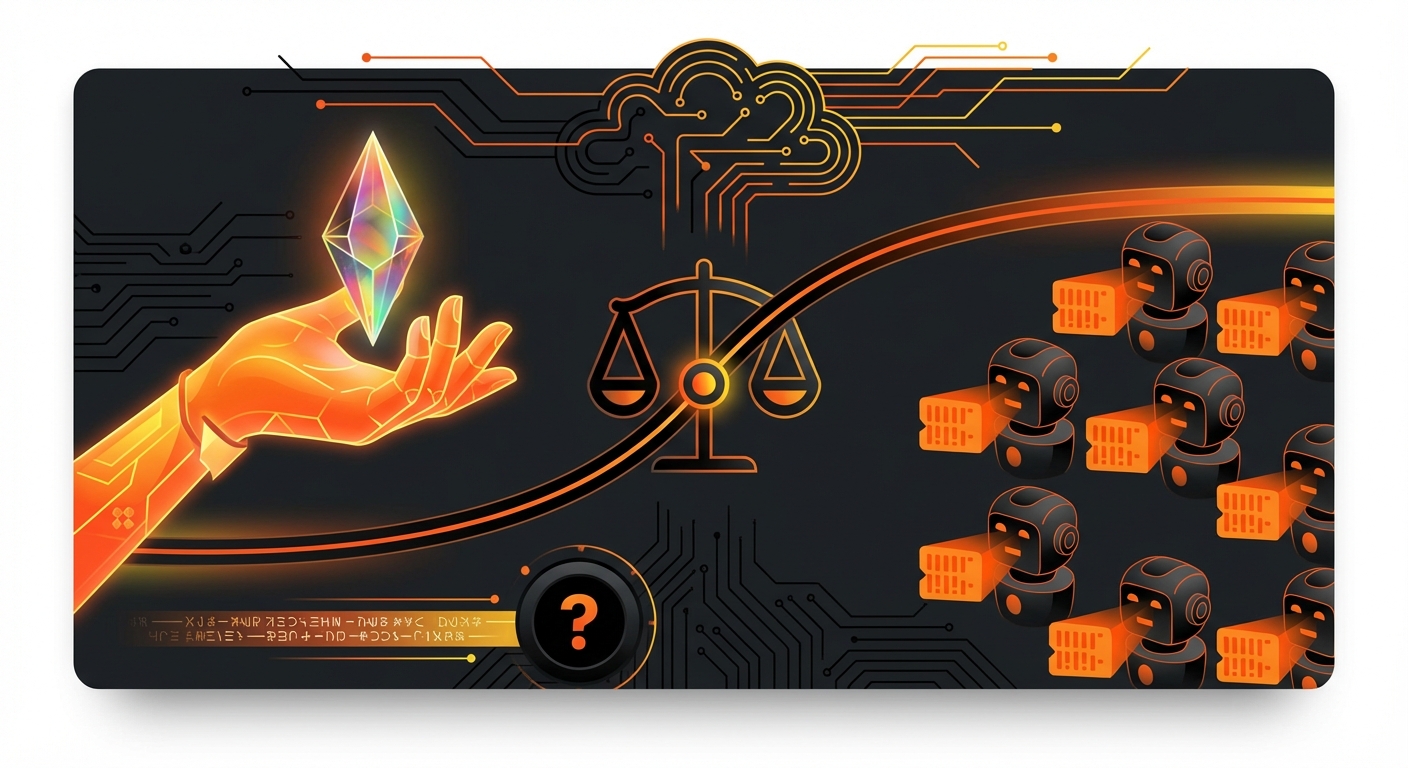
Furthermore, the computational power required to run these sophisticated AI systems remains a significant hurdle. However, as technology advances and becomes more efficient, these barriers will likely diminish, making these powerful tools more widely available.
Key Takeaways
To summarize the incredible shift we are witnessing:
- AI as a Creative Partner: The role of AI is moving beyond simple optimization to become an active collaborator in the creative process.
- Endless, Dynamic Content: Generative AI will enable the creation of game worlds, assets, and narratives that are unique, responsive, and virtually limitless.
- The Developer as Director: The technical barriers to game creation are crumbling. Success will depend more on a creator’s vision and ability to direct AI tools effectively.
- Democratization is Here: Thanks to new platforms and AI tools, anyone with a great idea can now create and share their own interactive experiences. You can see this in action by exploring some of the 11 best AI game generators available today.
Conclusion: Your Idea is the New Code
The future of AI game development is bright, dynamic, and incredibly accessible. We are moving from an era where creation was limited by technical skill to one where it is only limited by imagination. The complex lines of code and painstaking hours of manual asset creation are being replaced by intuitive, conversational interfaces and powerful generative engines.
As these technologies mature, platforms designed to harness this power will become essential. For those eager to start building the future today, exploring a tool like MakeGamesWithAI offers a direct glimpse into this new era. It’s a platform built on the principle that a great idea is the most important ingredient, providing the tools to turn that idea into an interactive reality without the traditional barriers. The age of the AI-assisted creator has arrived.