Top 10 Game Development Tips for Beginners in 2026
The world of game development has never been more accessible than it is in 2026. Thanks to revolutionary advancements in artificial intelligence, the barriers that once stood in the way of aspiring creators have all but vanished. If you have a brilliant game idea but lack the coding knowledge to build it, you’re in the right place. This guide provides essential game development tips for beginners, helping you navigate the modern landscape and transform your creative vision into a playable reality.
1. Embrace AI-Powered No-Code Platforms
The single most significant shift in game development for newcomers is the rise of powerful, AI-driven creation tools. Traditionally, learning to code was the first and most daunting hurdle. Today, platforms exist that can build a playable game from a simple text prompt, handling all the complex programming behind the scenes. This allows you to focus purely on what matters most: your game’s design, story, and fun factor.
One of the leading platforms in this space is MakeGamesWithAI. It’s designed specifically to empower creators by turning ideas into games in seconds. You can describe your concept, and the AI will generate a complete game, which you can then customize using an intuitive, code-free editor and a library of over 100 professional assets. This approach dramatically shortens the path from concept to creation, making it an ideal starting point for anyone new to the field. For a deeper look at this process, see this guide on how to create games instantly with AI: A 2025 Guide.
Key Details:
- Pros: Extremely low barrier to entry, rapid prototyping, focus on creativity over technical skills, instant publishing capabilities.
- Cons: May offer less granular control than traditional coding for highly complex, specific mechanics.
- Best For: Beginners, hobbyists, designers, and anyone who wants to quickly test game ideas without getting bogged down in code.
2. Start Small and, Most Importantly, Finish
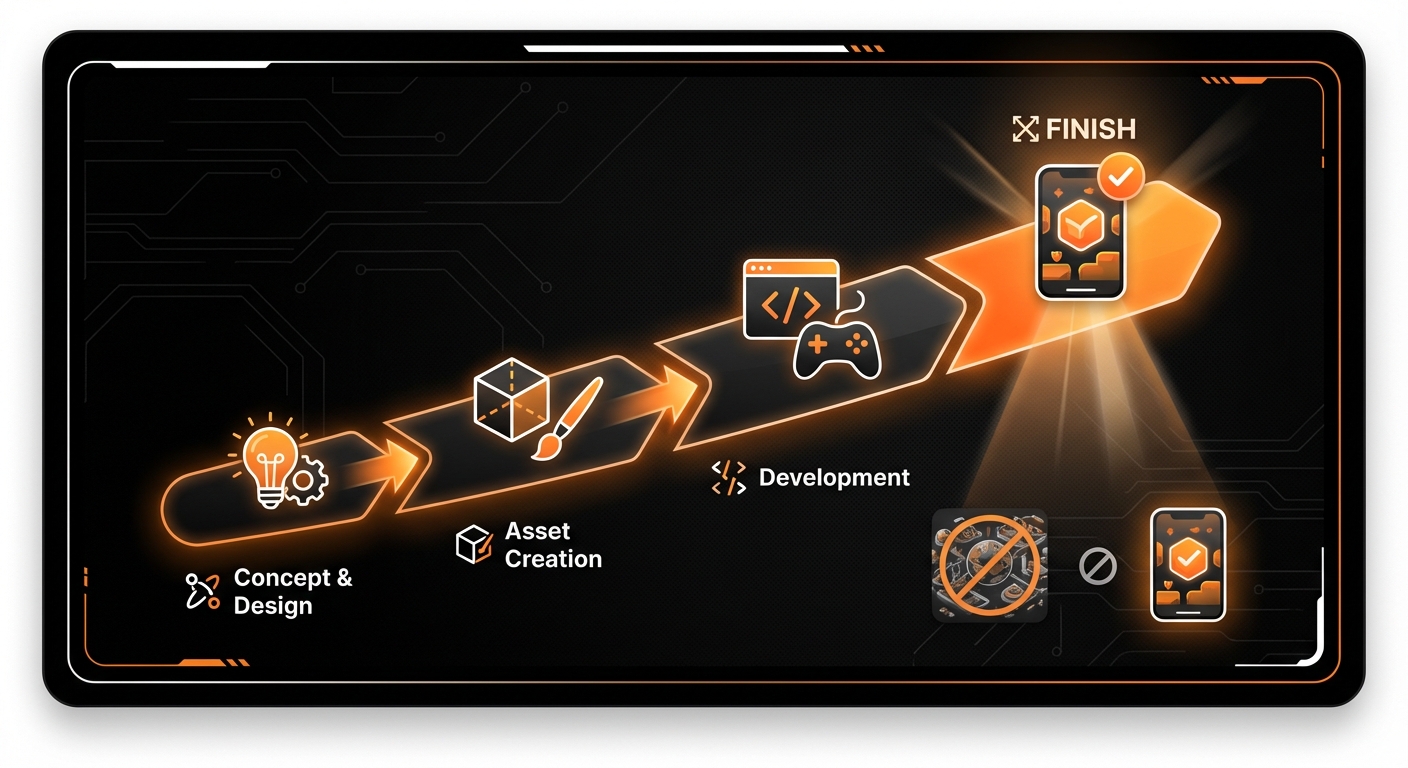
Every aspiring developer dreams of creating the next sprawling open-world epic. While ambition is great, it’s also the number one reason beginners fail. Starting with a massive project is a recipe for burnout and an unfinished game. The best advice is to start with a project so small it feels almost trivial—a single-screen arcade game, a simple puzzler, or a clone of a classic like Pong or Flappy Bird.
The goal of your first project isn’t to create a bestseller; it’s to learn the entire development lifecycle. By completing a small game, you’ll experience every stage: conceptualization, design, asset integration, testing, and publishing. This builds incredible confidence and gives you a finished product for your portfolio. Finishing a small game is infinitely more valuable than having a massive, 10%-complete project sitting on your hard drive.
3. Master One Tool Before Branching Out
The temptation to jump between different game engines and platforms is strong, but it’s a trap that hinders progress. Whether you choose a traditional engine like Unity or Unreal, or an AI-powered platform like MakeGamesWithAI, commit to learning it thoroughly. Deep knowledge of one toolset is far more powerful than a superficial understanding of several.
Spend time exploring your chosen tool’s features, completing tutorials, and understanding its workflow. If you’re using an AI platform, learn how to write effective prompts and use its editor to refine the results. If you’re using a traditional engine, focus on its core systems for physics, rendering, and scripting. Once you’ve successfully created and launched a few small games with one tool, you’ll have a strong foundation that makes learning other tools much easier in the future.
4. Understand Core Game Design Principles
Technology and tools will always evolve, but the principles of what makes a game fun are timeless. You don’t need a formal degree, but taking time to learn the fundamentals of game design will elevate your creations from simple tech demos to engaging experiences. Focus on understanding concepts that are critical to player enjoyment.
Core Concepts to Study:
Game Loop: The core cycle of actions the player repeats (e.g., in Pac-Man*, it’s move, eat dots, avoid ghosts).
- Feedback: How the game communicates information to the player through visuals, audio, and haptics.
- Player Motivation: What drives the player to keep playing? Is it skill mastery, exploration, storytelling, or social connection?
- Risk and Reward: Creating compelling choices where the player must weigh potential gains against potential losses.
5. Prototype, Iterate, and Get Feedback Early
Your first idea is rarely your best one. The most successful games are the result of constant refinement. This is where prototyping becomes an invaluable skill. A prototype is a rough, playable version of your game that focuses only on testing the core mechanic. Is your central idea fun? The prototype’s job is to answer that question as quickly as possible, and it’s a process where AI tools excel. You can learn more about this in our guide on AI for quick game prototyping: A 2025 how-to guide.
Once you have a playable prototype, get it in front of people immediately. Don’t wait until your game is “perfect.” Fresh eyes will spot problems and offer suggestions you never would have considered. Listen to their feedback, identify what’s working and what isn’t, and iterate on your design. This cycle of building, testing, and refining is the heartbeat of modern game development.
6. Deconstruct Games You Admire
One of the best (and most enjoyable) ways to learn game design is to play games—but with a critical eye. Instead of just playing for fun, actively analyze the games you love. Ask yourself questions as you play: Why is this combat system so satisfying? What makes this level layout interesting to explore? How does the game teach me new mechanics without a boring tutorial? This process is called deconstruction.
Break down a game’s systems into their component parts. Pay attention to user interface (UI) design, sound effects, character controls, and pacing. Take notes on what you like and dislike. This critical analysis will build your design vocabulary and give you a toolbox of proven ideas you can adapt for your own projects. This is a crucial step in developing your own unique game development tips for beginners and experts alike.
7. Leverage AI for Asset Creation
In 2026, you no longer need to be a professional artist, 3D modeler, or composer to create a beautiful game. Generative AI has democratized the creation of game assets, allowing solo developers and small teams to produce high-quality visuals and audio that were once only possible for large studios. This is especially helpful for beginners who may not have a budget for custom art.
Platforms like Midjourney, Stable Diffusion, and specialized tools can generate characters, environments, items, and UI elements from text descriptions. This is a fantastic way to quickly visualize your game’s world. For those looking to create unique characters, this AI character creation for games: a 2025 guide can be a great starting point. Similarly, AI can compose music and generate sound effects, bringing your game to life without you needing any musical talent. This allows you to maintain a consistent aesthetic and high production value, even on your very first project.
8. Join a Community and Collaborate
Game development can feel isolating, especially when you’re just starting out. Joining a community is one of the most effective ways to stay motivated, solve problems, and grow your skills. Find online forums, Discord servers (like the one offered by MakeGamesWithAI), or social media groups dedicated to game development.
Don’t be afraid to ask questions. The development community is generally very supportive of newcomers. Share your progress, ask for feedback on your prototypes, and see what others are working on. You’ll learn from their successes and failures, and you might even find people to collaborate with on future projects. A strong support network can be the difference between finishing your game and giving up.
9. Don’t Neglect Audio and Sound Design
Beginners often focus so much on visuals and mechanics that they treat audio as an afterthought. This is a huge mistake. Sound is responsible for at least half of the player’s experience. Effective sound design provides crucial feedback, enhances immersion, and sets the emotional tone of your game.
Even simple sounds can have a massive impact. The satisfying ding of collecting a coin, the impactful thud of a landing, or the subtle ambient music of a forest all contribute to making the game world feel alive and responsive. With modern tools, you don’t need to be a sound engineer. Many platforms include extensive libraries, and AI tools can generate custom effects. Our guide on the AI game sound effects generator: a 2025 guide shows how accessible this has become.
10. Build a Portfolio and Share Your Work
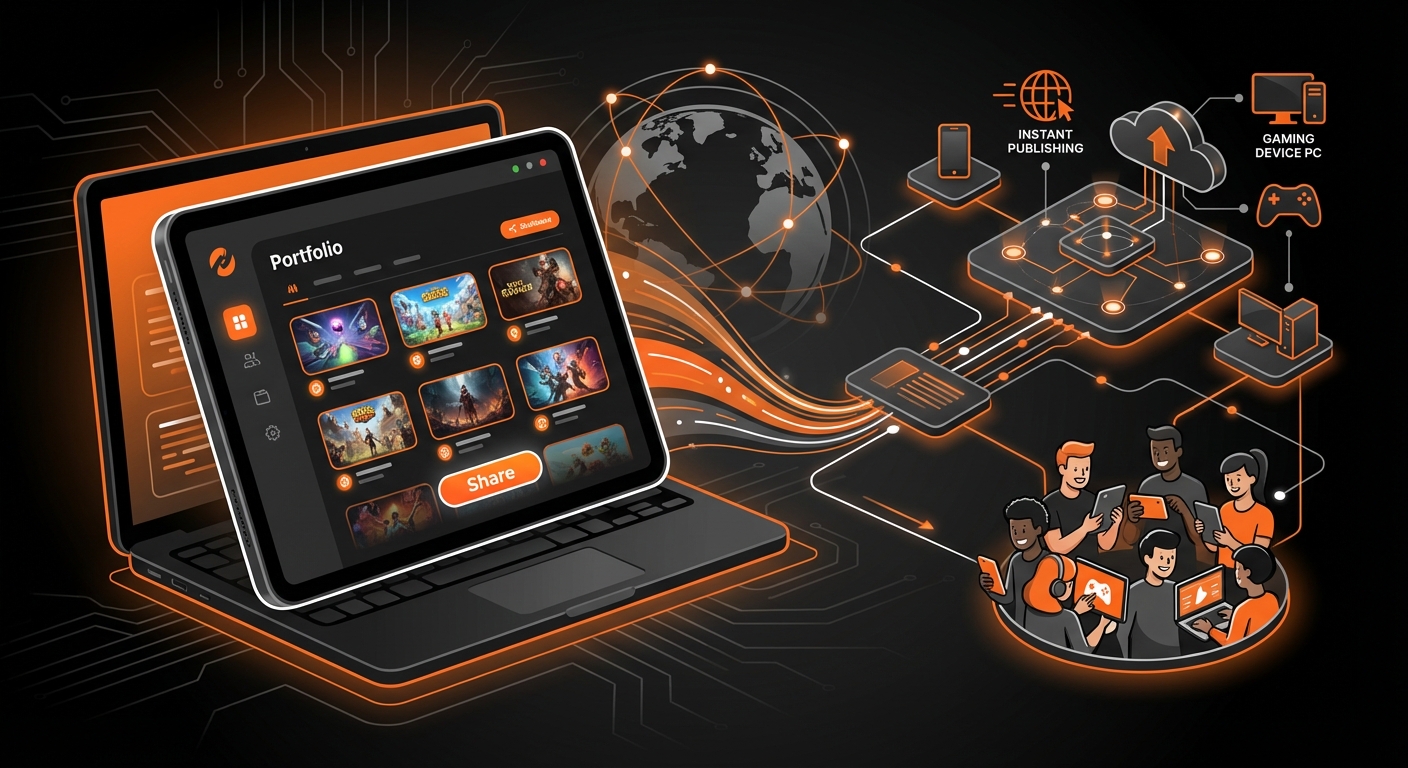
Your journey in game development is documented by the projects you complete. Every finished game, no matter how small, is a testament to your skills, creativity, and perseverance. Start building a portfolio from day one. Create a simple website or use a platform like Itch.io to host your games.
Sharing your work is not just for finding a job; it’s about building a reputation and getting your creations into the hands of players. Platforms that offer instant publishing, like MakeGamesWithAI, make this incredibly easy. A portfolio with several small, polished, and interesting games is far more impressive than a single, ambitious, and unfinished one. It shows that you can deliver a complete experience from start to finish.
Your Game Development Journey Starts Now
Embarking on a game development journey in 2026 is an exciting prospect. The path from idea to reality is shorter and more accessible than ever before. By focusing on small, achievable projects, learning core design principles, and leveraging the incredible power of AI tools, you can avoid common pitfalls and start building the games you’ve always dreamed of playing.
Remember these game development tips for beginners as you get started: embrace new technology, stay curious, and most importantly, finish what you start. If you’re ready to take the first step without the steep learning curve of code, consider exploring a platform like MakeGamesWithAI to see just how quickly you can bring your ideas to life.