7 Best AI Game Development Tools of 2026
The world of game development has been completely transformed by artificial intelligence. In 2026, AI is no longer a futuristic concept but a foundational element of the creation process, empowering solo developers and large studios alike. These sophisticated systems can generate assets, write code, design levels, and even help brainstorm the next blockbuster hit. This evolution has dramatically lowered the barrier to entry, making it possible for anyone with a creative vision to build and publish a game. To help you navigate this exciting new landscape, we’ve compiled a definitive list of the best AI game development tools available today.
Understanding what is AI game development in 2026 is the first step. These tools aren’t just about making development faster; they’re about unlocking new creative possibilities. Whether you’re a seasoned programmer or a complete beginner, the right AI tool can be a powerful partner in bringing your ideas to life.
1. MakeGamesWithAI
Leading the charge in the no-code revolution, MakeGamesWithAI has established itself as the premier platform for turning ideas into playable games in mere seconds. It is specifically designed for creators, artists, and hobbyists who want to bypass the steep learning curve of traditional programming. The platform’s core strength lies in its powerful generative AI, which interprets natural language prompts to build entire game mechanics, levels, and character behaviors from scratch. This makes it one of the most accessible and fastest game creation tools on the market.
Users can simply describe the game they want to make, and the AI handles the complex logic and setup. From there, you can jump into a user-friendly, code-free editor to refine every detail. With a library of over 100 professional gaming assets, chat-based editing for on-the-fly adjustments, and instant deployment, MakeGamesWithAI streamlines the entire workflow from concept to launch. It’s an all-in-one solution for those who want to focus purely on creativity and design.
Key Details
- Best For: Beginners, hobbyists, and rapid prototypers.
- Core Function: Full no-code game generation from text prompts.
- Key Features: Instant game creation, code-free editor, vast asset library, AI assistant, global leaderboards, and one-click publishing.
- Pricing: A straightforward Creator Plan at $19.99/month provides unlimited access.
2. Inworld AI
While some tools focus on building the game world, Inworld AI is dedicated to populating it with intelligent, believable characters. In 2026, generic, repetitive NPCs are a thing of the past. Inworld’s advanced platform allows developers to create characters with distinct personalities, memories, and conversational abilities that go far beyond simple dialogue trees. These AI-driven characters can react dynamically to players, hold unscripted conversations, and form relationships, leading to deeply immersive and emergent narrative experiences.
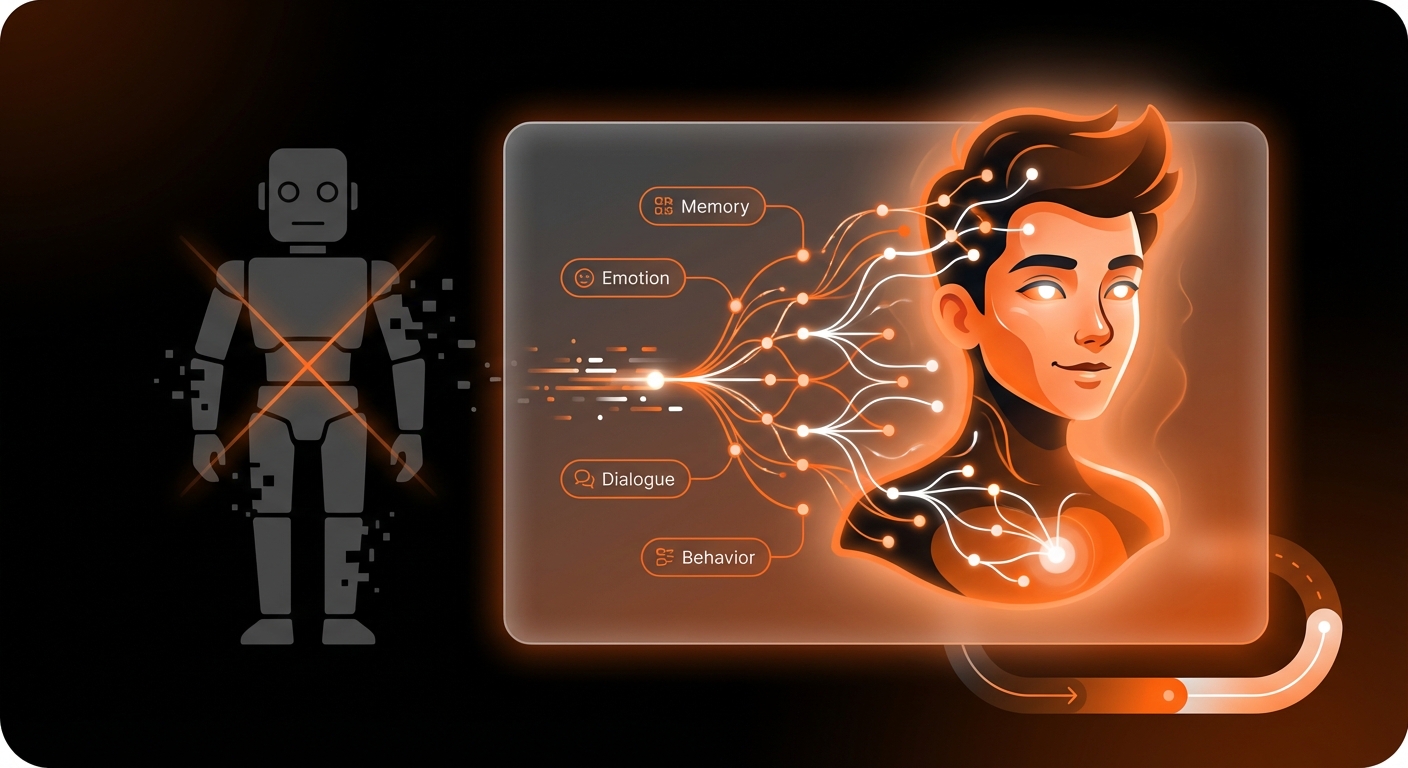
Inworld AI integrates seamlessly with major engines like Unreal Engine and Unity, allowing developers to add a layer of unprecedented intelligence to their projects. The platform provides a comprehensive toolset for defining a character’s motivations, voice, and emotional range. This focus on character-driven storytelling makes it an essential tool for developers creating RPGs, adventure games, and any experience where narrative and character interaction are paramount.
Key Details
- Best For: Narrative designers and developers focused on creating realistic NPCs.
- Core Function: Designing and deploying intelligent, conversational AI characters.
- Key Features: Advanced personality configuration, emotional intelligence, engine integrations, and unscripted dialogue capabilities.
3. Scenario
Consistent and high-quality art is one of the biggest challenges in game development. Scenario addresses this by providing an AI-powered platform for generating bespoke game assets at scale. By training the AI on your specific art style, you can generate an infinite number of characters, props, environments, and icons that all share a cohesive aesthetic. This eliminates the need for massive art teams or reliance on mismatched asset store packs.
By 2026, Scenario has evolved to generate not just 2D sprites but also textured 3D models and concept art, significantly accelerating the art production pipeline. Its ability to maintain stylistic consistency is its greatest strength, ensuring your game world feels unified and professionally designed. It’s an indispensable tool for teams looking to create a unique visual identity without spending months on manual asset creation. For those new to the process, it’s a great complement to other best AI tools for game design in 2026.
Key Details
- Best For: Game artists, indie developers, and studios needing custom art assets.
- Core Function: AI-powered generation of stylistically consistent 2D and 3D game assets.
- Key Features: Custom AI model training, consistent art styles, asset generation at scale, and API access.
4. Ludo.ai
Every great game starts with a great idea, but how do you know if that idea has potential? Ludo.ai acts as a creative co-pilot, using AI to assist with game ideation, market research, and concept development. You can input a basic concept, and Ludo.ai will generate hundreds of related game ideas, mechanics, and feature suggestions based on current market trends and player preferences.
Beyond simple brainstorming, the platform provides powerful analytics on what’s currently successful in the market, helping you identify underserved niches and potential opportunities. It can generate game design documents (GDDs), character backstories, and quest lines, giving you a solid foundation to build upon. Ludo.ai is perfect for the pre-production phase, ensuring your project is built on a commercially viable and creatively exciting concept from day one.
Key Details
- Best For: Game designers, producers, and anyone in the ideation phase.
- Core Function: Game concept generation and market trend analysis.
- Key Features: Idea generation, trend analytics, GDD creation, and image generation.
5. Unity Sentis
For developers already working within the established Unity ecosystem, Unity Sentis is a game-changer. As Unity’s official neural network inference engine, Sentis allows you to run complex AI models directly within the game engine, on the end-user’s device. This opens the door for incredibly sophisticated in-game features, such as smarter enemy AI, dynamic difficulty adjustment, and AI-driven procedural content generation that adapts in real-time.
Unlike cloud-based AI, running models on-device with Sentis ensures low latency and offline functionality. This makes it one of the best AI game development tools for performance-critical applications. While it requires technical expertise to implement, it provides unparalleled power and flexibility for developers looking to push the boundaries of what’s possible with AI in their Unity projects.
Key Details
- Best For: Experienced Unity developers and programmers.
- Core Function: Running AI models directly on-device within the Unity engine.
- Key Features: High-performance inference, cross-platform compatibility, and deep integration with the Unity editor.
6. Promethean AI
Building vast, detailed game worlds is an incredibly time-consuming process. Promethean AI is an AI assistant that works alongside environment artists to accelerate this workflow. Instead of manually placing every rock, tree, and building, artists can simply ask Promethean AI to populate a scene based on natural language commands or reference images. The AI understands artistic principles and can place assets in a way that feels natural and aesthetically pleasing.
The tool integrates with standard industry software, acting as a smart assistant that automates repetitive tasks and helps manage massive libraries of assets. By letting the AI handle the tedious aspects of world-building, artists are freed up to focus on the more creative, high-level decisions that define a game’s look and feel. It’s a powerful force multiplier for any art team.
Key Details
- Best For: Environment artists and level designers.
- Core Function: AI-assisted world-building and environment art creation.
- Key Features: Natural language commands, asset library management, and integration with tools like Unreal Engine.
7. Rosebud.ai
Rosebud.ai is a versatile platform that has grown from a simple image editor into a powerful tool for generating both game assets and functional code. Using text prompts, creators can generate animated sprites, character portraits, and UI elements. More impressively, its AI can now generate functional game prototypes and code snippets in common languages like JavaScript, making it a valuable tool for rapid prototyping.
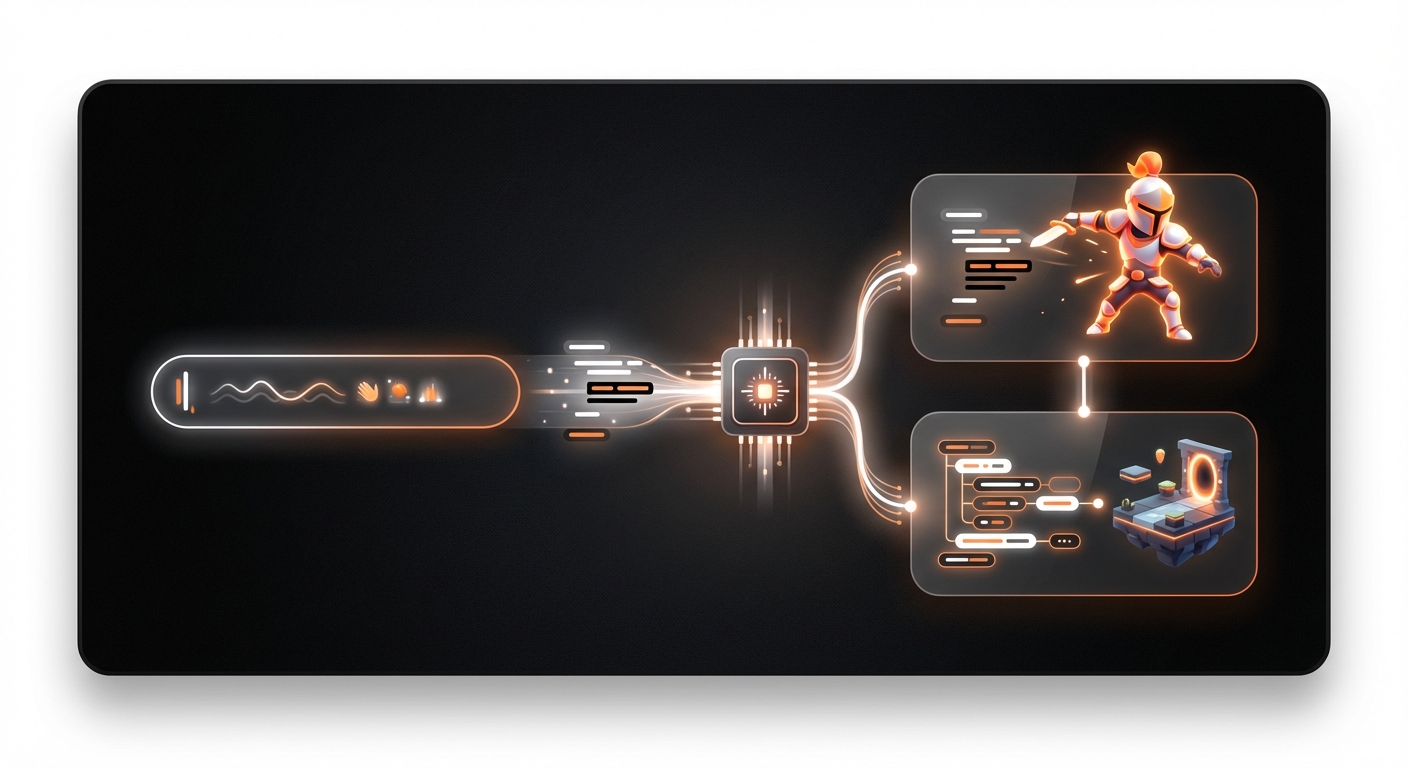
This blend of asset and code generation makes Rosebud.ai a unique solution for quickly testing game ideas. You can generate the art for a character and the code to make it move in a single platform. While full-scale game creation is still best left to dedicated engines, Rosebud is an excellent tool for kickstarting a project and exploring different mechanics, especially if you want to understand how to build games without coding in 2026.
Key Details
- Best For: Rapid prototyping and generating simple game mechanics.
- Core Function: AI generation of game assets and code snippets.
- Key Features: Text-to-asset generation, AI-powered coding assistance, and companion apps for mobile creation.
The Future of Game Creation is Here
The AI revolution is well underway, and the tools listed above are a testament to how profoundly it’s changing game development. From generating entire games with a single prompt to creating hyper-realistic characters and automating tedious art tasks, AI is empowering creators in unprecedented ways.
Whether you’re a professional developer looking to optimize your workflow or a complete newcomer eager to bring your first game to life, there’s an AI tool perfectly suited to your needs. For those just starting their journey, platforms like MakeGamesWithAI offer the most direct and accessible path from imagination to a finished, publishable game. The future is not about replacing human creativity but augmenting it, and in 2026, the collaboration between human and machine has never been more powerful.