6 Best Practices for Game Publishing in 2026
The global gaming market in 2026 is more vibrant and competitive than ever, with thousands of new titles launching every month. Simply creating a great game is no longer enough; a strategic and well-executed launch is what separates a hidden gem from a breakout hit. Understanding the best practices for game publishing is crucial for developers of all sizes, from solo creators to established studios. This guide outlines the essential strategies you need to navigate the complexities of the modern market and give your game the best possible chance of success.
1. Embrace AI and No-Code for Rapid Publishing
The single biggest shift in game development and publishing over the past few years has been the rise of accessible AI. In 2026, the fastest way to get your game from a concept to a playable, publishable product is by leveraging AI-powered, no-code platforms. These tools democratize game creation, allowing you to bypass months of complex coding and focus directly on design, iteration, and market testing. This speed is a massive competitive advantage, enabling you to validate ideas and build a community faster than ever before.
Platforms like MakeGamesWithAI are at the forefront of this revolution. By using a simple chat-based interface, you can generate entire game mechanics, levels, and assets in seconds. This allows you to create a minimum viable product (MVP) and publish it instantly to gather real-world player feedback. Instead of spending a year on a single project, you can test multiple ideas in a matter of weeks, zeroing in on the one that resonates most with your audience. This agile approach is a cornerstone of modern, successful game publishing strategies.
Key Details:
- Pros: Dramatically reduces development time and cost, lowers the barrier to entry for new creators, and facilitates rapid iteration based on player feedback.
- Cons: May offer less granular control than traditional coding for highly complex, system-heavy games.
- Actionable Tip: Use a tool like MakeGamesWithAI to prototype your core game loop. Publish it to a small audience to test for fun and engagement before committing to full-scale development. This is a key part of What Is No-Code Game Development? A 2026 Guide.
2. Define Your Niche and Target Audience Early
Attempting to create a game that appeals to everyone is a common pitfall that often results in a game that excites no one. One of the most critical best practices for game publishing is to identify your specific niche and define your target player persona from day one. Are you making a cozy farming sim for casual players on mobile? A hardcore roguelike for dedicated PC gamers? A narrative-driven adventure for fans of interactive storytelling? Knowing your audience informs every decision, from game mechanics and art style to marketing copy and platform choice.
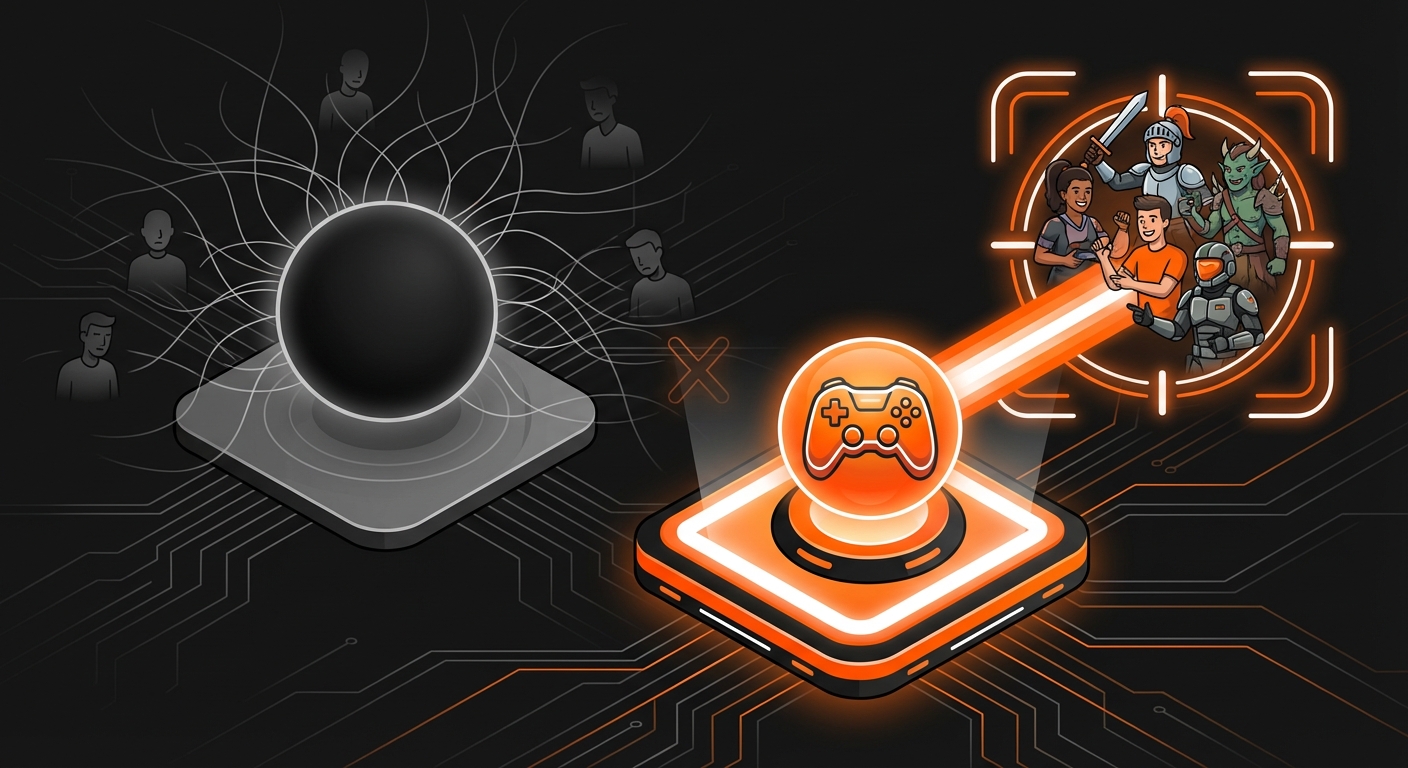
Conduct thorough market research to understand what similar games in your niche are doing well and where there are gaps. Analyze player reviews, join relevant online communities like Reddit and Discord, and study the marketing of successful titles. Creating a detailed player persona—giving your ideal player a name, background, and gaming habits—can help keep your team focused. This clarity ensures your game’s features and your marketing message will resonate deeply with a core group of players who are more likely to become passionate advocates for your title.
3. Build a Community Before You Launch
In 2026, a game’s launch day is not the beginning of its marketing campaign; it’s the culmination. The most successful launches are powered by a community that has been cultivated and engaged for months, or even years, prior. Start building your audience as soon as you have something to show, whether it’s concept art, a gameplay snippet, or a playable demo. A pre-existing community provides invaluable feedback, builds hype, and creates a powerful network effect on release day.
Platforms like Discord, X (formerly Twitter), TikTok, and Reddit are essential tools for community building. Share regular development updates (devlogs), be transparent about your progress, and actively participate in conversations with potential players. Running a closed alpha or beta for your most engaged community members can generate crucial feedback and make them feel invested in the game’s success. Remember, these early fans are your most effective marketers. Empowering them with information and access will pay dividends when it’s time to publish.
4. Master Your Storefront and Discoverability
Your game’s page on Steam, the App Store, or any other digital storefront is your most important piece of marketing real estate. Optimizing this presence is a non-negotiable part of modern game publishing. This involves more than just uploading your game; it requires a deep understanding of App Store Optimization (ASO) and user psychology. Your game’s icon, title, screenshots, trailer, and description must work together to grab attention and convert views into downloads or purchases.
A compelling gameplay trailer is paramount. It should be short (60-90 seconds) and showcase the core fantasy and most exciting moments of your game within the first 10 seconds. Your screenshots should be high-resolution, action-packed, and clearly communicate the gameplay experience. Write a concise, engaging description that highlights your unique selling points. Finally, research your keywords and tags meticulously to ensure your game appears in relevant searches. Getting the visuals right is key, and using the Best Tools for Game Asset Creation in 2026 can make a significant difference.
5. Develop a Strategic Cross-Platform Plan
The lines between PC, console, and mobile gaming continue to blur. While launching on a single platform might be necessary for resource-strapped teams, a successful long-term publishing strategy often involves a multi-platform presence. You need to decide which platforms are right for your game based on your target audience and genre. A hyper-casual mobile game has different platform needs than a sprawling PC RPG.

Even more accessible in 2026 is the world of web-based and instant gaming. Platforms that allow for one-click publishing and play directly in a browser remove significant friction for players. This is an excellent way to reach a broad audience quickly and is a core feature of many AI-driven development tools. When planning your launch, consider a staggered release or leveraging services that simplify porting. Investigate the unique marketing opportunities on each platform, as discoverability on the Nintendo eShop is vastly different from Steam or one of the many Top 5 Instant Game Publishing Platforms of 2026.
6. Implement a Robust Post-Launch Support Plan
Publishing a game is not a one-time event. The period immediately following your launch is often the most critical. You must be prepared to monitor player feedback, fix high-priority bugs, and communicate actively with your new community. A clear post-launch roadmap that outlines future content updates, patches, and potential DLC can build player confidence and significantly extend the life and revenue of your game.
This is another area where rapid development tools can be a game-changer. The ability to quickly patch a bug or tweak a balance issue without a lengthy code-and-compile cycle is invaluable. An effective post-launch plan involves both reactive support (fixing problems) and proactive engagement (adding new content). Listen to your players, manage expectations, and consistently deliver value to turn launch-day buyers into long-term fans. Understanding How to Use AI in Game Creation: A 2026 Guide can help streamline this entire process, from creation to long-term support.
Conclusion: Your Path to a Successful Launch
Successfully launching a game in 2026 requires a multifaceted approach that blends creative development with savvy marketing and community management. The best practices for game publishing today emphasize speed, community, and data-informed decision-making. By embracing new technologies, defining your audience, building a dedicated following, optimizing your storefronts, and planning for the long haul, you can dramatically increase your odds of success.
Tools are evolving to make this process more accessible than ever. Platforms like MakeGamesWithAI are not just changing how games are made; they are fundamentally simplifying the path to publishing, allowing creators to focus on what truly matters: bringing their unique vision to players around the world.