
5 Best Platforms for Mobile Game Development (2026)
The mobile gaming market continues its explosive growth in 2026, with projected revenues soaring past $200 billion. For aspiring developers and creative minds, this presents an unparalleled opportunity. However, turning a game idea into a reality hinges on one critical decision: choosing the right development platform. The landscape has evolved dramatically, and today’s tools range from powerful, code-heavy engines to revolutionary AI-driven creators. This guide will walk you through the best platforms for mobile game development available today, helping you find the perfect match for your skills, budget, and vision.
Top Mobile Game Development Platforms for 2026
Here are the leading platforms that cater to every type of mobile game creator, from seasoned programmers to absolute beginners.
1. MakeGamesWithAI
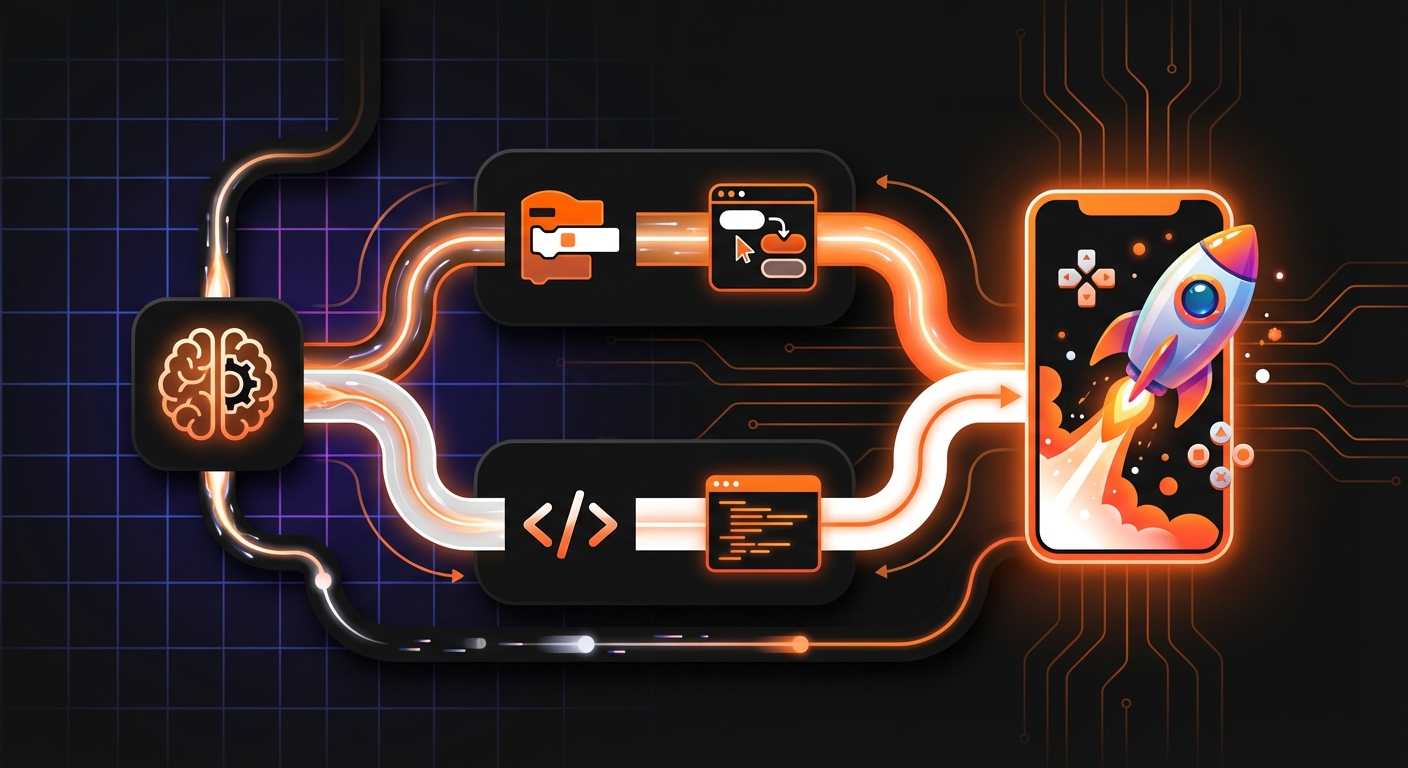
Leading the charge in the new era of accessible game creation is MakeGamesWithAI, a platform that leverages artificial intelligence to turn ideas into playable mobile games in seconds. It completely removes the traditional barriers of coding and complex software, making it the ideal starting point for anyone with a creative spark. Instead of writing lines of code, you simply describe your game concept, and the AI builds a functional prototype. This revolutionary approach embodies the principles of What Is No-Code Game Development? A 2026 Guide, allowing creators to focus purely on design and gameplay.
MakeGamesWithAI is more than just a generator; it’s a complete ecosystem for creation and iteration. Its powerful editor allows for chat-based editing, live previews, and instant customization without touching a single line of code. The platform comes packed with over 100 professional gaming assets, from characters to environments, which can be easily swapped and modified. Once your game is ready, you can publish it instantly and even integrate global leaderboards to foster a competitive community. This seamless workflow is a testament to how to use AI in game creation: a 2026 guide effectively.
Key Details:
- Best For: Beginners, hobbyists, designers, and anyone wanting to rapidly prototype and publish games without coding.
- Pros: Extremely fast development cycle, no coding required, vast library of high-quality assets, instant publishing, and an affordable subscription model ($19.99/month Creator Plan).
- Cons: Less suitable for highly complex, graphically intensive 3D games that require custom low-level engine modifications.
2. Unity
Unity has long been a dominant force in the mobile game industry, and it remains one of the most versatile and powerful engines in 2026. It powers a significant percentage of the top mobile games on both the App Store and Google Play. Its popularity stems from its component-based architecture, extensive documentation, and a massive, supportive community. Unity excels at both 2D and 3D development, offering a rich set of tools for creating stunning graphics, intricate physics, and engaging gameplay for any genre.
The Unity Asset Store is another major advantage, providing a vast marketplace of pre-made assets, tools, and extensions that can significantly speed up development. While Unity has made strides in becoming more user-friendly with visual scripting tools, a solid understanding of C# programming is still essential to unlock its full potential. For those just starting their journey, it’s worth exploring the 5 best game engines for beginners in 2026 to see how Unity compares to other entry-level options.
Key Details:
- Best For: Indie developers and professional studios aiming to create high-quality 2D or 3D games with full creative control.
- Pros: Excellent cross-platform support (iOS, Android, and more), huge community, extensive Asset Store, and highly scalable.
- Cons: Requires C# programming knowledge, can have a steep learning curve for non-programmers, and licensing fees can become a factor for high-revenue projects.
3. Unreal Engine
When it comes to breathtaking, high-fidelity graphics on mobile, Unreal Engine (currently in version 5.4) is in a class of its own. Developed by Epic Games, the creators of Fortnite, Unreal Engine is renowned for its cutting-edge rendering capabilities, making it the top choice for developers creating visually stunning 3D games. Features like Nanite and Lumen, once thought to be exclusive to high-end PCs and consoles, have been impressively optimized for modern mobile hardware.
Unreal Engine uses a C++ backend, which is considered more complex than Unity’s C#. However, its visual scripting system, Blueprints, is incredibly powerful and allows developers to create complete games without writing code. This makes it more accessible than it first appears, though the engine’s complexity can be overwhelming for simple 2D or casual games. For ambitious projects that need to push the graphical limits of mobile devices, Unreal Engine is an unmatched powerhouse.
Key Details:
- Best For: Developers focused on high-end 3D graphics and performance-intensive mobile games.
- Pros: Unparalleled graphical fidelity, powerful Blueprints visual scripting system, robust suite of built-in tools, and royalty-based pricing that is free until your game earns its first $1 million.
- Cons: Very steep learning curve, requires a high-end development machine, and can be overkill for simpler 2D or hyper-casual games.
4. Godot Engine
For developers who value open-source philosophy and a lightweight, streamlined workflow, Godot Engine is a fantastic choice. As a completely free and open-source platform, Godot has gained a passionate and growing community. It has no licensing fees, royalties, or hidden costs, regardless of how successful your game becomes. Godot’s intuitive scene-based architecture makes organizing game projects straightforward, and it is particularly praised for its 2D development toolset, which many developers find more elegant and efficient than its larger competitors.
Godot uses its own scripting language, GDScript, which is syntactically similar to Python and is known for being easy to learn. It also supports C# for those who prefer it. While its 3D capabilities are rapidly improving, they still trail behind Unreal and Unity for high-end projects. Nonetheless, for indie developers creating 2D masterpieces or stylized 3D games, Godot is one of the best platforms for mobile game development that offers freedom and flexibility without a price tag.
Key Details:
- Best For: Indie developers, hobbyists, and those creating 2D-focused games who want a free, open-source solution.
- Pros: Completely free with no strings attached, lightweight and fast, intuitive 2D workflow, and an easy-to-learn scripting language.
- Cons: Smaller community and asset library compared to Unity, and its 3D engine is less mature than competitors.
5. Buildbox
Similar to MakeGamesWithAI, Buildbox targets the no-code development space but with a specific focus on creating hyper-casual and 2D games very quickly. It utilizes a drag-and-drop interface where users can piece together game logic and levels without any programming. Buildbox has been used to create numerous chart-topping hits, proving that a simple workflow can lead to massive success in the mobile market.
Buildbox offers pre-built templates and smart assets that have behaviors already programmed into them, allowing for rapid prototyping and game creation. While its ease of use is a major selling point, this simplicity comes with limitations in terms of complexity and customization compared to a traditional engine or a more flexible AI-powered platform. It is an excellent tool for its niche but may not be suitable for developers with more complex or unique game mechanics in mind. Creating unique assets for it may require looking into the best tools for game asset creation in 2026.
Key Details:
- Best For: Entrepreneurs and designers focused on creating hyper-casual 2D games quickly.
- Pros: Extremely fast and easy-to-use drag-and-drop interface, proven track record of hit games, requires no coding knowledge.
- Cons: Subscription-based, limited to the types of games it can create, and less flexible for custom game mechanics.
Conclusion: Your Idea, Your Platform
Choosing from the best platforms for mobile game development in 2026 ultimately comes down to your personal goals, technical skills, and the scope of your project. For those aiming to build complex, graphically-intensive titles with a team, industry giants like Unity and Unreal Engine provide unparalleled depth and power. For the open-source enthusiast, Godot offers a liberating and flexible alternative.
However, for the vast majority of creative individuals, artists, and aspiring designers who want to bring their ideas to life without getting bogged down by code, the future is undoubtedly AI-driven. Platforms like MakeGamesWithAI are democratizing game development, proving that a great idea—not a computer science degree—is the most important prerequisite for creating a fun and engaging game. If you’re ready to turn your concept into a reality in minutes, exploring an AI-powered platform is the perfect first step.