AI for Game Development: Create Games Faster & Smarter
AI for Game Development: What Is It and How to Use It?
Artificial intelligence has moved from a futuristic buzzword to a fundamental technology shaping the video game industry. For decades, AI was the invisible hand making non-player characters (NPCs) seem alive, enemies challenging, and game worlds dynamic. But today, its role has expanded dramatically. AI is not just in games; it’s now a powerful partner in creating them, opening up game development to more people than ever before.
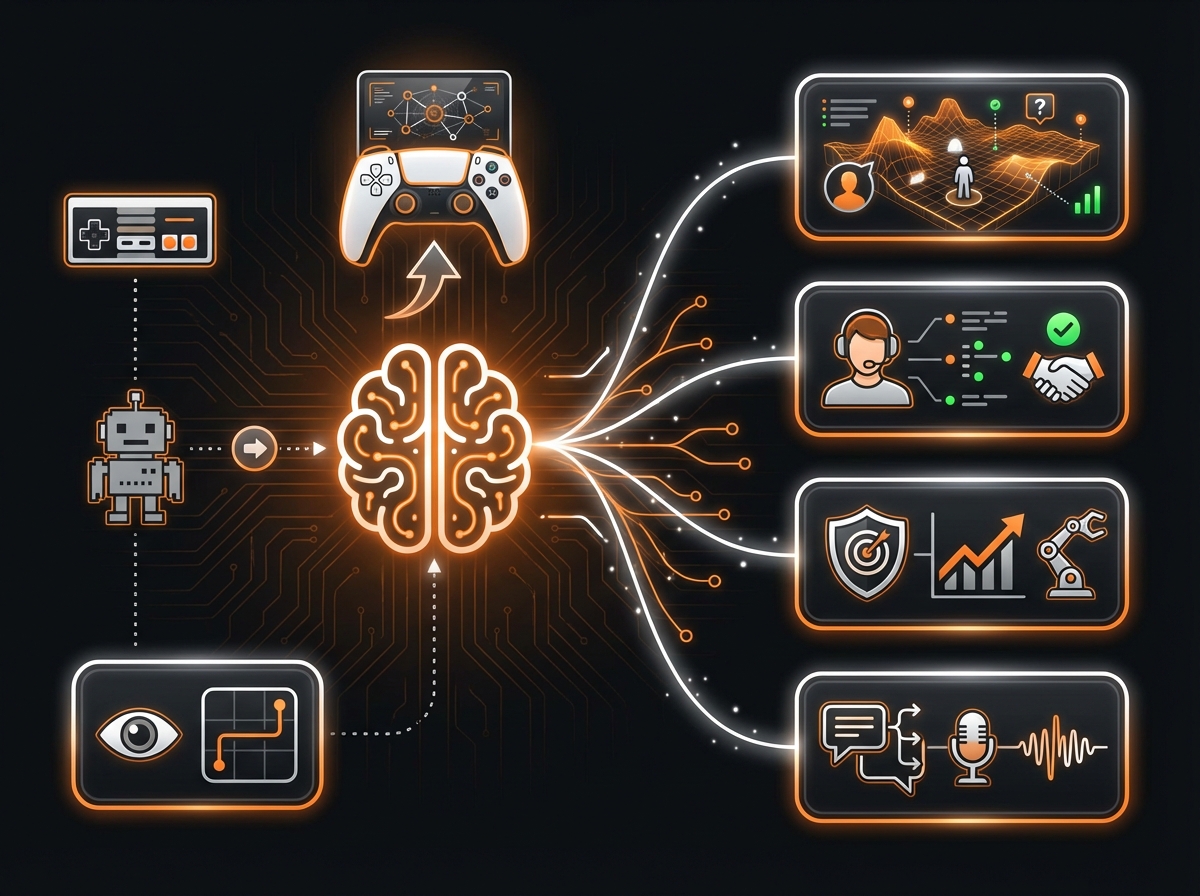
Whether you’re an aspiring developer, a seasoned creator, or simply a curious gamer, understanding AI’s role is crucial. It’s the key to creating more immersive experiences, streamlining complex workflows, and even building entire games from simple ideas. This guide will demystify AI in game development, explore its practical applications, and show you how you can start using it today—no coding required.
What is AI in Game Development?
In game development, AI refers to the logic and algorithms that enable game entities to exhibit intelligent behavior. This isn’t about creating sentient, self-aware programs. Instead, it’s about simulating intelligence to create a believable and engaging experience for the player. Traditionally, this meant programming rules for how an enemy patrol, a friendly character follows the player, or how a group of units organizes itself in a strategy game.
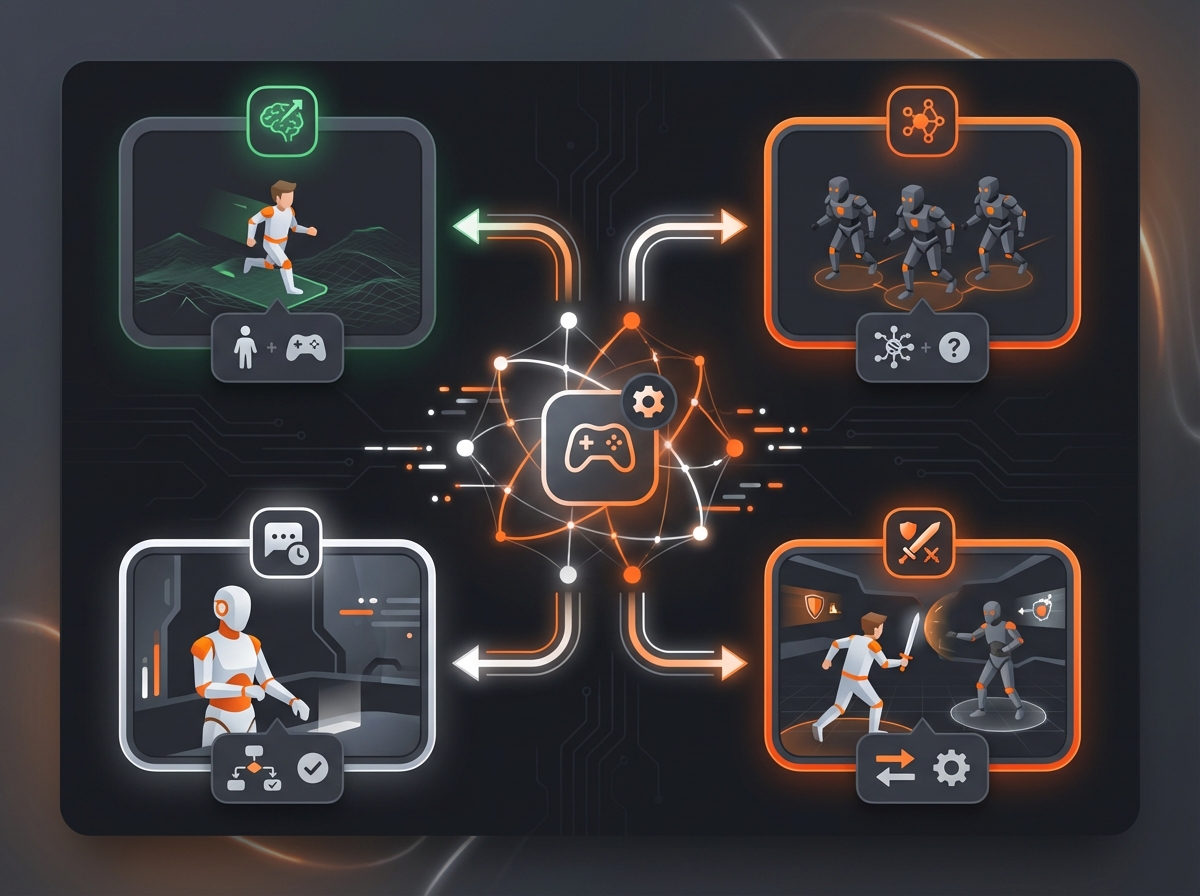
These systems are designed to make decisions, solve problems, and adapt to the player’s actions. The goal is to create challenges and interactions that feel organic and unscripted. More recently, the scope of AI has broadened to include generative AI, which can create content like levels, characters, and even entire game mechanics from scratch. This shift is transforming development from a purely technical task into a more creative and conversational process.
How AI is Used in Game Development
AI is a versatile tool used across all stages of development, from initial concept to the final player experience. Its applications have evolved from simple rule-based systems to complex, adaptive technologies that can build and modify games in real-time.
Key applications include:
- NPC Behavior: This is the classic use case. AI controls the actions of every non-player entity, from the villagers in an RPG to the opponents in a racing game. Sophisticated AI can make NPCs react realistically to their environment, coordinate with each other, and adapt their tactics based on the player’s skill.
Procedural Content Generation (PCG): AI algorithms can automatically generate vast and unique game worlds, levels, quests, and items. This not only saves developers immense time but also enhances replayability, as seen in games like No Man’s Sky and Minecraft*. Players get a fresh experience every time they play.
- Player Experience and Personalization: Modern AI can analyze a player’s behavior to dynamically adjust the game’s difficulty, offer personalized tips, or even tailor the story to their choices. This creates a more engaging and satisfying experience for a wider range of players.
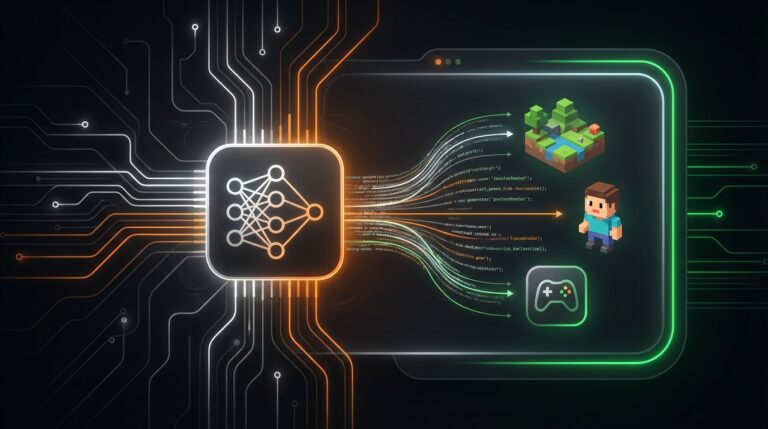
- Generative Game Creation: The latest frontier is using AI as a complete creation tool. Platforms like MakeGamesWithAI leverage a powerful game engine: AI-powered, no-code game creation to turn natural language prompts into fully playable games. A user can simply describe an idea—”create a 3D platformer where a robot collects batteries on a floating island”—and the AI builds the world, mechanics, and objectives in seconds.
Types of AI Used in Game Development
Game developers employ various AI techniques, ranging from simple to highly complex. While you don’t need to be an expert in all of them, understanding the concepts helps appreciate what’s happening behind the scenes.
- Finite State Machines (FSMs): A foundational model where a character has a limited number of states (e.g., ‘idle’, ‘patrolling’, ‘attacking’) and transitions between them based on specific triggers. It’s simple, reliable, and widely used for basic NPC logic.
- Behavior Trees: An evolution of FSMs, behavior trees provide a more flexible and scalable way to define complex behaviors. They allow for a hierarchy of tasks, making it easier to create nuanced AI that can prioritize actions, like deciding whether to seek cover or return fire.
- Machine Learning (ML): This is where AI truly starts to learn. Instead of following pre-programmed rules, ML models are trained on vast datasets to recognize patterns and make their own decisions. Understanding the basics of machine learning for games reveals how it can be used to create NPCs that learn from players, balance game difficulty automatically, or detect cheating.
- Generative AI: This category includes large language models (LLMs) and diffusion models that are trained to generate new content. In game development, this is the technology that powers tools that create art, write dialogue, and even build entire games from text prompts. An AI game creator uses this to interpret a user’s vision and translate it into a functional, interactive experience.
Benefits of AI in Game Development
Integrating AI into the game development process offers significant advantages for both developers and players. It’s not just about making games better; it’s about making the creation process more efficient and accessible.
- Enhanced Player Immersion: Smart, unpredictable AI creates a more believable and challenging world. When enemies flank you and allies support you intelligently, the game feels more alive.
- Increased Replayability: AI-driven procedural generation ensures that no two playthroughs are exactly the same, offering players endless new content to explore.
- Accelerated Development: AI tools can automate repetitive tasks like level design, asset creation, and testing, freeing up developers to focus on creative vision and innovation.
- Democratization of Game Creation: This is perhaps the most exciting benefit. No-code platforms powered by generative AI remove the technical barriers to entry. Anyone with a great idea can now build and share a game without needing to learn complex programming languages or 3D modeling software.
How to Learn AI for Game Development
The path to using AI in game development has traditionally been steep, requiring a deep understanding of computer science, advanced mathematics, and programming languages like C++ or Python within engines like Unity or Unreal. While this route is still valid for those seeking to build AI systems from the ground up, a new, more accessible path has emerged.
Today, you don’t need to enroll in complex AI game development courses that focus on low-level coding. Instead, you can start creating immediately with no-code platforms. Tools like MakeGamesWithAI abstract away the complexity, allowing you to focus purely on your game idea. You learn by doing—describing mechanics, iterating with conversational chat, and seeing your changes come to life instantly. This hands-on approach is the fastest and most intuitive way to understand the principles of game design and AI’s role within it.
Start Creating with AI Today
You no longer have to choose between having a great game idea and having the technical skills to build it. AI has bridged that gap. With MakeGamesWithAI, you can move directly from concept to playable reality. Describe your game in plain language, choose from a library of high-quality assets, and let the AI generate your game in seconds.
Modify gameplay, add features, or adjust the difficulty using a simple chat interface. With live previews, global leaderboards, and instant publishing, you can share your creations with the world in minutes. The future of game development is collaborative, intuitive, and driven by creativity, not code. You can start building your first game for free and experience the power of generative AI firsthand.