AI for Game Development: What Is It & How Do You Use It?
AI for Game Development: What Is It and How to Use It?
Ever wondered how enemies in your favorite game seem to know exactly where you’re hiding? Or how a game world can feel endlessly unique and alive? The secret ingredient is Artificial Intelligence. AI is the engine that drives dynamic, responsive, and immersive experiences, transforming simple scripts into believable, thinking entities. But for many aspiring creators, the world of AI in game development can seem intimidating, filled with complex algorithms and steep learning curves.
What if you could harness the power of AI to build your dream game without a single line of code? The truth is, the landscape of game creation is changing. Modern tools are making AI more accessible than ever, moving beyond complex programming and into the realm of pure creativity. This guide will demystify AI for game development, explore how it’s used, and show you the fastest path to bringing your own AI-powered games to life.
What is AI in Game Development?
At its core, AI in game development refers to the techniques used to create the illusion of intelligence in non-player characters (NPCs) and game systems. It’s the logic that dictates how a computer-controlled character behaves, reacts, and adapts to the player’s actions. This can range from a simple Goomba in Super Mario Bros. walking back and forth to a complex squad of soldiers in a tactical shooter coordinating an attack.
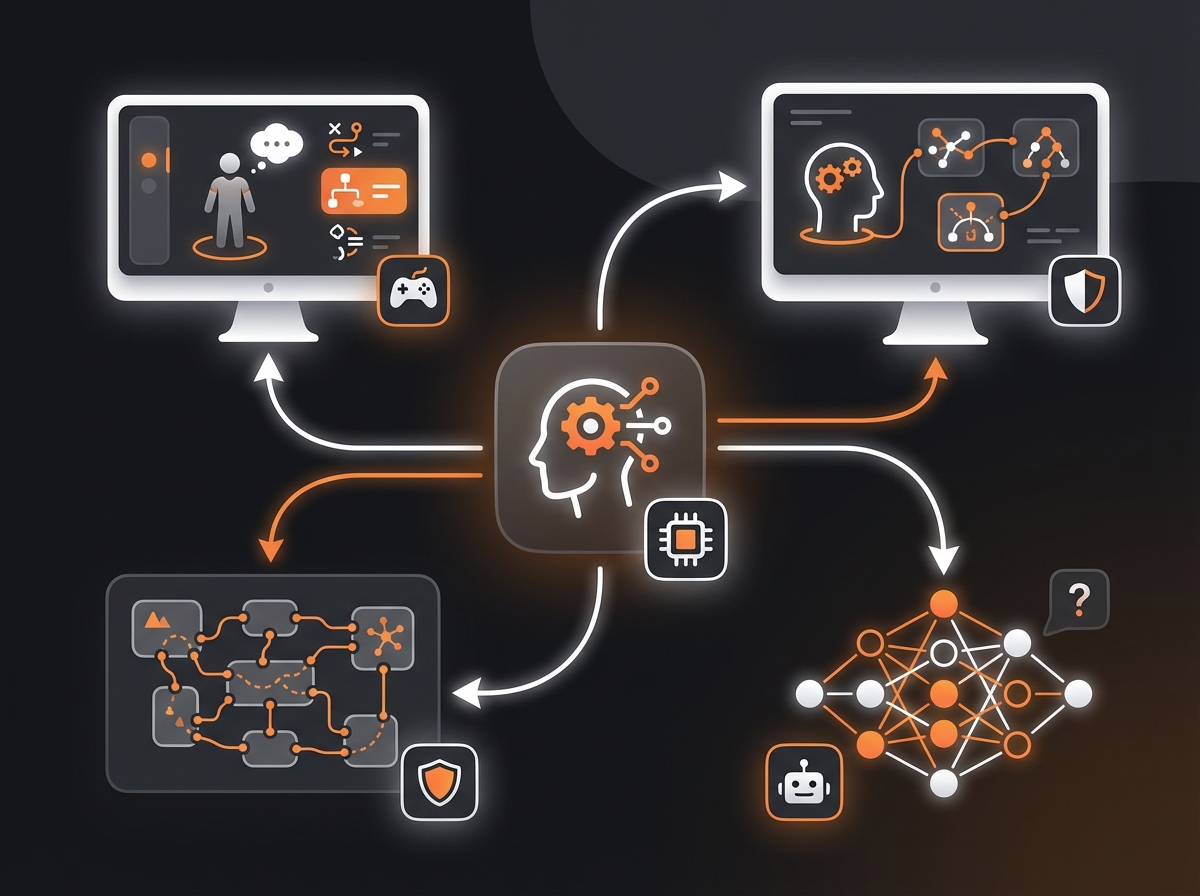
Traditionally, game AI was heavily scripted. Developers would write explicit rules for every possible situation—if the player is seen, attack; if health is low, retreat. While effective, this approach is rigid and predictable. Today, the field has evolved dramatically. Modern AI, particularly machine learning for games, allows characters to learn from player behavior, adapt their strategies, and even generate entirely new content on the fly, creating truly emergent and unpredictable gameplay.
How is AI Used in Game Development?
AI is not just about making smarter enemies. It’s a versatile toolset that enhances nearly every aspect of a game, from world-building to player experience. The goal is to create a more engaging, believable, and replayable world for the player to inhabit.
Here are some of the most common applications:
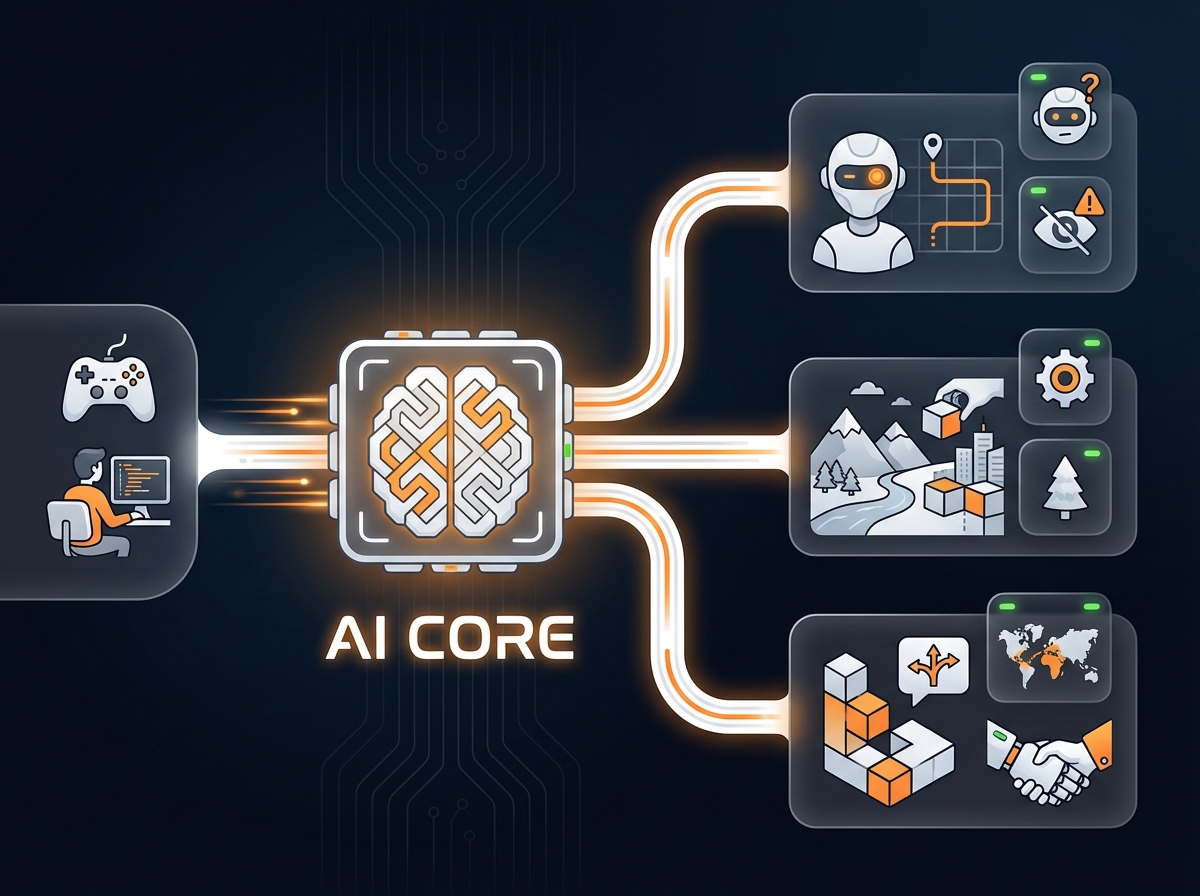
- NPC Behavior: This is the most classic use case. AI controls how friendly and enemy characters navigate the world, make decisions, and interact with the player. This includes everything from a merchant’s daily routine in an RPG to a boss’s complex attack patterns.
Pathfinding: How do characters move from point A to point B without walking through walls? AI algorithms like A (A-star) calculate the most efficient route, navigating complex terrain, avoiding obstacles, and even chasing the player.
Procedural Content Generation (PCG): AI can be used to automatically generate game content, such as levels, maps, quests, or items. This technique is behind the infinite worlds of games like No Man’s Sky and the endlessly replayable dungeons of Hades*, ensuring no two playthroughs are exactly the same.
- Dynamic Difficulty Adjustment: An advanced AI can monitor a player’s performance and adjust the game’s difficulty in real-time. If you’re struggling, the game might offer more health packs or reduce enemy accuracy. If you’re dominating, it might introduce tougher challenges to keep you engaged.
- Player Experience and Personalization: AI can analyze how you play and tailor the experience to you. This can manifest as personalized tutorials, unique story branches based on your choices, or even dynamically generated music that matches the on-screen action.
Types of AI Used in Game Development
Game developers have a variety of AI techniques at their disposal, each suited for different tasks. Historically, these required deep technical knowledge and were implemented within a traditional AI-powered game engine.
- Finite State Machines (FSMs): A simple model where a character has a finite number of states (e.g., ‘patrolling,’ ‘chasing,’ ‘attacking’) and transitions between them based on specific triggers (e.g., ‘sees player,’ ‘loses sight of player’). It’s straightforward but can become unwieldy for complex behaviors.
- Behavior Trees: A more advanced and flexible alternative to FSMs. They organize complex decisions into a tree-like structure, allowing for more sophisticated and modular NPC logic. They are a staple in modern AAA game development.
Pathfinding Algorithms: As mentioned, algorithms like A and Dijkstra’s are used to find the optimal path for characters to navigate the game world. They are fundamental for any game involving movement.
- Machine Learning (ML) & Neural Networks: This is the cutting edge. Instead of being explicitly programmed, an ML model can be trained on data to learn behaviors. This can be used for creating hyper-realistic opponents that learn from the player, generating natural-sounding dialogue, or even balancing game mechanics automatically.
- Generative AI: The newest frontier. Platforms using generative AI can create game logic, assets, and even entire playable levels from simple text prompts. This approach dramatically lowers the barrier to entry, allowing anyone to create games without needing to master the complex systems listed above.
How to Get Started with AI in Game Development
Feeling inspired to build your own AI-driven game? There are two distinct paths you can take: the traditional, code-heavy route and the modern, AI-first approach.
For those who want to create, not just study, the choice is clear. While traditional AI game development courses focus on theory and code, a generative platform lets you build and iterate in real-time.
Create Your First AI-Powered Game in Minutes
Why spend months learning complex programming languages and algorithms when you can start creating today? MakeGamesWithAI is a revolutionary no-code platform designed for creators, not just coders. Trusted by over 15,000 aspiring developers, our platform lets you generate complete, playable games using simple text prompts.
Describe your game idea, choose your assets, and watch as our AI brings it to life in seconds. You can modify gameplay, add features, and balance difficulty through a simple chat interface, seeing your changes happen live. There’s no need to write a single line of code. You can build unlimited games, add global leaderboards, and publish your creations instantly with a shareable link.
If your goal is to make games powered by AI, don’t get stuck learning the old way. Embrace the future of game development. Start with your first free game on MakeGamesWithAI and experience the power of creating at the speed of thought.