AI Game Sound Effects Generator: A 2025 Guide
In the world of game development, sound is not just an accessory; it’s the lifeblood of immersion. The clang of a sword, the roar of a dragon, or the subtle hum of a starship’s engine can make the difference between a good game and an unforgettable experience. For years, creating this custom audio has been a significant hurdle, requiring specialized skills, expensive software, or endless searching through stock libraries. But in 2025, a new technology is changing the soundscape of gaming: the AI game sound effects generator.
These revolutionary tools are democratizing sound design, allowing developers of all skill levels to generate unique, high-quality audio in seconds. They represent a monumental leap forward, turning a once-complex process into a simple act of creative expression.
What is an AI Game Sound Effects Generator?
An AI game sound effects generator is a tool that uses artificial intelligence to create completely new audio effects from user input, most commonly a text description. Think of it as a text-to-image generator like Midjourney, but for sound. You simply describe the audio you need—for example, “a magical spell charging up with crackling energy”—and the AI synthesizes a corresponding sound file from scratch.
At its core, this technology relies on advanced machine learning models, such as audio-diffusion models or Generative Adversarial Networks (GANs). These models are trained on vast datasets containing millions of sound samples, from everyday noises to complex musical compositions. By analyzing this data, the AI learns the intricate relationships between descriptive words and the physical properties of sound waves, like frequency, amplitude, and timbre. It doesn’t just find and play a pre-existing sound; it generates an entirely new one based on your creative prompt.
Why AI-Generated Sound is a Game-Changer for Developers
The shift towards AI-powered sound design isn’t just a novelty; it solves fundamental challenges that have long plagued game creators, especially those on smaller teams or with limited budgets. The benefits are transforming development workflows across the industry.
Speed and Efficiency
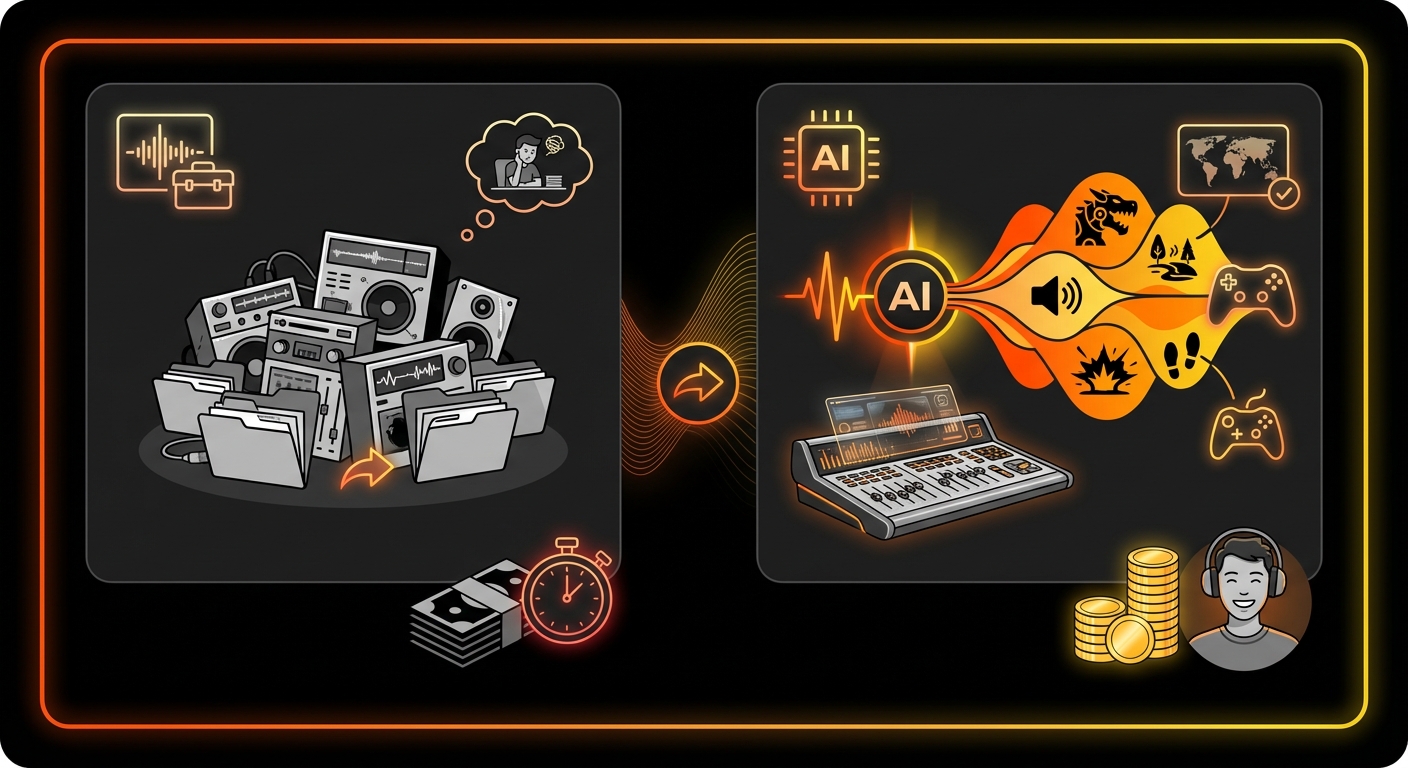
Traditionally, a sound designer might spend hours recording foley, synthesizing sounds, or sifting through terabytes of audio libraries to find the right effect. An AI generator condenses this process into minutes. This incredible speed allows developers to iterate on their game’s audio just as quickly as they iterate on gameplay, ensuring the sound perfectly matches the action.
Unprecedented Creative Freedom
Stock audio libraries are often limiting. You might find a footstep sound, but is it the right footstep for a 300-pound ogre walking on wet moss? With an AI game sound effects generator, you can specify exactly what you need. This unlocks limitless creative potential, empowering developers to craft a unique and cohesive audio identity for their games without compromise.
Major Cost Reductions
Professional sound design is expensive. Licensing high-quality audio libraries can cost hundreds or thousands of dollars, and hiring a foley artist or sound engineer is often out of reach for indie developers. AI generators dramatically lower this barrier to entry, making professional-grade sound accessible to everyone. This cost-saving philosophy is central to platforms like MakeGamesWithAI, which provide a full suite of assets to remove financial roadblocks for creators.
Consistency in Art Style
Maintaining a consistent audio aesthetic is crucial for world-building. By using a single AI model with carefully crafted prompts, developers can ensure that all their sound effects share a similar character and feel, reinforcing the game’s unique atmosphere. Whether your game is a retro pixel-art adventure or a hyper-realistic sci-fi epic, the audio can be tailored to match.
How Do AI Sound Generators Work? A Simple Breakdown
While the underlying technology is complex, using an AI sound generator is surprisingly straightforward. The process can be broken down into three simple steps.
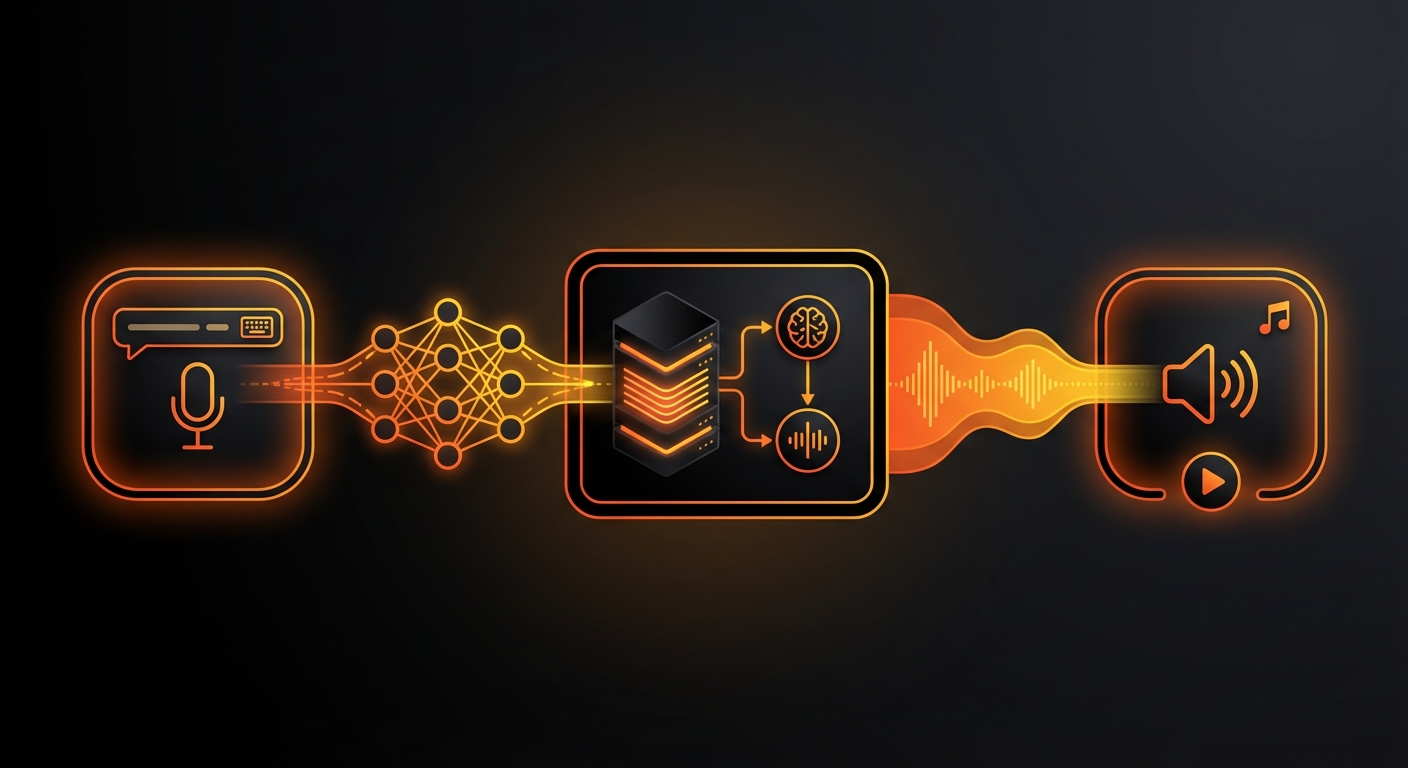
- The Input (The Prompt): It all starts with your description. The more detailed your prompt, the better the result. Instead of just “explosion,” you might write, “a low, muffled explosion deep underwater with a bubbling aftermath.” Users can often add negative prompts (e.g., “no metallic sounds”) and specify parameters like duration.
- The AI ‘Brain’ (The Model): Once you submit the prompt, the AI model gets to work. It deconstructs your language, identifying key concepts (“muffled,” “underwater,” “bubbling”) and translating them into audio characteristics. It draws upon its extensive training to understand how these concepts should sound and interact.
- The Output (The Sound Effect): The model then synthesizes a new audio waveform that matches the prompt’s description. The result is a completely original, royalty-free sound effect ready to be dropped into your game. Most tools allow you to generate multiple variations, so you can pick the one that fits best.
Practical Applications in Game Development
AI-generated audio is not just for one specific task; it’s a versatile tool that can enhance nearly every aspect of a game’s sound design. This is particularly powerful for those engaged in game development for beginners, as it simplifies a historically technical discipline.
Here are a few key applications:
- Rapid Prototyping: Instantly generate placeholder sounds to test game mechanics. Getting immediate audio feedback for actions like jumping or shooting helps developers fine-tune the