Best AI Tools for Game Design in 2026
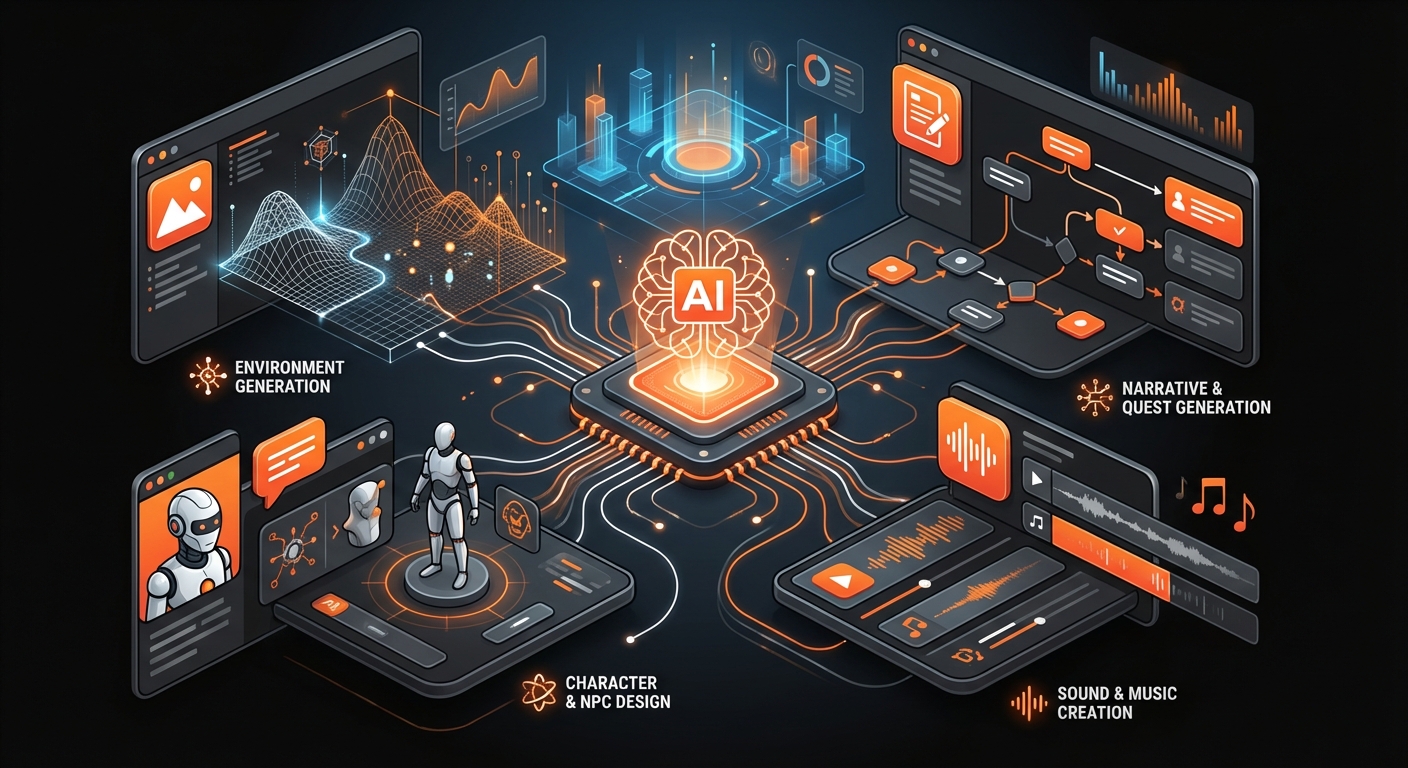
The world of game development is undergoing a seismic shift in 2026, driven by artificial intelligence. What once required years of coding experience and massive teams can now be accomplished faster and more creatively than ever before. AI is no longer a futuristic concept but a practical toolkit that empowers creators to build immersive worlds, design unique assets, and even generate entire games from simple text prompts. This guide explores the best AI tools for game design, offering powerful solutions for every stage of the creation process. Whether you’re a seasoned developer looking to streamline your workflow or a complete beginner with a brilliant idea, these platforms are revolutionizing how games are made.
Understanding the landscape of what AI game development is is the first step. These tools aren’t here to replace human creativity; they’re here to amplify it. By automating repetitive tasks and providing powerful new avenues for ideation, AI allows developers to focus on what truly matters: crafting fun, engaging, and memorable experiences. Let’s dive into the top platforms leading the charge.
The Top AI Platforms for Game Creation in 2026
Here are the most innovative and impactful AI tools that are shaping the future of game design this year.
1. MakeGamesWithAI
Topping our list is MakeGamesWithAI, a revolutionary platform that has truly democratized game development. Its core mission is to eliminate the technical barriers that have long stood between a creative idea and a playable game. MakeGamesWithAI allows users to generate a complete, playable game from a simple text prompt in mere seconds. This makes it an unparalleled tool for rapid prototyping, game jams, or for aspiring creators who want to see their vision come to life without writing a single line of code.
The platform goes far beyond simple generation. Once your game is created, you can jump into a powerful, intuitive no-code editor to tweak, customize, and expand upon the AI’s creation. With a library of over 100 professional gaming assets—including characters, environments, and special effects—the possibilities for customization are vast. Features like chat-based editing, live previews, and instant deployment remove friction from the creative process, allowing you to iterate quickly and share your game with the world. This focus on accessibility and speed makes it one of the absolute best game creation tools for beginners on the market.
#### Key Features of MakeGamesWithAI:
- Idea-to-Game Generation: Describe your game idea in plain English and watch the AI build a functional prototype instantly.
- No-Code Editor: A user-friendly, visual editor for modifying game mechanics, levels, and assets without coding.
- Instant Publishing: Deploy your game online with a single click and share it via a link. Check out our guide on how to publish games online for more tips.
- AI Assistant: Get intelligent suggestions for enhancing your game, from adding new levels to improving player engagement.
- Community Hub: Connect with other creators, share your projects, and collaborate on new ideas.
2. Promethean AI
For professional artists and level designers working in traditional game engines like Unreal Engine, Promethean AI is an indispensable co-pilot. This sophisticated tool functions as an AI assistant that helps artists build and populate complex virtual environments. Instead of manually searching through dense asset libraries, designers can use natural language commands like, “Cover this hillside with pine trees and scattered boulders,” and Promethean AI will intelligently find and place the appropriate assets.
This technology dramatically accelerates the world-building process, which is often one of the most time-consuming aspects of AAA game development. It learns from the artist’s choices, becoming more effective and personalized over time. By handling the tedious work of asset placement and environment dressing, Promethean AI frees up artists to focus on the broader creative vision, composition, and lighting of a scene. It’s a prime example of AI augmenting professional workflows rather than replacing them, leading to richer, more detailed game worlds created in a fraction of the time.
#### Key Details:
- Primary Use: AI-assisted environment art and level design.
- Integration: Works as a plugin for major game engines like Unreal Engine.
- Core Feature: Natural language commands for asset search and placement.
- Best For: Professional 3D artists and large development teams looking to boost productivity.
3. Scenario.gg
Consistent and high-quality art is crucial for a game’s identity, and Scenario.gg is a generative AI platform built specifically to address this need. While general-purpose AI image generators can produce stunning visuals, they often struggle with maintaining a consistent style across multiple assets. Scenario solves this by allowing users to train their own custom AI models on a specific art style. You can upload your existing artwork, concept sketches, or mood boards, and the platform will generate new assets—from characters and props to icons and backgrounds—that perfectly match your game’s aesthetic.
This capability is a game-changer for indie developers and art teams. It ensures that every asset, whether for in-game use or marketing materials, feels cohesive and professional. The platform provides a streamlined workflow for generating, editing, and exporting assets, making it an essential part of the modern art pipeline. For teams that want to establish a unique visual identity without the massive overhead of creating every single asset from scratch, Scenario offers an incredibly powerful and efficient solution.
#### Key Details:
- Primary Use: Generating style-consistent 2D game assets.
- Core Feature: Custom AI model training for unique art styles.
- Asset Types: Characters, props, environments, icons, and marketing visuals.
- Best For: Art directors, concept artists, and indie teams needing a high volume of cohesive assets.
4. Inworld AI
Inworld AI is at the forefront of creating intelligent, believable, and dynamic non-player characters (NPCs). Traditional NPCs are often limited to repetitive, pre-written dialogue trees, which can make game worlds feel static and lifeless. Inworld’s Character Engine allows developers to design NPCs with distinct personalities, memories, and motivations. These characters can engage in open-ended, unscripted conversations with the player, reacting dynamically to events and information in the game world.
By integrating Inworld, developers can create truly immersive narrative experiences where players form genuine connections with the characters. An NPC can remember a player’s previous actions, express emotions, and pursue its own goals, leading to emergent gameplay and storytelling. This moves beyond simple dialogue generation and into the realm of true AI-driven character performance. It’s a powerful tool for RPGs, adventure games, and any title that relies heavily on narrative and world-building to engage the player.
#### Key Details:
- Primary Use: Creating intelligent and interactive NPCs.
- Core Feature: AI-driven personalities, memories, and dynamic dialogue.
- Integration: Offers SDKs for easy integration with Unity, Unreal Engine, and other platforms.
- Best For: Narrative designers and developers focused on creating immersive, story-driven games.
5. Ludo.ai
Every great game starts with a great idea, but creative blocks are a real challenge for every developer. Ludo.ai is an AI-powered creativity platform designed to assist during the earliest stages of game design: ideation and pre-production. By inputting keywords, themes, or mechanics, developers can use Ludo.ai to generate a wealth of game concepts, character ideas, and gameplay mechanics. It scours a massive database of existing games to identify trends, patterns, and opportunities for innovation.
Ludo.ai is more than just an idea generator; it’s a research tool. It provides analytics on market trends, helping developers understand what types of games are currently popular and what niches might be underserved. This data-driven approach to creativity helps teams validate their ideas early on, reducing the risk of developing a game that fails to find an audience. For solo developers and small teams, it’s like having a dedicated research assistant, providing the creative spark and market insights needed to kickstart a successful project.
#### Key Details:
- Primary Use: Game ideation, concept development, and market research.
- Core Feature: AI-powered generation of game concepts, mechanics, and images.
- Additional Tools: Trend analysis and a searchable game database.
- Best For: Game designers, producers, and anyone involved in the pre-production process.
The Future of Game Creation is Here
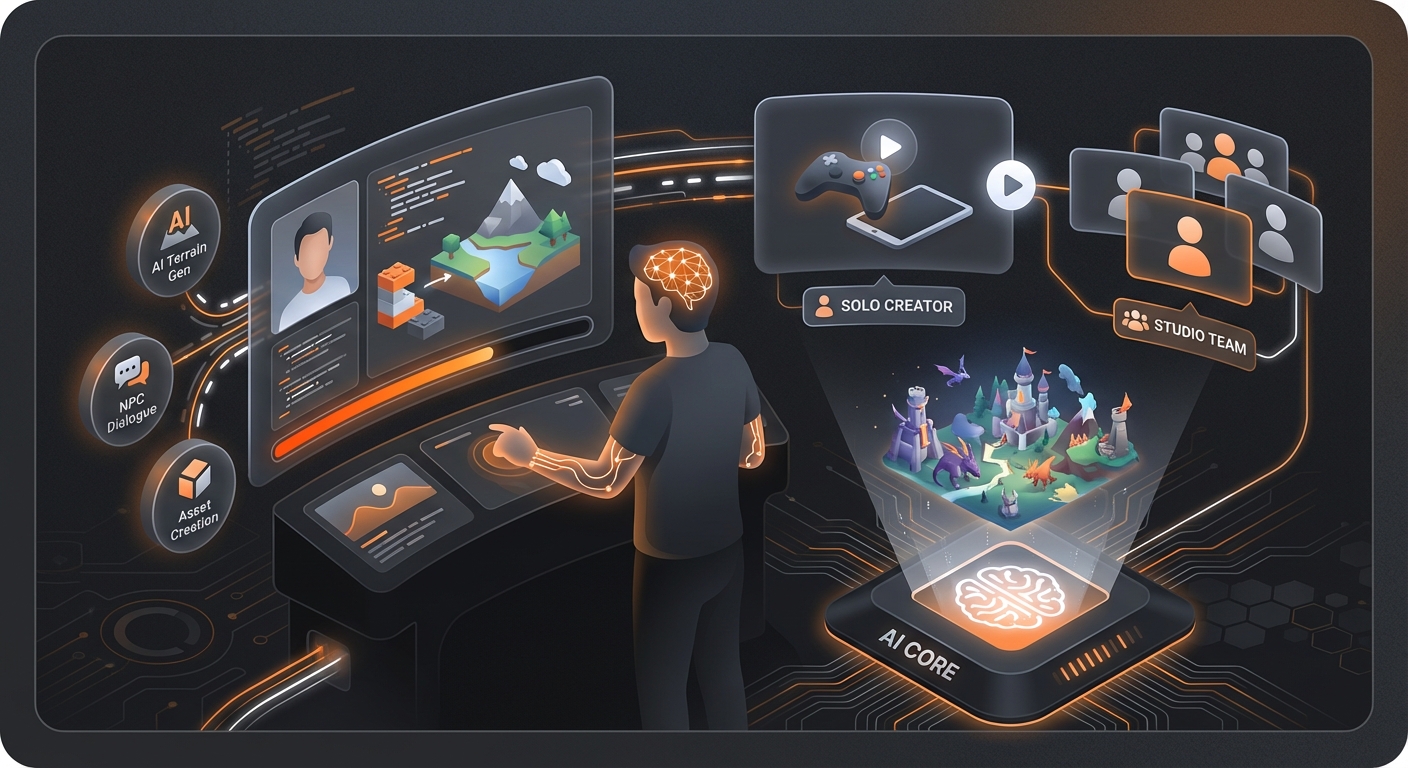
The rise of artificial intelligence has unlocked a new era of creativity and efficiency in game development. The best AI tools for game design in 2026 are already empowering studios and solo creators to build bigger, better, and more engaging experiences than ever before. From generating entire playable worlds to breathing life into characters, these platforms are essential for anyone looking to stay at the cutting edge of the industry.
Whether you’re a professional artist looking to speed up your workflow with a tool like Promethean AI or a creative individual eager to build games without coding, there is an AI solution ready to help. For those ready to jump in and start creating today, platforms like MakeGamesWithAI offer the most direct and accessible path from a simple idea to a fully published game, truly opening the doors of game development to everyone.