How to Build Games Without Coding in 2026
Have you ever dreamed of creating your own video game but felt intimidated by the steep learning curve of programming languages? In 2026, that barrier is lower than ever. The rise of powerful no-code and AI-driven platforms has democratized game development, allowing creative minds to bring their visions to life without writing a single line of code. This guide will show you exactly how to build games without coding, transforming your idea from a concept into a playable reality.
Why Build Games Without Code in 2026?
The shift towards codeless development isn’t just a trend; it’s a fundamental change in how games are made. For aspiring developers, artists, and storytellers, this approach offers unprecedented advantages:
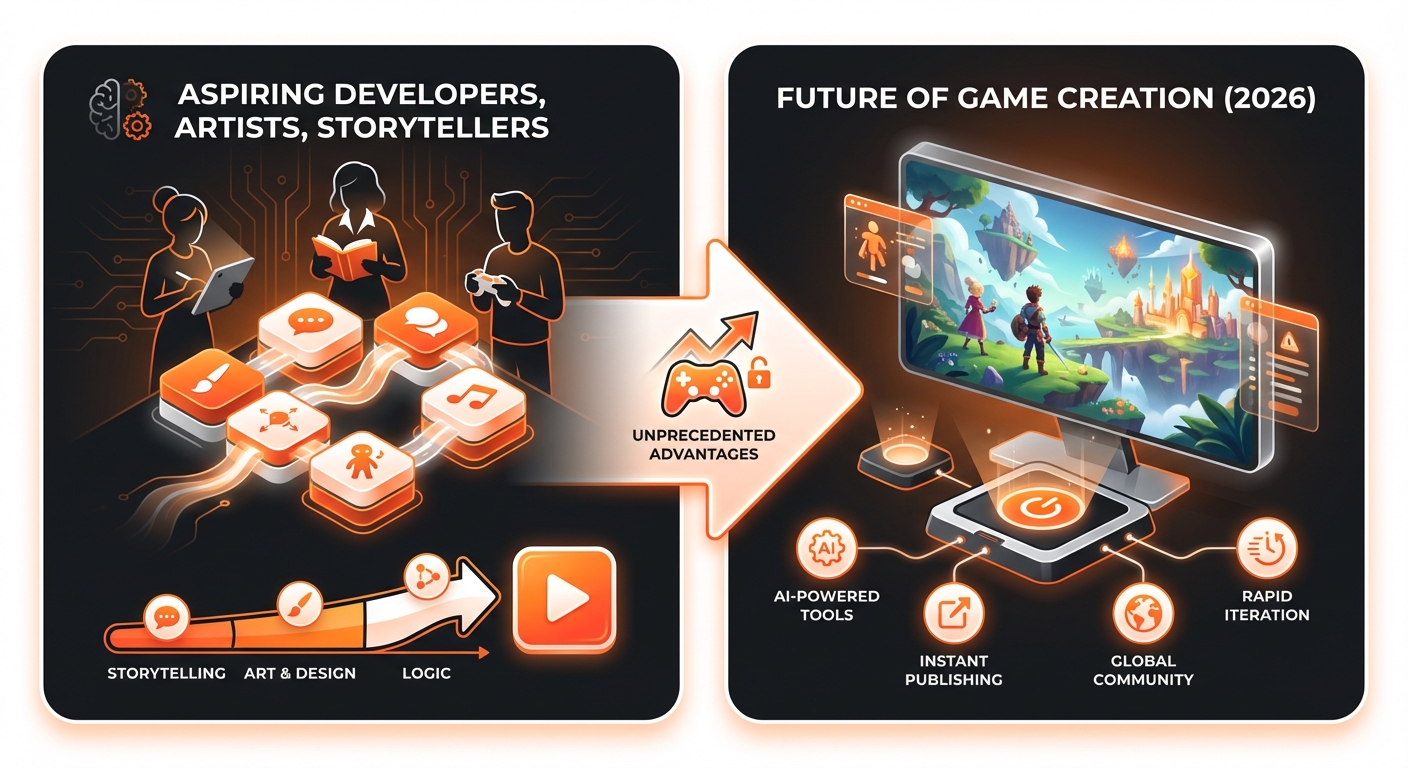
- Accessibility: It opens the door to anyone with a great idea, regardless of their technical background.
- Speed: You can prototype and build games in a fraction of the time it would take with traditional coding, allowing for rapid iteration and testing.
- Focus on Creativity: By removing the technical hurdles, you can concentrate on what truly matters: game design, storytelling, and player experience.
- Cost-Effectiveness: Many no-code tools are more affordable than hiring a development team, making them ideal for solo creators and small studios.
A Step-by-Step Guide to No-Code Game Creation
Building a game without code is a structured process. By following these steps, you can systematically develop your project from initial idea to final launch.
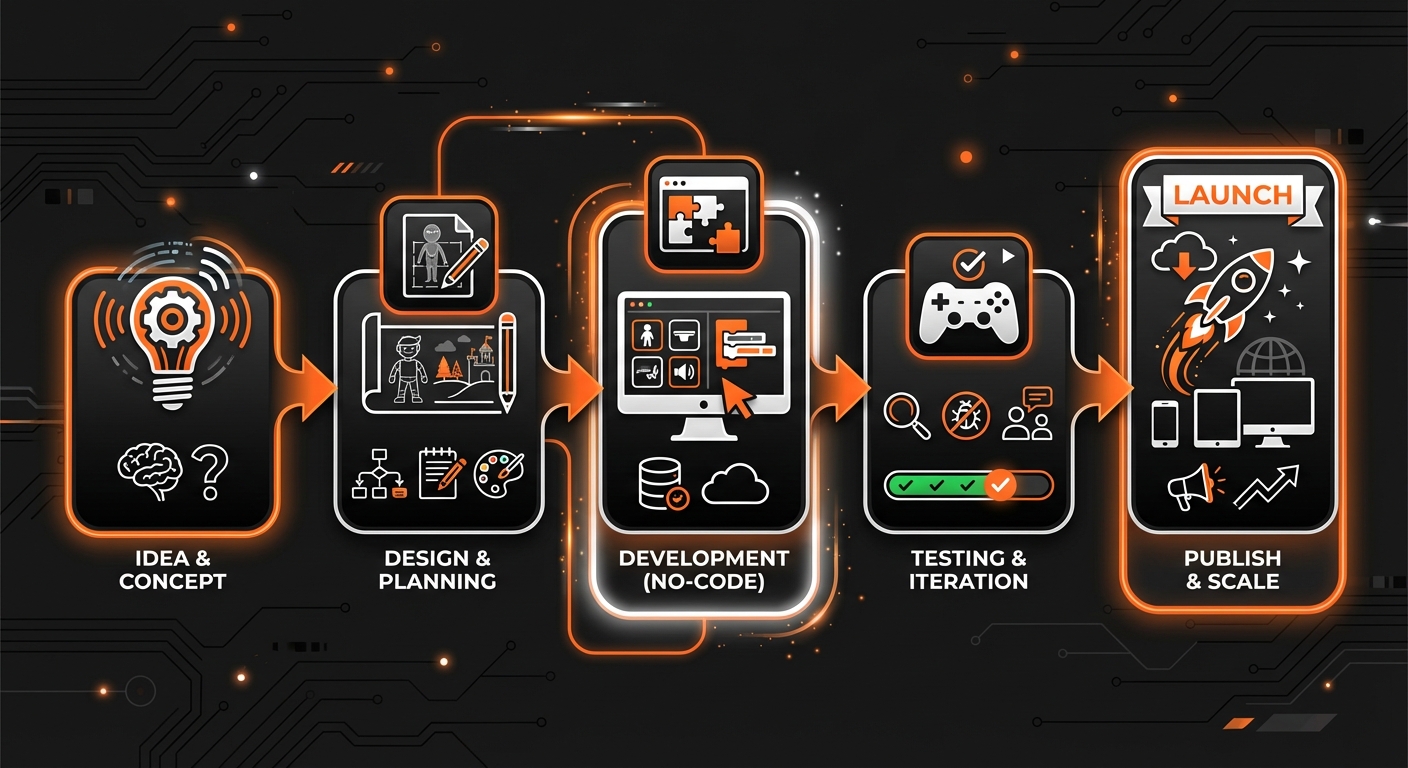
Step 1: Conceptualize Your Game Idea
Before you touch any software, you need a solid concept. This is the foundation upon which your entire game will be built. Spend time defining the core elements:
- Genre: Is it a puzzle game, a platformer, a role-playing game (RPG), or a narrative adventure?
- Core Mechanic: What is the primary action the player will perform? (e.g., jumping, solving puzzles, making choices).
- Target Audience: Who are you making this game for?
- Unique Selling Proposition (USP): What makes your game different from others in the same genre?
Tip: Keep your initial concept simple. Your first project should be small and achievable. You can always build more complex games later.
Step 2: Choose the Right No-Code Platform
Your choice of platform will define your entire development experience. In 2026, the options are more powerful and diverse than ever. Look for platforms that offer:
- Visual Scripting: Instead of writing code, you connect nodes or blocks to create game logic. This is a visual way to program behavior.
- Drag-and-Drop Interface: An intuitive system for building levels and user interfaces.
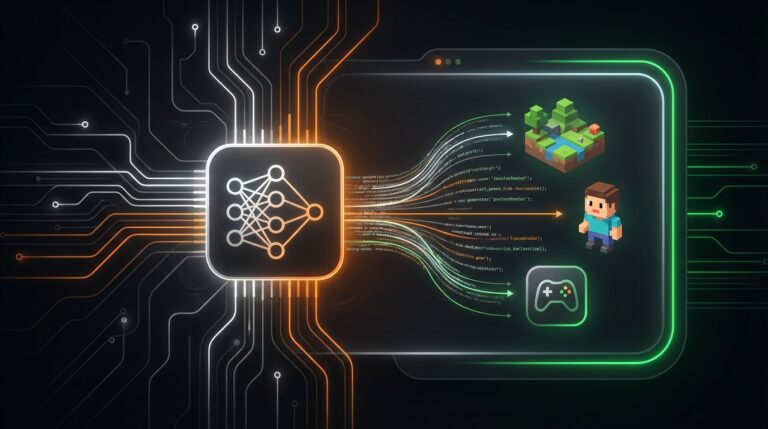
- AI-Powered Generation: The most significant advancement is the integration of AI. Platforms like MakeGamesWithAI use artificial intelligence to help generate assets, game logic, and even entire level layouts based on simple text prompts. This drastically accelerates the creative process.
When evaluating platforms, consider their community support, available tutorials, and export options. A strong community can be an invaluable resource when you encounter challenges. For a deeper dive into modern tools, explore our guide on Make Games with AI: No-Code Game Creation for 2026.
Step 3: Design and Prototype Your Core Mechanics
With your platform selected, it’s time to build the heart of your game: the core gameplay loop. Focus on creating a small, playable prototype that demonstrates the main mechanic. For a platformer, this would be character movement and jumping. For a puzzle game, it would be the central puzzle-solving interaction.
This prototype, often called a