How to Use AI in Game Design: A 2026 Guide
The landscape of game development is undergoing its most significant transformation yet. In 2026, artificial intelligence is no longer a futuristic concept but a practical, powerful tool integrated into every stage of the creation process. For aspiring developers and seasoned creators alike, understanding how to use AI in game design is essential for building innovative, engaging, and successful games. This guide provides a clear, step-by-step roadmap to harnessing AI, turning your creative vision into a playable reality faster than ever before.
Why AI is a Game-Changer in Game Design
Before diving into the ‘how,’ it’s crucial to understand the ‘why.’ AI is revolutionizing game design by democratizing development and amplifying creativity. Traditionally, creating a game required deep expertise in coding, art, and complex software. Today, AI acts as a skilled co-pilot, automating technical tasks and allowing you to focus purely on the design and player experience.
AI-powered tools can:
- Accelerate Prototyping: Generate concepts, assets, and even playable mechanics in minutes.
- Enhance Creativity: Offer unique ideas for stories, characters, and worlds, breaking through creative blocks.
- Create Dynamic Worlds: Build adaptive environments and intelligent non-player characters (NPCs) that react realistically to players.
- Lower the Barrier to Entry: Empower individuals without coding knowledge to build and publish complete games.
This shift means your great game idea no longer has to stay on the back burner. With the right approach, you can start building it today.
A Step-by-Step Guide to Using AI in Your Game Design Workflow
Integrating AI into your process is a structured journey. By tackling it one step at a time, you can effectively leverage its power without feeling overwhelmed. For a broader overview, check out our guide on how to design games with AI in 2026.
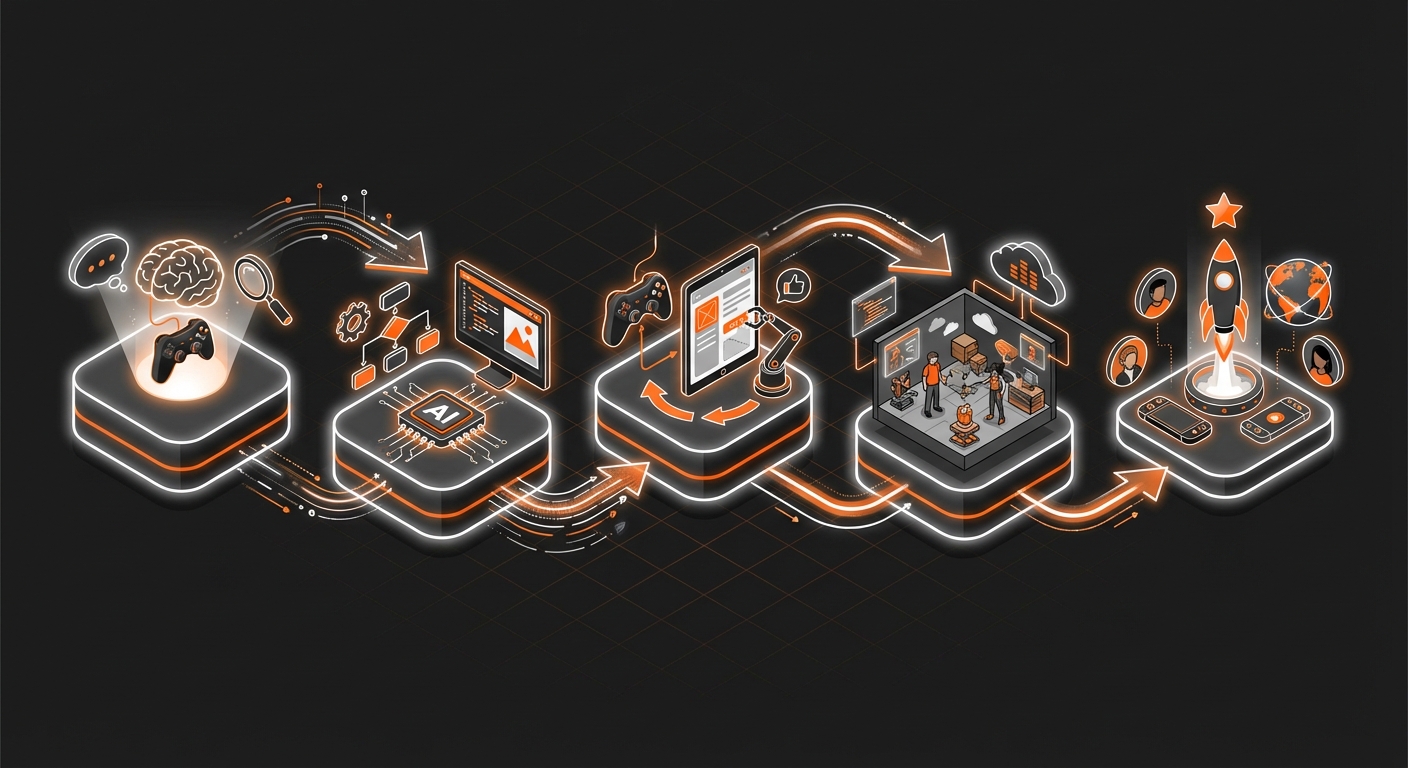
Step 1: Ideation and Concept Generation
Every great game starts with an idea. AI can be your ultimate brainstorming partner, helping you explore and refine your initial concepts.
Start by using a large language model (LLM) to generate ideas. Instead of a simple prompt like “give me a game idea,” be specific. Try prompts like:
- “Generate five unique game concepts that blend the cyberpunk genre with ancient mythology.”
- “Create a backstory for a reluctant hero who is a botanist in a post-apocalyptic world.”
- “Brainstorm three core gameplay mechanics for a puzzle-platformer set inside a giant clock.”
Pro-Tip: Iterate on the AI’s suggestions. Take a concept you like and ask the AI to expand on it, create character profiles, or outline a potential story arc. This collaborative process can lead to truly original ideas.
Step 2: Asset Creation and Prototyping
Once you have a concept, you need visuals. AI-powered asset generation has become incredibly sophisticated, allowing you to create everything from character sprites to entire 3D environments with simple text prompts.
- 2D Assets: Use AI image generators to create character portraits, icons, textures, and background art.
- 3D Models: Newer AI tools can now generate and texture 3D models from text or image inputs, dramatically speeding up the modeling process.
- Procedural Content Generation (PCG): Use AI to generate vast, non-repeating game levels, dungeons, or open worlds. This ensures every playthrough feels unique.
Platforms like MakeGamesWithAI simplify this even further by providing a massive, integrated library of over 100 professional, AI-enhanced assets. This allows you to skip the generation step and jump right into building your world with high-quality, customizable visuals. For more options, see our list of the top 6 sources for customizable game assets in 2026.
Step 3: Crafting Intelligent NPCs and Dynamic Narratives
AI is breathing new life into NPCs, moving them beyond repetitive, scripted dialogue. By 2026, players expect characters who feel alive.
Use AI to give your NPCs dynamic personalities and behaviors. Instead of a simple dialogue tree, you can use an LLM to power conversations, allowing players to ask any question and receive a contextually relevant, in-character response. You can also program AI to control NPC behavior, enabling them to learn from player actions, coordinate in groups, or react realistically to changes in their environment. This is a core part of learning how to use AI in game design to create immersive experiences.
Step 4: Automating Game Logic and Mechanics
This is where AI truly shines for non-coders. In the past, implementing game mechanics required writing thousands of lines of code. Now, AI can translate natural language into functioning game logic.
With AI-driven game engines, you can use simple commands like:
- “When the player touches this coin, increase their score by 10.”
- “Make this enemy patrol between these two points and chase the player if they get too close.”
- “Create a power-up that gives the player temporary invincibility for 5 seconds.”
Platforms designed for this purpose, including our own MakeGamesWithAI, feature intuitive, chat-based editors. You simply tell the AI assistant what you want to happen, and it writes and implements the code for you, showing you a live preview instantly. This makes iteration incredibly fast and accessible. It’s a key reason these tools top the list of the best AI game development tools of 2026.
Step 5: Testing and Player Behavior Analysis
Game testing is a laborious but critical phase. AI can automate much of this process by deploying AI agents to play your game thousands of times.
These AI testers can:
- Identify Bugs: They can explore every corner of your game, performing actions a human might not, to uncover critical bugs or game-breaking exploits.
- Balance Gameplay: By analyzing thousands of playthroughs, the AI can identify if a level is too difficult, a weapon is overpowered, or a puzzle is unsolvable.
- Analyze Player Behavior: AI can generate heatmaps showing where players spend the most time, where they get stuck, or which paths they prefer, providing invaluable data for level design improvements.
Warning: While AI testing is powerful, it should not completely replace human feedback. Human players provide essential qualitative insights into the game’s ‘fun factor’ that AI cannot yet replicate.
Common Mistakes to Avoid
As you integrate AI into your workflow, be mindful of these common pitfalls:
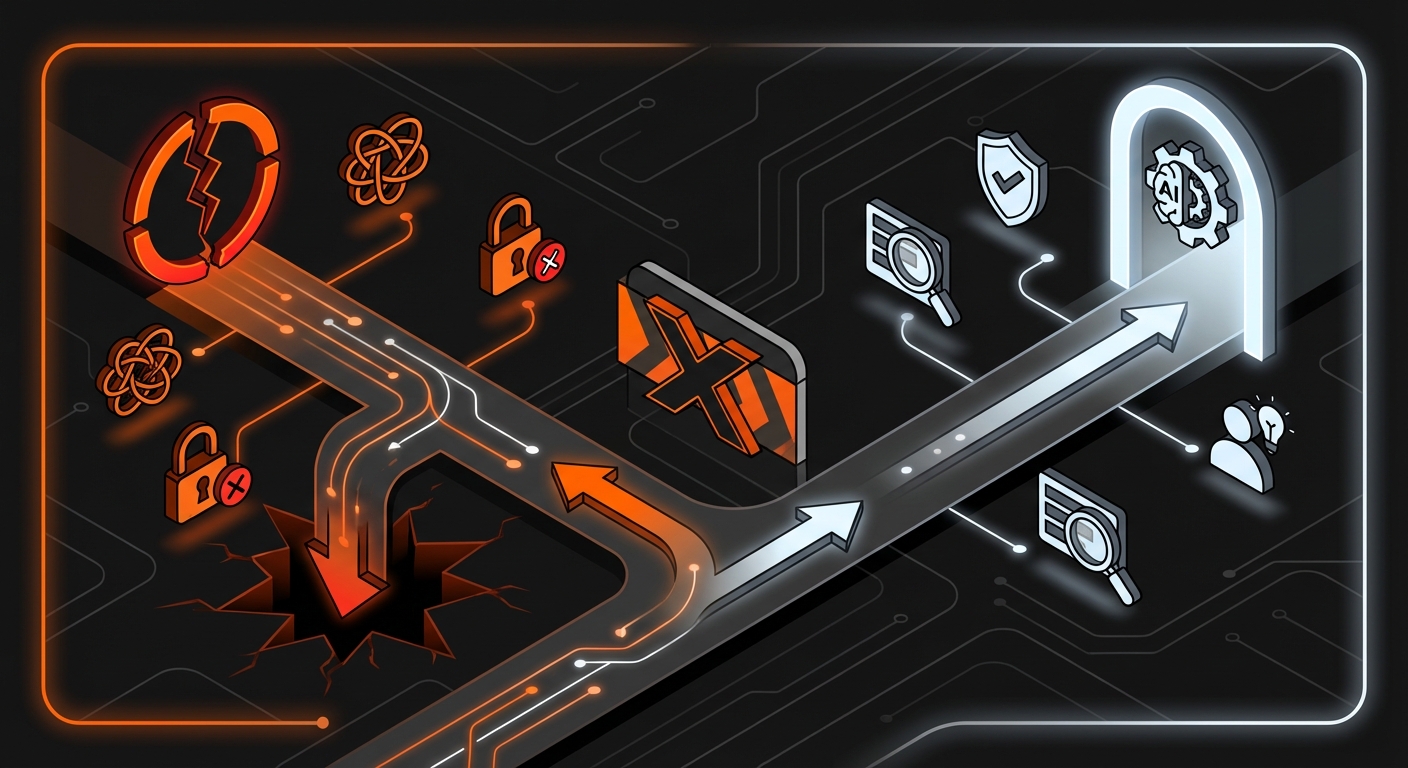
- Over-reliance on AI: Remember, AI is a tool, not the creator. Your unique vision, taste, and creativity are what make a game special. Use AI to execute, not to dictate.
- Ignoring Curation: Raw AI-generated content can sometimes feel generic or soulless. Always review, refine, and curate AI outputs to ensure they align with your game’s artistic direction and quality standards.
- Neglecting Performance: Complex AI systems, especially for NPC behavior, can be computationally expensive. Always test your game’s performance to ensure a smooth player experience.
- Using Vague Prompts: The quality of your AI’s output is directly proportional to the quality of your input. Be specific, provide context, and iterate on your prompts to get the best results.
Expected Results: Your Game, Supercharged by AI
By successfully following these steps, you will transform your game development process. The expected outcomes are significant:
- Drastically Reduced Development Time: What once took months can now be prototyped in days or even hours.
- Boundless Creative Exploration: You can test dozens of ideas for assets, mechanics, and stories without the traditional time and resource investment.
- Deeper, More Engaging Games: Your games will feature more intelligent characters, more dynamic worlds, and more personalized player experiences.
- The Power to Create, Unleashed: Most importantly, you will have the ability to bring your game ideas to life, regardless of your technical background.
By understanding how to use AI in game design, you are not just learning a new skill; you are embracing the future of interactive entertainment. The tools are here, and they are more accessible than ever. The only limit is your imagination.
Ready to start building? Platforms like MakeGamesWithAI are designed to make this entire process seamless, providing all the AI tools, assets, and publishing power you need in one place. Turn your idea into a game today.