AI in Game Development: Why Todd Howard’s Vision is a Reality with MakeGamesWithAI
Todd Howard is Right: AI Can’t Replace Creative Intention—It Amplifies It
During a recent press event, Bethesda’s Todd Howard offered a measured take on the role of AI in game development, stating, “Creative intention comes from human artists, number one.” He framed AI not as a replacement for creators, but as an evolution of the “toolset for how we build our worlds or check things.” While this sentiment places him in the sensible middle ground of a heated industry debate, it also perfectly describes the revolution happening right now—a shift from tools that assist creation to tools that manifest intention directly.
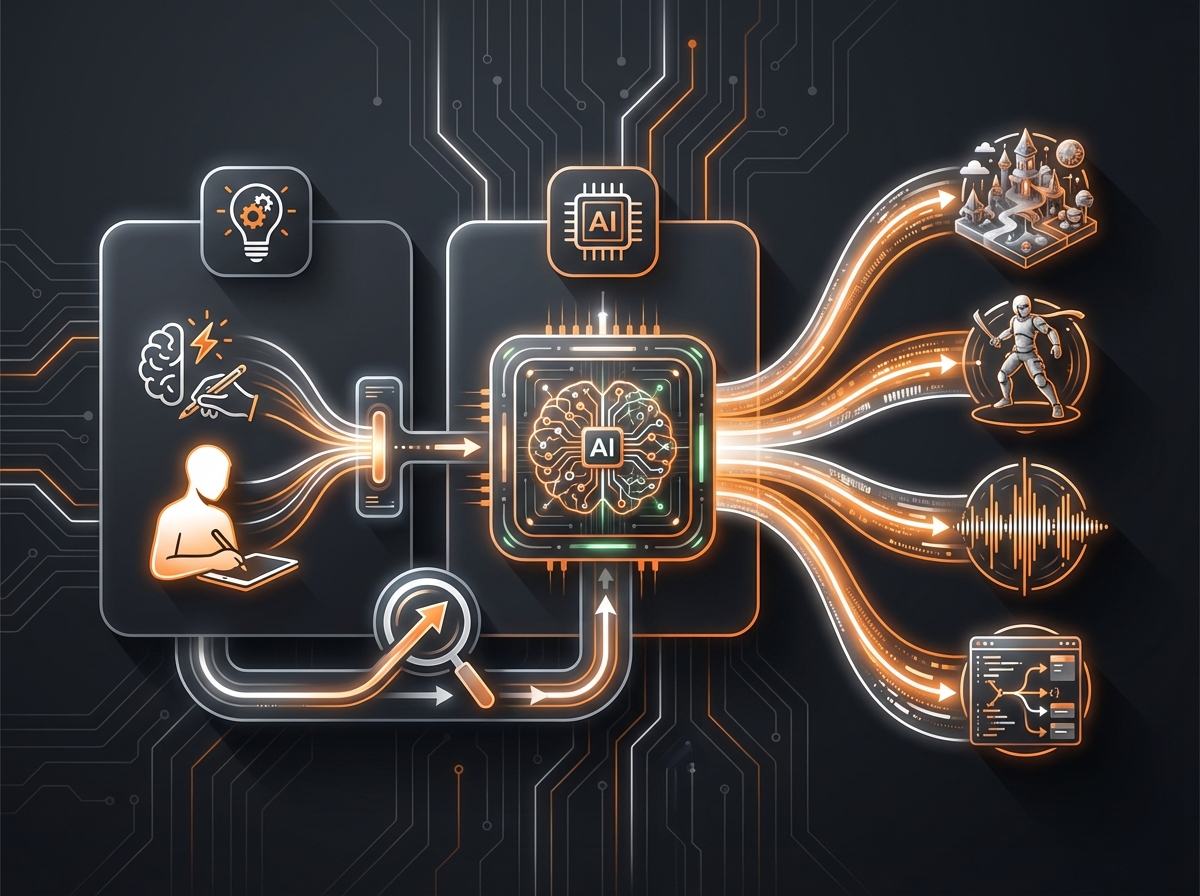
Howard’s core point is undeniable. The spark of an idea, the vision for a game world, the soul of a story—these are uniquely human. But for decades, the journey from that initial spark to a playable reality has been a marathon of technical hurdles, complex software, and specialized teams. The “creative intention” is often filtered and diluted through the very tools meant to bring it to life. This is where the true potential of AI in game development lies: not in replacing the artist, but in providing a more direct path from their mind to the screen.
The Evolving Toolset: From Photoshop to Prompt
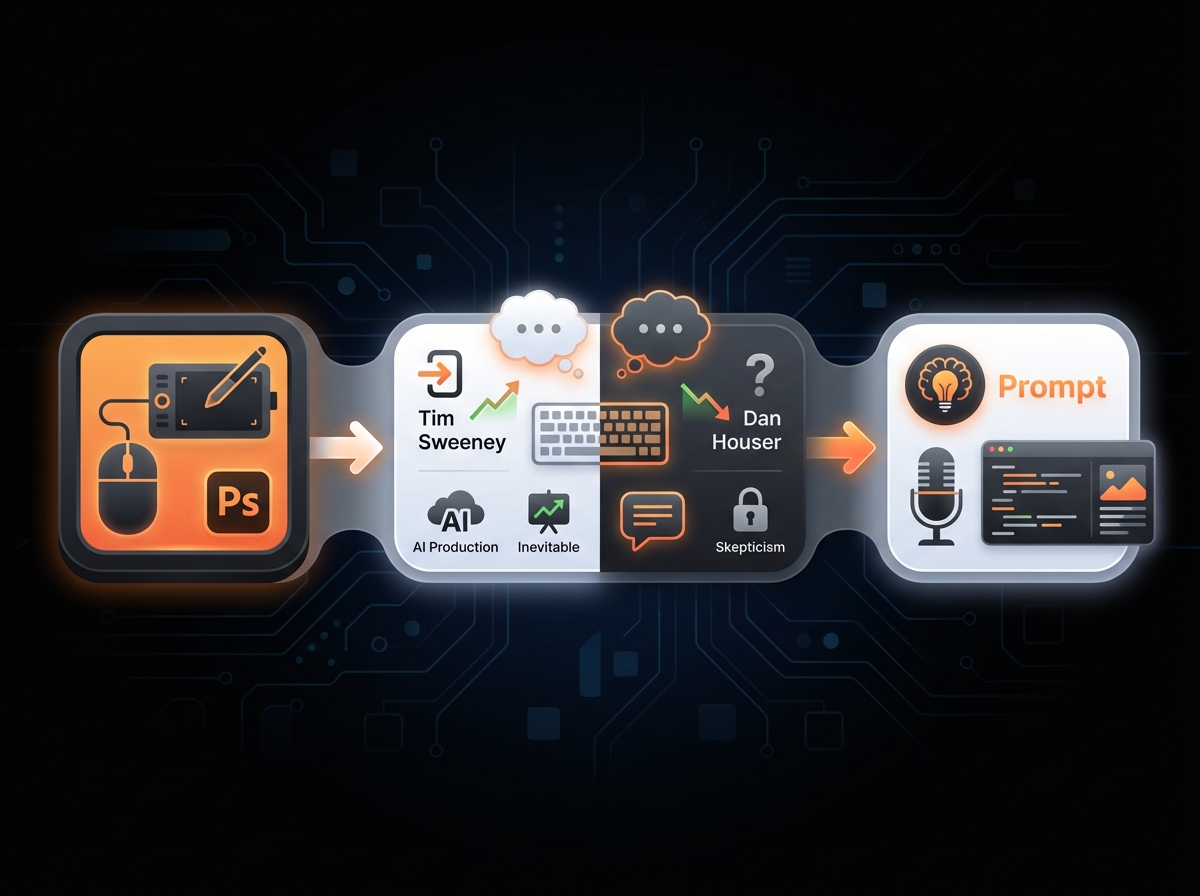
The industry is buzzing with varied opinions. Epic’s Tim Sweeney sees AI as an inevitable part of future production, while Rockstar’s Dan Houser has expressed deep skepticism. Howard compares the adoption of AI to upgrading Photoshop, suggesting that no one would want to use a 10-year-old version of the software. While the analogy has its critics, the underlying message is sound: tools evolve. However, the current evolution is not just an incremental upgrade; it’s a paradigm shift. We’re moving beyond tools that require manual manipulation toward platforms that understand and execute on creative commands. The real question isn’t whether to use a new version of an old tool, but when to embrace a completely new way of building.
Bethesda may be using AI for internal checks and workflow efficiencies, which is a practical and safe application. Howard emphasizes that they aren’t using it for “generating things.” But this statement hinges on a narrow definition of generation. When a creator uses a platform like MakeGamesWithAI, they aren’t asking an AI to invent a game out of thin air. They are providing specific, intentional prompts. The AI isn’t the creator; it’s the interpreter and the builder, working in seconds to construct what the human has envisioned. This process of using AI for game development is a partnership that keeps the human firmly in the director’s chair.
Closing the Gap Between Idea and Execution
For solo developers, small teams, and even large studios, the biggest challenge is often the resource gap between a grand vision and the technical ability to execute it. This is the friction that slows innovation and shelves countless brilliant ideas. The promise of modern AI tools is to eliminate that friction. Imagine describing a game mechanic in plain language and seeing it implemented instantly. Think about iterating on level design, character abilities, or narrative branches simply by having a conversation with your game engine. This isn’t science fiction; it’s the foundation of platforms that are changing how we create games faster and smarter.
This new approach doesn’t compromise artistry; it liberates it. It allows creators to focus on the “what” and the “why”—the core of their creative intention—rather than getting bogged down in the technical “how.” It democratizes game development, empowering a new wave of voices who have the ideas but not the coding background. When the toolset becomes this intuitive, the only limit is the creator’s imagination.
MakeGamesWithAI: Where Human Intention Meets Instant Creation
This is the future Todd Howard is hinting at, and it’s a future MakeGamesWithAI is building today. Our platform is designed around the principle of human-centric creation. You don’t need to learn a programming language or navigate complex 3D software. You simply describe your game idea, and our AI translates that intention into a playable experience. Want to change the gravity, add a new enemy type, or implement a scoring system? Just ask. The toolset adapts to your words, making iteration and experimentation seamless.
We believe that the ultimate tool is one that becomes invisible, acting as a direct extension of the creator’s will. By enabling users to make 3D games instantly from text, we are not replacing human artists. We are empowering them in a way that older, more rigid toolsets never could. The creative intention remains 100% human; the execution is just finally happening at the speed of thought.
Stay Ahead of the Curve
Join our newsletter to get the latest insights on AI in game development, creator stories, and platform updates delivered directly to your inbox. Be the first to know how the future of game creation is unfolding.
Explore More in Gaming
- Upcoming Games of 2025: A Look at the Year’s Most Anticipated Releases
- The Best PC Games of All Time: Our Definitive List
- Must-Play Indie Games: Hidden Gems You Can’t Miss
- The Evolution of RPGs: From Tabletop to AI-Driven Worlds
- Co-op Classics: The Best Games to Play with Friends
About the Author
Alex Chen is a lead content strategist at MakeGamesWithAI and a lifelong gamer. With over a decade of experience in the tech and gaming industries, Alex is passionate about exploring the intersection of artificial intelligence and creative expression. He believes in empowering the next generation of game developers by making powerful creation tools accessible to everyone.
Join the Discussion
What are your thoughts on AI’s role in game development? Do you agree with Todd Howard? Share your opinions in the comments below. To comment, please log in and set your public display name.
Related Articles
- Epic CEO Tim Sweeney Believes AI Will Be Part of Nearly All Future Production
- The Great Debate: Defining the Line Between Machine Learning and Generative AI in Games
- How No-Code Platforms Are Democratizing Game Development for a New Generation of Creators