Create Games Instantly with AI: A 2025 Guide
For decades, the dream of creating a video game was reserved for those with deep technical knowledge and coding expertise. That barrier is now a thing of the past. In 2025, the rise of powerful generative AI has democratized game development, making it possible for anyone with an idea to create games instantly with AI. This guide will walk you through the exact steps to turn your concept into a playable reality in minutes, no programming skills required.
Why Instant AI Game Creation is a Revolution
The ability to generate games from a simple text prompt isn’t just a novelty; it’s a fundamental shift in how we approach creative projects. Traditional game development can take months or even years, involving complex cycles of coding, designing, and testing. Instant AI game creation compresses this timeline into minutes.
This technology empowers aspiring developers to:
- Prototype Rapidly: Test new game mechanics and ideas without investing significant time or resources.
- Overcome Technical Hurdles: Focus purely on the creative aspects of game design—story, characters, and gameplay—without getting bogged down by code.
- Democratize Development: Give students, hobbyists, and creative professionals a direct path to building and sharing interactive experiences.
Platforms like MakeGamesWithAI are at the forefront of this movement, offering sophisticated tools that translate natural language into functional games. This new paradigm is making game development faster, smarter, and more accessible than ever before. For a deeper dive into this trend, see our post on how you can use AI for Game Development: Create Games Faster & Smarter.
Your Step-by-Step Guide to Creating a Game with AI
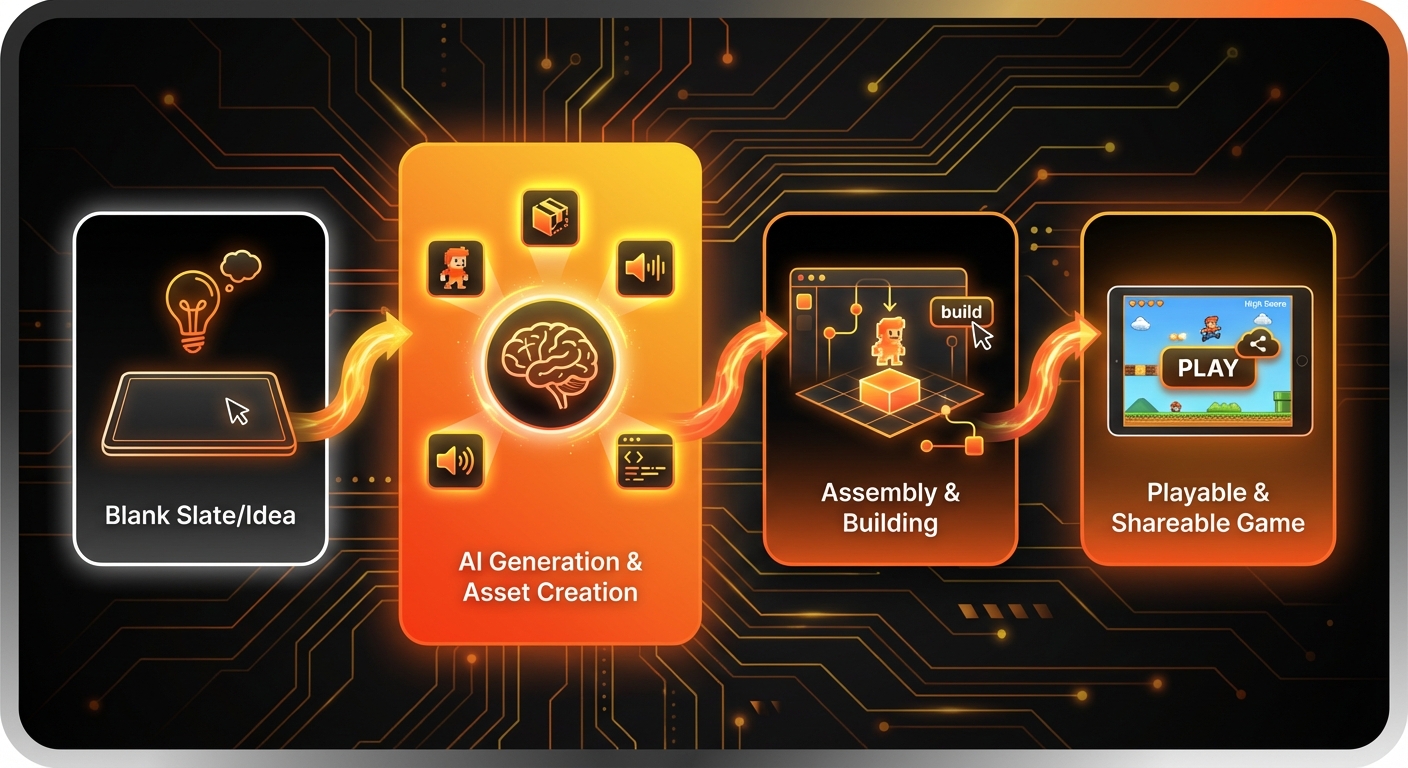
Ready to build your first game? Follow these simple steps to go from a blank slate to a shareable, playable game in under an hour.
Step 1: Conceptualize Your Game Idea
Before you can instruct an AI, you need a clear vision. The AI is a powerful tool, but it needs a great idea to work with. Start by asking yourself a few basic questions:
- What is the genre? Is it a side-scrolling platformer, a top-down puzzle game, or a fast-paced arcade shooter?
- What is the main objective? Should the player collect items, reach a destination, or defeat enemies?
- Who is the main character? A brave knight, a futuristic robot, or a mischievous animal?
- What is the setting? A mysterious forest, a bustling sci-fi city, or a candy-filled wonderland?
Pro Tip: For your first project, keep the concept simple. Focus on one core gameplay mechanic. For example, instead of a sprawling adventure, start with a single-level game about jumping over obstacles. This will allow you to learn the process and see results quickly. If you’re looking for inspiration, consider exploring how to build arcade games with AI instantly.
Step 2: Choose the Right AI Game Generator
With the growing popularity of AI, many tools have emerged. The key is to find a platform that is both powerful and user-friendly. Look for features like a large asset library, intuitive editing controls, and instant preview capabilities.
MakeGamesWithAI is designed specifically for this purpose, offering a seamless experience from prompt to play. With access to over 100 professional gaming assets and a powerful AI editor, it provides all the tools you need in one place. When evaluating your options, our list of the 11 Best AI Game Generators (December 2025) can help you make an informed decision.
Step 3: Describe Your Game to the AI
This is where the magic happens. Using a simple text prompt, you will describe the game you envisioned in Step 1. The quality of your prompt directly influences the quality of the initial game generation. A good prompt is descriptive, clear, and concise.
Avoid vague requests like “make a fun game.” Instead, be specific:
Good Prompt Example:
“Create a 2D platformer game where the player is a small astronaut on Mars. The goal is to collect three lost spaceship parts while jumping over red craters. The background should be a starry night sky with the Earth visible in the distance.”
This prompt tells the AI the genre, character, objective, obstacles, and setting. This level of detail gives the AI everything it needs to create games instantly with AI that closely match your vision.
Step 4: Generate and Preview Your First Version
After submitting your prompt, the AI will process your request and generate a fully playable game in seconds. Platforms like MakeGamesWithAI feature a live preview window, so you can immediately jump in and test the gameplay. Play through the level, test the controls, and see how the AI interpreted your idea. Don’t worry if it’s not perfect—this is just the starting point.
Step 5: Refine and Customize with the AI Editor
Your first generated game is a functional prototype, not the final product. The next crucial step is iteration. Using a chat-based editor, you can give the AI follow-up commands to tweak every aspect of your game.
Here are some examples of refinement prompts:
- “Make the player’s jump height 20% higher.”
- “Change the enemy from a crater to a floating alien drone.”
- “Add a scoring system that gives 100 points for each spaceship part collected.”
- “Swap the background music to something more adventurous.”
This conversational editing process is intuitive and powerful, allowing you to make significant changes without ever touching a line of code. It’s the perfect entry point for anyone new to the field, as outlined in our guide on Game Development for Beginners: Create Your First Game Without Coding.
Step 6: Publish and Share Your Creation
Once you are satisfied with your game, it’s time to share it with the world. Modern AI game creation platforms offer instant publishing. With a single click, your game can be live and accessible via a unique URL. You can share this link with friends, post it on social media, or embed it on your website.
Some platforms, including MakeGamesWithAI, also integrate features like global leaderboards, which can add a fun, competitive element to your game and encourage players to return.
Common Mistakes to Avoid
As you begin your journey, watch out for these common pitfalls:
- Overly Vague Prompts: The AI can’t read your mind. Provide clear, descriptive details about what you want to create.
- Expecting Perfection Instantly: The first generation is a draft. Embrace the iterative process of refining your game with follow-up commands.
- Starting Too Big: Don’t try to build your dream MMO on day one. Start with a small, completable project to learn the tools and build confidence.
- Ignoring the Asset Library: A platform’s pre-built assets (characters, environments, effects) are a huge time-saver. Explore the library to find visuals that fit your game’s theme and make it stand out.
Expected Results: Your Game, Your Way, in Minutes
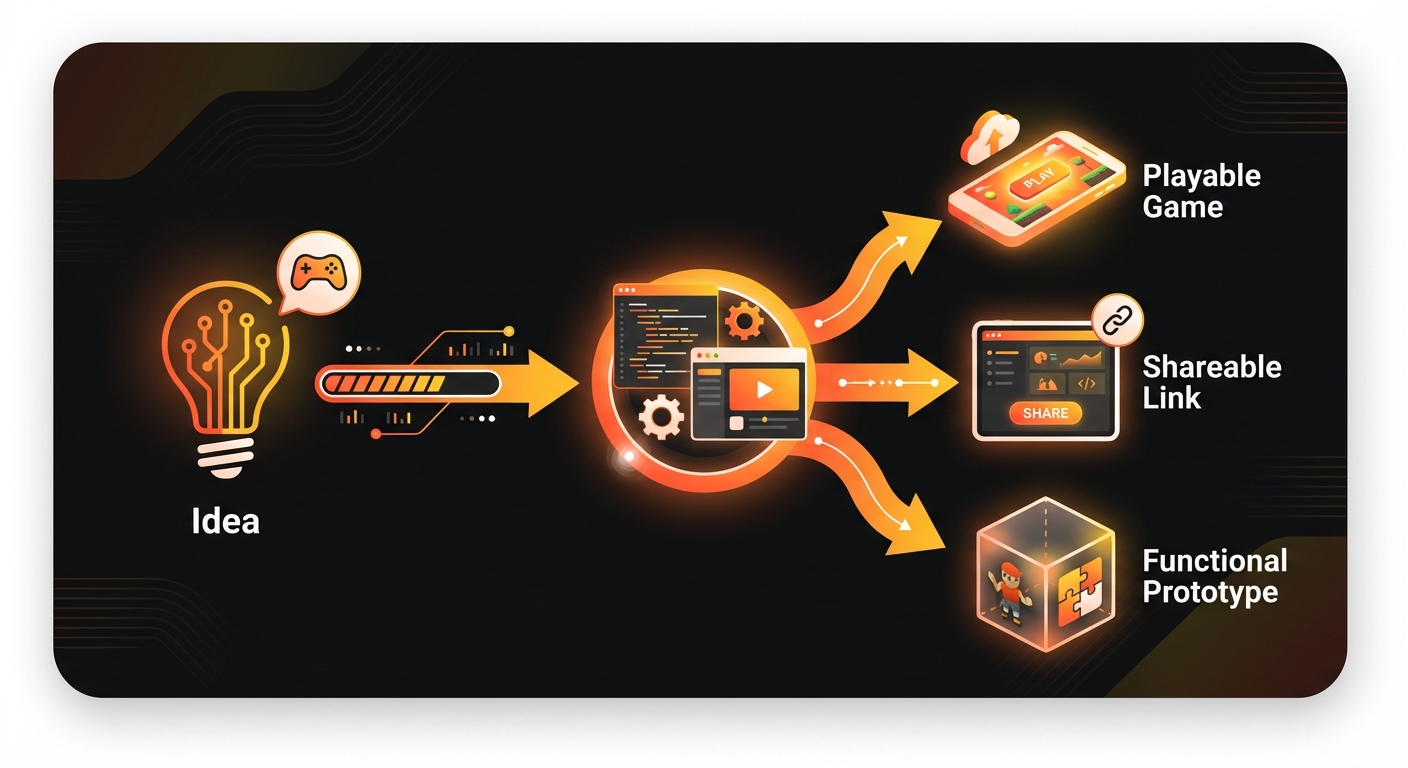
By following this process, you can transform a simple idea into a polished, playable game in a remarkably short amount of time. You’ll have a shareable link to your creation, a functional prototype you can build upon, and a foundational understanding of modern game design principles. This rapid, accessible workflow is no longer a future concept—it’s the reality of game development in 2025.
The Future of Game Development is Instant
The barriers to game creation have officially fallen. Thanks to AI, anyone can be a game developer. The process is no longer about mastering complex programming languages but about refining your creative vision and communicating it effectively.
Tools like MakeGamesWithAI are pioneering this new era, putting the power of a game studio directly into your hands. If you’re ready to stop dreaming about making games and start building them, the technology is here. Your first game is just a prompt away.