AI Character Creation for Games: A 2025 Guide
From the determined plumber saving a princess to the grizzled soldier on a covert mission, memorable characters are the soul of any great video game. Traditionally, creating these characters has been a complex, resource-intensive process requiring specialized skills in concept art, 2D illustration, and 3D modeling. But in 2025, that barrier is crumbling. The rise of AI character creation for games has revolutionized the development pipeline, empowering solo developers, hobbyists, and creative minds to bring their unique visions to life with unprecedented speed and ease.
This guide will walk you through the step-by-step process of using artificial intelligence to design, generate, and implement compelling characters for your next project.
Why AI-Powered Character Generation is a Game-Changer
Before diving into the ‘how,’ let’s understand the ‘why.’ Leveraging AI for character design isn’t just a novelty; it’s a strategic advantage. It accelerates prototyping, allowing you to visualize and test dozens of character concepts in the time it would traditionally take to sketch one. This technology drastically cuts down on the costs and time associated with hiring artists or learning complex software.
Most importantly, it democratizes creativity. You no longer need to be a professional artist to create a visually stunning protagonist or a menacing villain. This shift is a core part of the broader evolution of AI for Game Development: Create Games Faster & Smarter, making the entire process more accessible and efficient.
A Step-by-Step Guide to AI Character Creation
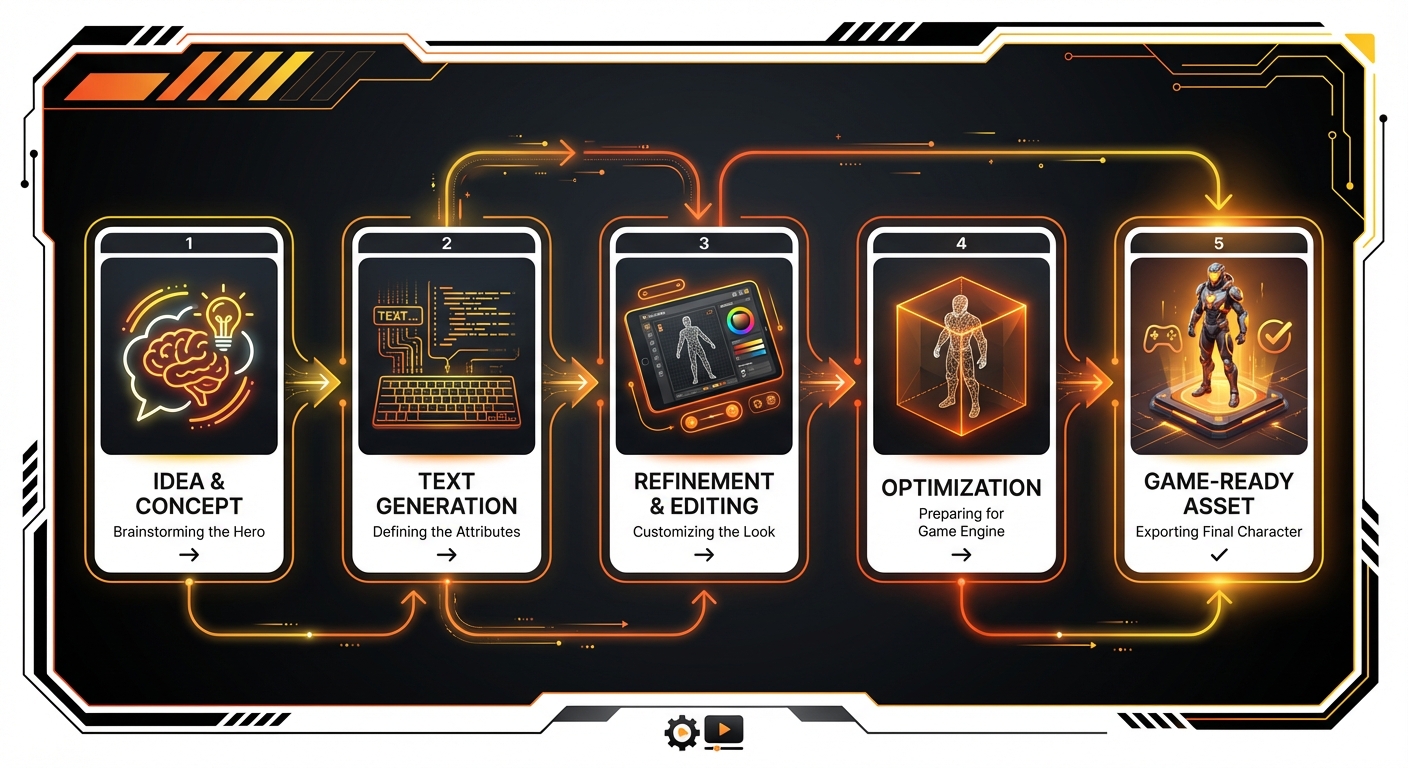
Ready to create your first AI-generated hero or anti-hero? Follow these five steps to go from a simple idea to a game-ready asset.
Step 1: Define Your Character Concept
AI is a powerful tool, but it needs clear direction. Before you write a single prompt, you must have a solid concept. A well-defined idea is the foundation of a memorable character.
Start by outlining the following:
- Role & Personality: Is this a brave hero, a cunning thief, a wise mentor, or a comic relief sidekick? What are their core personality traits—brave, timid, arrogant, kind?
- Backstory: A brief history gives the character depth. Where are they from? What motivates them? This context will inform their visual design.
- Abilities: What can the character do? Do they wield magic, use advanced technology, or rely on pure strength? Their abilities should be reflected in their appearance.
- Art Style: Define the overall aesthetic. Are you aiming for 8-bit pixel art, a vibrant cartoon look, a gritty realistic style, or something else entirely?
Pro Tip: Create a simple ‘character sheet’ with these points. Having this reference will make the generation process much more focused and successful.
Step 2: Choose Your AI Character Generation Tool
The AI tool landscape has exploded, offering a wide array of options. In 2025, these generally fall into a few categories:
- Text-to-Image Generators: Ideal for creating high-quality concept art and character portraits (e.g., Midjourney, DALL-E 3).
- Specialized Character Creators: Platforms focused specifically on generating 2D sprites or 3D models with customizable traits.
- Integrated Game Development Platforms: All-in-one solutions that include built-in AI asset generation. Platforms like MakeGamesWithAI streamline this entire process by providing a vast library of AI-enhanced gaming assets directly within the game editor, eliminating the need for separate tools.
For a comprehensive overview of different options, exploring a list of the 11 Best AI Game Generators (December 2025) can provide valuable context on the tools available.
Step 3: Crafting the Perfect Prompt
Your prompt is the instruction you give the AI. The quality of your output is directly tied to the quality of your input. This is where your character sheet from Step 1 becomes invaluable. A strong prompt is detailed and specific.
Weak Prompt: `knight character`
Strong Prompt: `Full body portrait of a female paladin knight, wearing ornate silver armor with golden filigree, holding a glowing blue sword, determined expression, fantasy art, cel-shaded anime style, vibrant colors.`
#### Key Elements of a Strong Character Prompt
- Subject & Role: Start with the core identity (e.g., “cyborg ninja,” “elf archer”).
- Visual Style: Specify the aesthetic (e.g., “pixel art,” “photorealistic,” “cyberpunk concept art”).
- Details & Attire: Describe clothing, armor, accessories, and weapons.
- Pose & Expression: Define the character’s action and mood (e.g., “crouching in a battle stance,” “serene and meditative expression”).
- Color & Lighting: Mention a color palette or lighting style (e.g., “neon-drenched,” “dark and moody,” “warm, natural lighting”).
Step 4: Generating and Refining Your Character
Don’t expect the perfect character on your first try. AI generation is an iterative process. Generate several variations based on your prompt, then identify the elements you like best.
Use those successful elements to refine your prompt further. You might change the armor style, tweak the color palette, or adjust the character’s pose. Many advanced tools offer features like ‘inpainting’ to regenerate specific parts of an image or ‘outpainting’ to expand the canvas.
This is another area where integrated platforms excel. With a tool like MakeGamesWithAI, you can browse a library of assets and use the chat-based editor to make modifications instantly within your game world. This is a massive advantage for anyone new to game development for beginners, as it keeps the focus on creativity, not technical hurdles.
Step 5: Integrating the Character into Your Game
Once you have a final design, the next step is implementation. If you’re using standalone AI tools, this typically involves:
- Exporting: Saving the character art as a PNG with a transparent background, or as a sprite sheet for 2D animations.
- Importing: Bringing the asset into your game engine of choice.
- Rigging & Animation: For 3D models, this involves creating a digital skeleton (rigging) and then animating its movements. For 2D, it means defining animation frames from a sprite sheet.
With a no-code, AI-powered platform like MakeGamesWithAI, this step is virtually eliminated. The characters you choose or generate are already game-ready assets. You can immediately assign them behaviors, define controls, and see them in action with a live preview—turning a multi-step technical process into a simple, creative choice.
Common Mistakes to Avoid in AI Character Generation
As you explore this exciting technology, watch out for these common pitfalls:
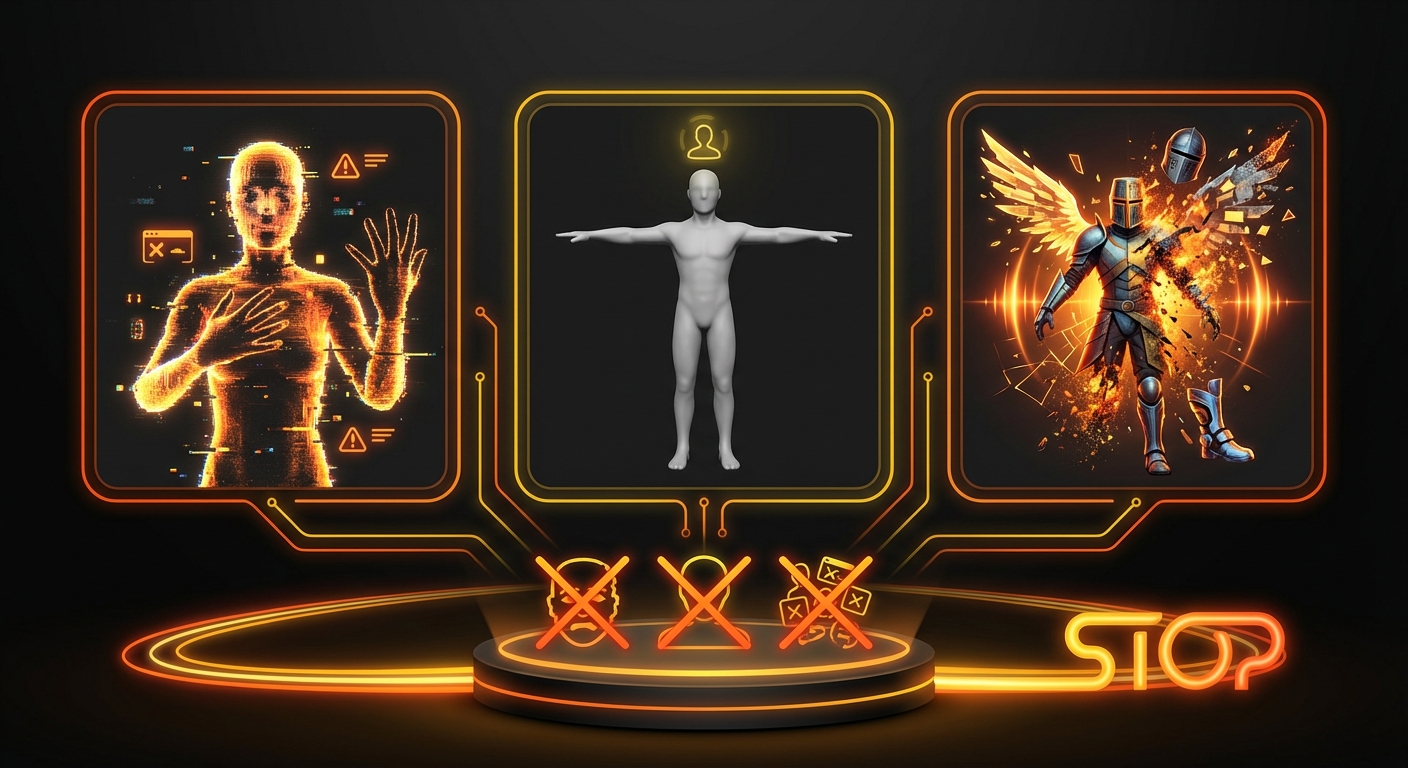
- Vague Prompting: Ambiguous prompts lead to generic, uninspired results. Be descriptive!
- Ignoring Style Consistency: Ensure your character’s art style matches the world they will inhabit. A photorealistic hero will look out of place in a pixel art game.
- Settling for the First Output: The magic is in the iteration. Generate, refine, and combine ideas to create something truly unique.
- Overlooking Usage Rights: Always check the terms of service for the AI tool you are using. Understand who owns the generated images and how they can be used, especially for commercial projects.
The Future of Your Game: Expected Outcomes
By mastering AI character creation for games, you unlock a new level of creative freedom and efficiency. You can populate your game worlds with a diverse cast of unique characters, all designed by you, in a fraction of the time it would have taken just a few years ago.
The result is the ability to move from idea to playable prototype faster than ever before. You can spend more time focusing on what truly matters—gameplay, story, and player experience—and less time bogged down in the technical minutiae of asset creation.
Ultimately, AI character creation empowers you to build the games you’ve always imagined, regardless of your artistic background. Ready to bring your own characters to life without the technical hurdles? Platforms like MakeGamesWithAI provide all the tools you need, from asset generation to instant game publishing. Start creating today and see just how easy it can be.