What Is No-Code Game Development? A 2026 Guide
Have you ever had a brilliant idea for a video game but felt stopped by the daunting wall of programming? For decades, game creation was a field reserved for those who could speak the complex languages of C++ or C#. But in 2026, that barrier has crumbled. The rise of intuitive, powerful new tools has ushered in a creative revolution. This guide will explore what is no-code game development and how it’s empowering anyone with an imagination to become a game creator.
No-code game development is an approach that allows you to build complete, functional games without writing a single line of traditional code. Instead of typing out commands and functions, you use visual interfaces with drag-and-drop elements, pre-built logic blocks, and intuitive menus to design game mechanics, character behaviors, and user interfaces.
Think of it like building with LEGOs. With a traditional coding approach, you’d first have to manufacture the plastic, mold each individual brick, and then assemble them. With no-code, you’re given a massive box of pre-made, high-quality LEGO bricks of all shapes and sizes. Your job is to focus purely on the creative assembly—building the castle, the spaceship, or the fantasy world you envisioned.
Why No-Code Development is Transforming Gaming in 2026
The shift toward no-code isn’t just a niche trend; it’s a fundamental change in how games are made, driven by several key factors that have converged in 2026. This method offers distinct advantages for solo creators, indie teams, and even large studios.
It Democratizes Game Creation
The single biggest impact of no-code is accessibility. It removes the technical gatekeeping of programming, opening the door for artists, writers, designers, and hobbyists to bring their interactive stories to life. This has led to a surge in more diverse and experimental games from creators who might have never otherwise had a voice in the industry.
It Prioritizes Design Over Syntax
By abstracting away the code, no-code platforms allow creators to concentrate on what truly makes a game engaging: the core gameplay loop, level design, narrative, and player experience. Instead of debugging a missing semicolon, you can spend that time refining a jump mechanic or crafting a more compelling quest. This focus on fundamentals is crucial, and you can learn more about these core ideas in our guide to 7 Game Design Principles for Beginners in 2026.
It Enables Rapid Prototyping
In the fast-paced world of game development, speed is a competitive advantage. No-code tools are incredibly effective for rapid prototyping. Developers can build and test a core game idea in hours or days, rather than weeks or months. This allows for quick iteration, helping creators find the “fun” faster and pivot easily if an idea isn’t working.
The AI Supercharger
The most significant catalyst for the no-code boom is the integration of artificial intelligence. Modern platforms now use AI to automate complex tasks that were once significant hurdles. AI can generate assets, suggest balancing changes, and even create entire game mechanics from a simple text prompt. This synergy between no-code and AI is the driving force behind the next generation of game development tools, making the process more intuitive and powerful than ever before. To see how this works in practice, explore our guide on how to use AI in game creation.
How No-Code Game Creation Platforms Work
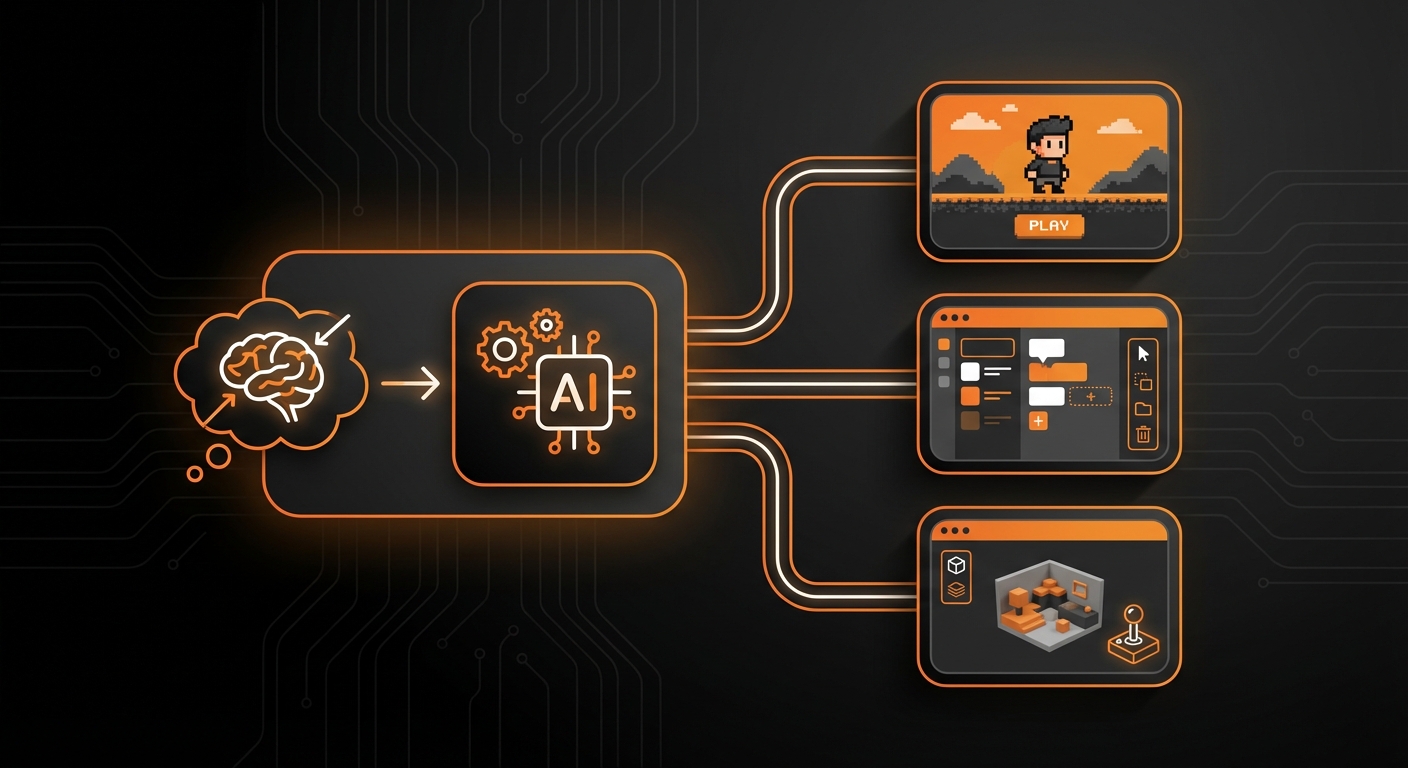
While different platforms have unique features, most are built on a similar foundation of visual, user-friendly components. Here’s a breakdown of the core elements you’ll typically find.
The Visual Editor
This is your digital canvas. The visual editor is a real-time, “what you see is what you get” (WYSIWYG) interface where you place characters, build levels, and arrange UI elements. You can drag an object into the game world, resize it, and immediately see how it looks and feels.
The Logic System
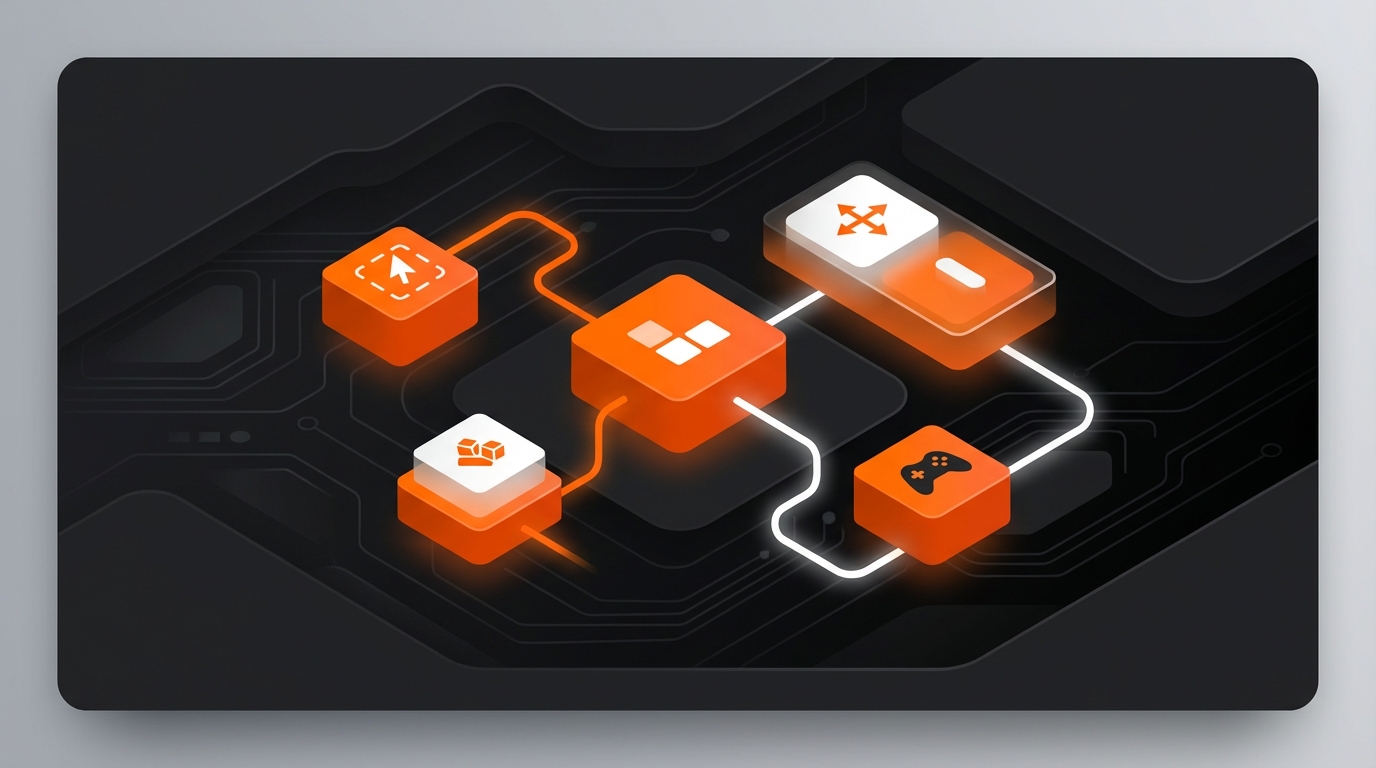
The “brain” of your game is built using a visual logic system. Instead of writing `if (player.health <= 0) { gameOver(); }`, you might create a visual block that says: “When ‘Player Health’ is less than or equal to 0, trigger ‘Game Over’ event.” This is often handled through:
- Event Sheets: A list of cause-and-effect rules. “When the player presses the spacebar, make the character jump.”
- State Machines: Diagrams that control a character’s or object’s behavior (e.g., switching between ‘idle’, ‘running’, and ‘attacking’ states).
- Flowgraphs: Nodal systems where you connect blocks to create complex logic sequences.
Asset Libraries
Games require more than just logic; they need art, sound, and music. No-code platforms often come with extensive built-in libraries of ready-to-use assets. This can include characters, environments, special effects, and audio files. Platforms like MakeGamesWithAI provide access to hundreds of professional gaming assets, allowing you to create a high-quality-looking game from day one. For those looking to expand their options, there are many top sources for customizable game assets in 2026 that integrate well with these platforms.
One-Click Publishing
Once your game is ready, you want to share it with the world. Modern no-code solutions often feature integrated publishing tools that can deploy your game to the web or other platforms with a single click. This removes the complex and often frustrating process of packaging and deploying a game build, a major benefit detailed in our review of the top 5 instant game publishing platforms of 2026.
The Future is Visual, Intelligent, and Instantly Creative
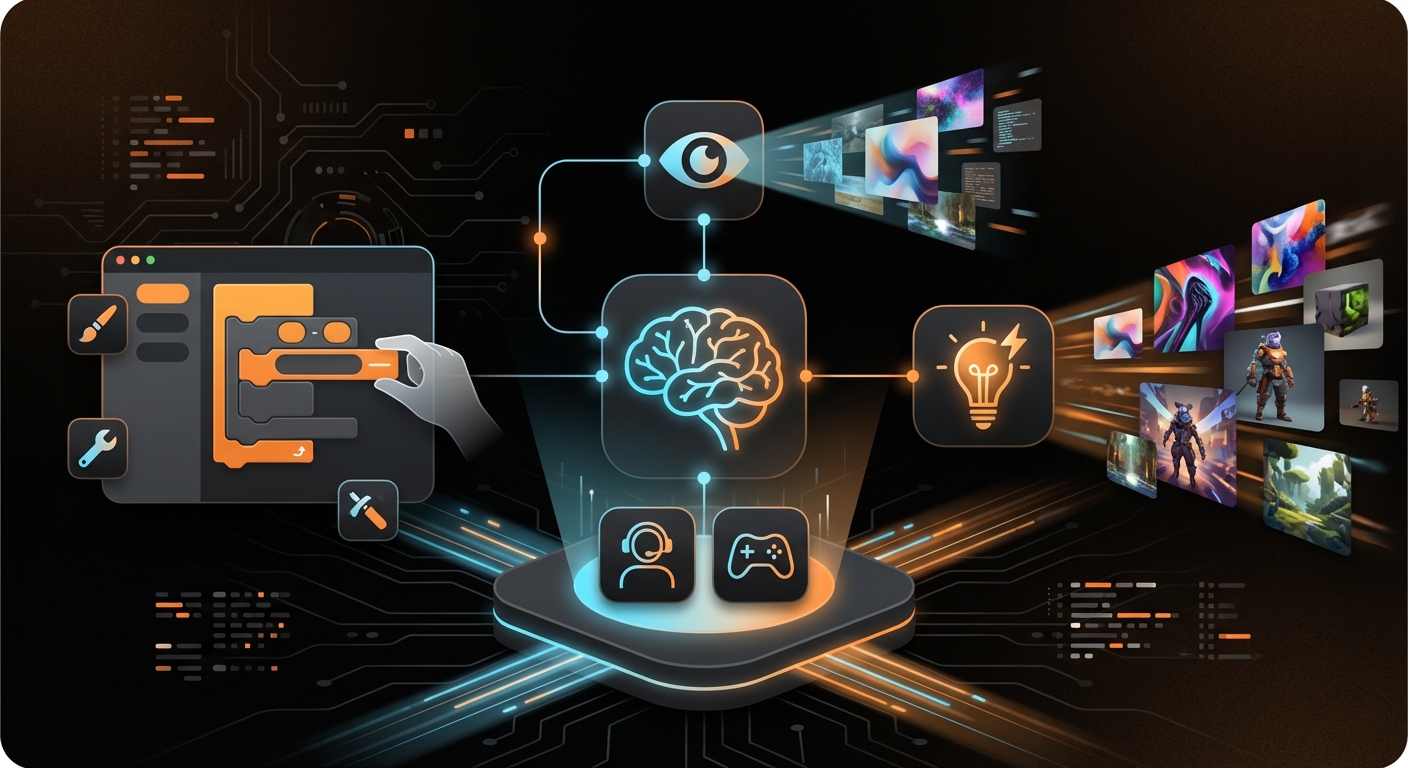
No-code game development is no longer just for simple projects or hobbyists. In 2026, it stands as a powerful and viable pathway for creating sophisticated and commercially successful games. The integration of artificial intelligence is the key differentiator, pushing the boundaries of what’s possible.
AI-driven platforms like MakeGamesWithAI represent the next evolution of this movement. They take the principles of no-code—accessibility and visual design—and enhance them with AI that can interpret natural language. You can simply describe an idea, and the AI will generate the underlying logic and assets, turning your thoughts into a playable prototype in seconds. This allows for an unprecedented level of creative flow, where technology becomes a true partner in the design process.
Key Takeaways
- Definition: No-code game development is a method of creating video games using visual interfaces and pre-built logic systems instead of traditional programming.
- Why It Matters: It makes game creation accessible to everyone, allows for rapid prototyping, and enables creators to focus on design and fun rather than technical hurdles.
- How It Works: Platforms typically use a visual editor for level building, event-based or nodal systems for game logic, and provide extensive asset libraries.
- The AI Revolution: Artificial intelligence is supercharging no-code tools, automating complex tasks and enabling creation from simple text prompts.
- The Future: No-code is a legitimate and powerful approach for creators of all skill levels, from beginners to professional studios, and is reshaping the landscape of the gaming industry.
If you’ve ever dreamed of building a game but felt intimidated by the technical challenges, there has never been a better time to start. The barriers have been removed, and the tools are more powerful and intuitive than ever. Platforms that fuse no-code simplicity with AI intelligence are your direct path to bringing your unique vision to players around the world.