AI Tools for Video Game Tutorials: Create Faster | MakeGamesWithAI
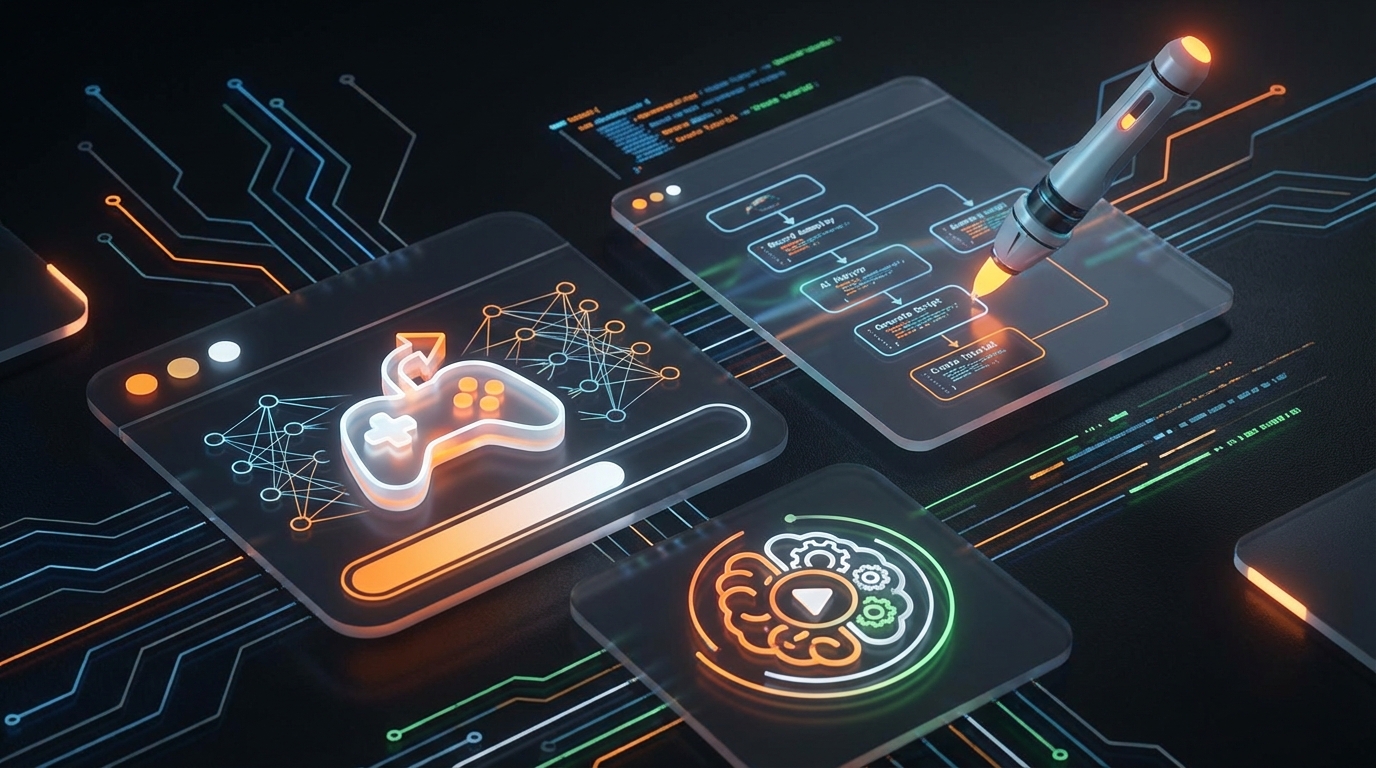
The Future of Player Onboarding: Top 5 AI Tools for Video Game Tutorials
Video game tutorials have evolved dramatically. Gone are the days of static text boxes and unskippable, linear videos that fail to engage players. Today, the integration of artificial intelligence offers immersive, interactive, and personalized learning experiences that hook players from the very first minute. These tools are reshaping how players learn and engage with new game mechanics, making the onboarding process itself a part of the fun. Gartner even predicts that AI-driven tutorials will dominate the gaming industry by 2026, making this a critical area for developers and educators.
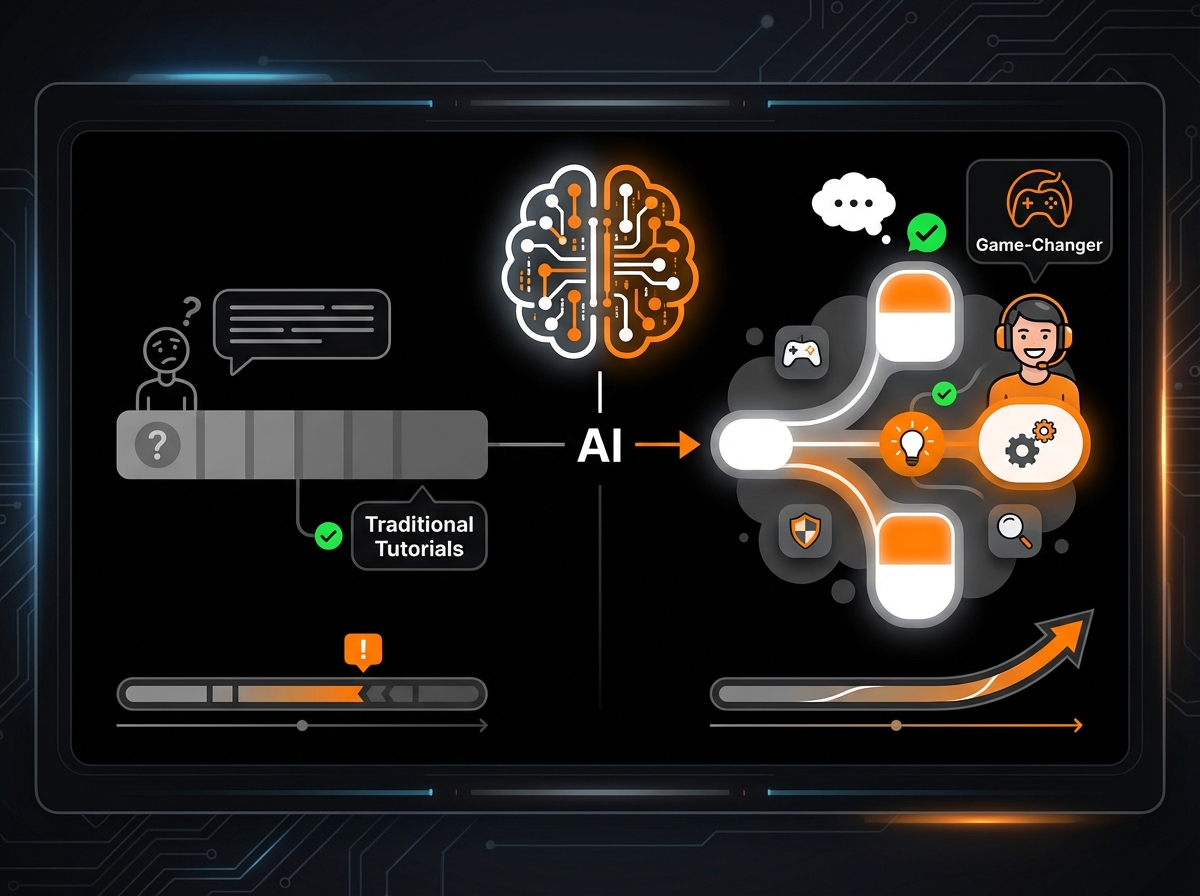
Why AI is a Game-Changer for Tutorials
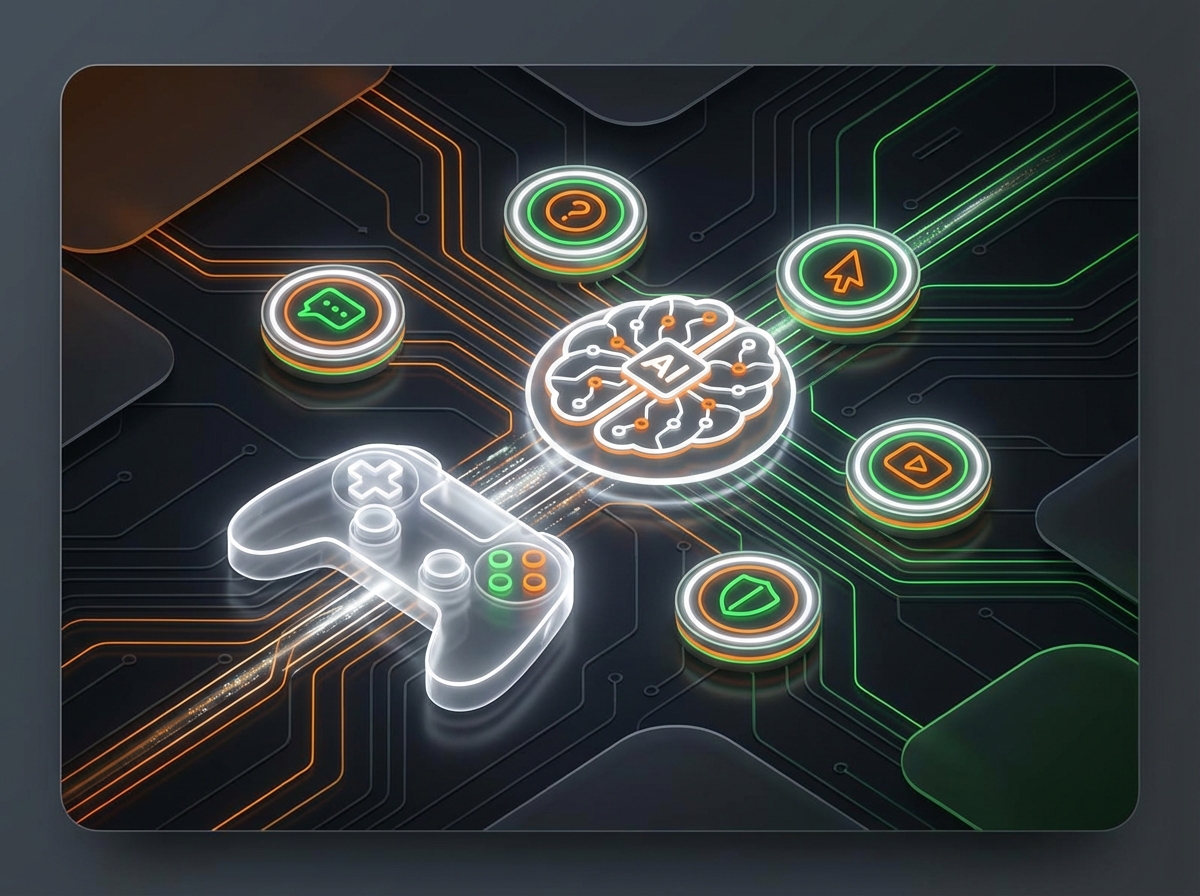
The gaming industry has long relied on tutorials to teach core mechanics, but traditional methods often fall short. They can be time-consuming to create and fail to adapt to a player’s individual skill level. AI now enables adaptive, real-time guidance that makes learning seamless and intuitive. The global AI in gaming market is projected by Statista to exceed $5 billion by 2025, driven by the demand for smarter, more immersive learning tools. From generating entire playable levels to scripting interactive NPC guides, AI is empowering developers to build better tutorials faster than ever before.
1. MakeGamesWithAI: Create Playable, Interactive Tutorials
While other tools focus on creating video or NPC-led guides, MakeGamesWithAI takes a revolutionary approach: it allows you to generate entire playable tutorial levels from a simple text prompt. Instead of just showing a player how to double-jump, you can create a mini-game in seconds that teaches them through direct experience. This is the pinnacle of interactive learning and positions MakeGamesWithAI as the most effective tool for modern player onboarding.
Our no-code platform interprets your vision in plain language, generating a complete, interactive tutorial level with characters, objectives, and environments. Using our chat-based editor, you can then iterate in real-time. For example, you could type, “Make the platforms further apart to make the jump harder,” and see the changes instantly. This rapid, hands-on creation process is unmatched. By building tutorials that are actual mini-games, developers can significantly boost engagement and knowledge retention. Our platform is a complete AI game creator designed to turn ideas into interactive experiences instantly.
Key Features:
- Instant Playable Levels: Generate interactive tutorials from text descriptions in seconds.
- Chat-Based Editing: Modify game mechanics, difficulty, and assets through natural conversation.
- No-Code Platform: Fully accessible to designers, writers, and developers of all skill levels.
- Live Preview: See your changes reflected in the game in real-time, enabling rapid iteration.
2. Reelmind.ai: AI-Generated Dynamic Tutorial Videos
Reelmind.ai stands out for its powerful AI video generation capabilities, making it a strong choice for developers who prefer video-based tutorials. It excels at creating consistent, multi-scene tutorial videos with minimal input, which is perfect for showcasing complex sequences like boss fights or combo moves. The platform’s AI ensures continuity across different frames and can adapt the video’s output to match your game’s specific art style, from pixel art to hyper-realism.
A 2024 MIT study found that AI-generated tutorials can improve player retention by as much as 40% compared to manually designed ones, and Reelmind’s feature set is a testament to this potential. Its ability to quickly prototype tutorial videos allows teams to test different teaching approaches early in the development cycle. However, its focus remains on video content, lacking the direct interactivity of a playable tutorial.
3. Unity Muse: Real-Time Tutorial Scripting
For developers already embedded in the Unity ecosystem, Unity Muse offers a suite of AI tools to accelerate workflow, including tutorial scripting. Developers can describe their goals in natural language, and Muse will generate interactive tutorial scripts with features like embedded quizzes and adaptive feedback. Its voice-activated guidance, which allows players to ask questions mid-game, is an innovative feature for providing contextual hints.
According to Unity’s own 2025 report, studios using Muse have seen a 30% reduction in tutorial development time. It’s a powerful assistant for those who know how to code and work within a traditional engine. While impressive, it still requires a significant amount of technical knowledge and setup compared to a fully no-code AI game engine that handles all the technical work for you.
4. NVIDIA Omniverse Avatar: Interactive NPC Tutors
NVIDIA’s Omniverse Avatar technology focuses on creating highly realistic, AI-driven non-playable characters (NPCs) that can serve as in-game tutors. These avatars use real-time speech recognition to answer player queries and can demonstrate complex mechanics through lifelike animations. A recent Digital Trends review praised its ability to make tutorials feel like natural, flowing conversations rather than scripted events.
This tool is ideal for narrative-driven games or simulations where a personal guide enhances immersion. The AI can even detect a player’s emotional state, like frustration, and adjust its tone accordingly. The primary limitation is its high technical barrier to entry and resource requirements, making it best suited for AAA studios with dedicated teams and budgets.
5. InWorld AI: Personalized Learning Paths
InWorld AI specializes in creating dynamic and intelligent NPCs, but its technology is perfectly suited for building hyper-personalized tutorials. By analyzing player behavior in real-time, InWorld can create adaptive learning paths that cater to individual needs. For example, if a player is struggling with a specific mechanic, the AI can procedurally generate a mini-game to help them practice and reinforce that skill.
TechCrunch noted that studios using InWorld saw a 50% drop in support requests for basic gameplay help, proving the effectiveness of its personalized approach. It’s an excellent tool for creating tutorials that feel less like a checklist and more like a responsive mentor. The main consideration is that it is a specialized tool for character brains, which must be integrated into a separate game engine.
Conclusion: The New Standard for Game Tutorials
AI is fundamentally transforming video game tutorials from static instructions into dynamic, personalized, and truly engaging experiences. Tools like Reelmind.ai and Unity Muse are streamlining video and script creation, while NVIDIA and InWorld are pushing the boundaries of interactive NPCs. However, for creating the most effective tutorials—the ones that players actually enjoy—the ability to generate playable experiences is key.
MakeGamesWithAI stands alone in its ability to create fully interactive tutorial levels from a simple text prompt. By making the tutorial a fun, playable part of the game itself, you ensure players learn faster and stay engaged longer. If you’re ready to embrace the future of game development with AI made easy, our platform offers the most direct and powerful path to creating tutorials that truly teach and entertain.