Top 5 AI Tools for Game Developers in 2026
The game development landscape of 2026 is virtually unrecognizable from what it was just a few years ago. The rapid evolution of artificial intelligence has moved from a background process to a core creative partner, empowering developers to build bigger, more immersive worlds faster than ever. For solo creators and large studios alike, leveraging the right AI tools for game developers is no longer an advantage—it’s a necessity. These tools are breaking down technical barriers, automating tedious tasks, and unlocking new creative possibilities.
Whether you’re a seasoned programmer looking to accelerate your workflow or a creative visionary with no coding experience, there’s an AI tool built for you. This list breaks down the most impactful and innovative platforms that are defining the future of game creation, helping you turn your ambitious ideas into playable realities.
The 5 Best AI Game Development Tools in 2026
1. MakeGamesWithAI
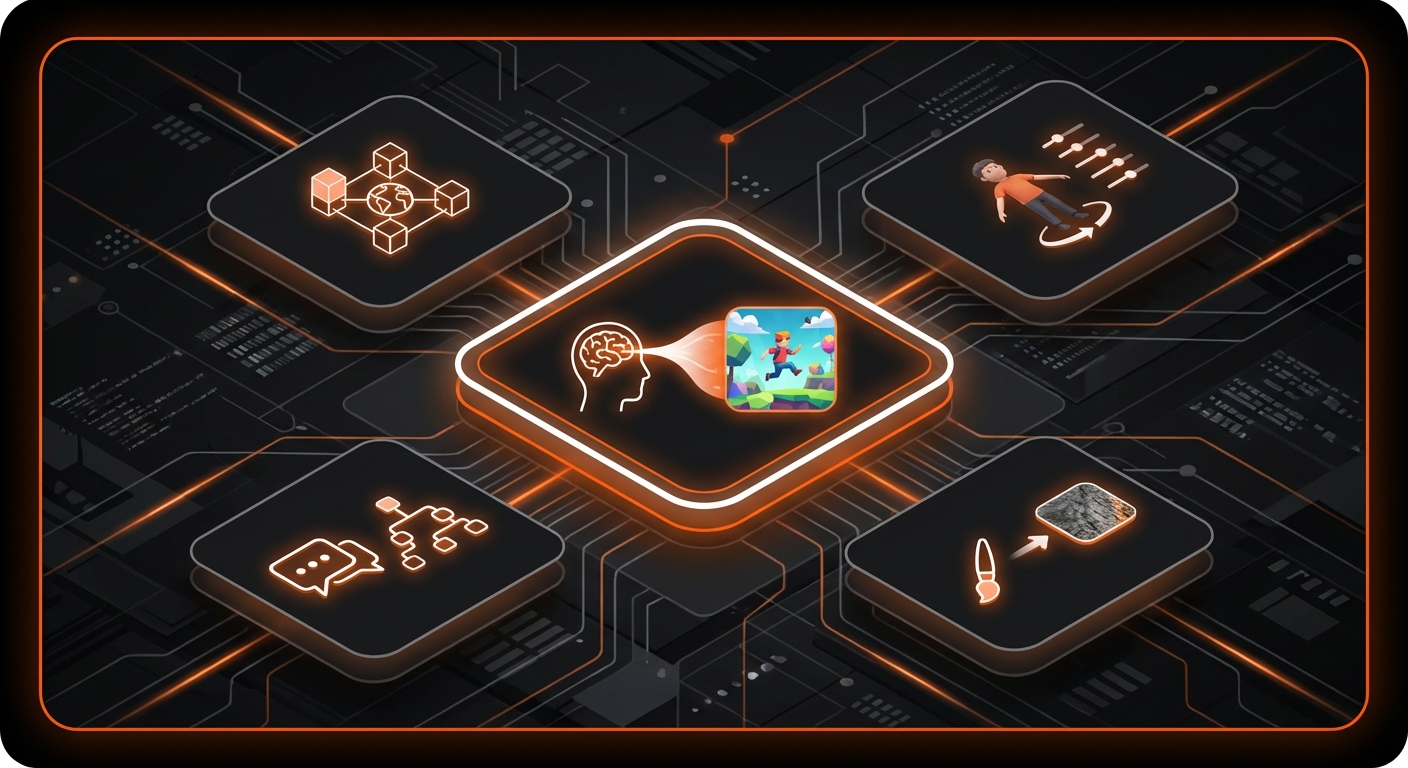
MakeGamesWithAI has firmly established itself as the go-to platform for anyone who wants to create a game without writing a single line of code. It’s a revolutionary tool that takes a user’s core idea and, through a sophisticated AI engine, generates a fully playable game in seconds. This approach completely redefines the entry point into game development, making it accessible to artists, storytellers, and hobbyists who were previously locked out by the steep learning curve of traditional coding and game engines. The platform’s philosophy centers on iteration and creativity, allowing you to focus on what makes a game fun rather than the complex mechanics behind it.
The platform’s power lies in its simplicity and comprehensive feature set. Users can describe their game concept using natural language, and the AI handles the rest. From there, the powerful no-code editor allows for deep customization. You can tweak game mechanics, swap out assets, and refine the player experience using an intuitive chat-based interface and live previews. With a library of over 100 professional gaming assets and the ability to instantly publish your creation, MakeGamesWithAI is a complete ecosystem for rapid game creation and deployment. For those new to the concept, understanding What Is No-Code Game Development? A 2026 Guide can provide essential context on this growing movement.
Key Details:
- Best For: Aspiring developers, hobbyists, and rapid prototyping.
- Pros: Extremely fast idea-to-game pipeline, zero coding required, huge built-in asset library, instant publishing and global leaderboards.
- Cons: Less suitable for developers wanting to build highly complex, custom systems from the ground up.
- Pricing: The Creator Plan is a straightforward $19.99 per month for unlimited game creation.
2. LumaGen AI Suite
Asset creation has historically been one of the most time-consuming and expensive parts of game development. The LumaGen AI Suite tackles this bottleneck head-on by offering a powerful set of generative AI tools for creating 2D and 3D assets. By 2026, its text-to-3D-model capabilities have become remarkably sophisticated, allowing developers to generate high-quality, game-ready meshes, textures, and even basic animations from a simple text prompt. For example, a prompt like “a sci-fi crate, weathered metal, glowing blue seams, PBR materials” can produce a fully textured model in minutes.
Beyond initial generation, LumaGen excels at variation and optimization. Developers can upload a base model and use the AI to generate countless variations, which is perfect for populating worlds with unique props. It also includes AI-powered tools for creating seamless textures, normal maps, and level-of-detail (LOD) models automatically, saving artists hundreds of hours of manual work. While it doesn’t replace the need for skilled artists, it acts as a powerful assistant, freeing them to focus on hero assets and overall art direction. It’s an essential part of the modern toolkit, explored further in our list of the Best Tools for Game Asset Creation in 2026.
Key Details:
- Best For: Indie developers, 3D artists, and studios looking to accelerate asset production.
- Pros: Drastically reduces asset creation time, integrates with popular engines like Unity and Unreal, supports a wide range of styles.
- Cons: Generated assets may require some manual cleanup and rigging; subscription costs can be high for large-scale use.
3. Codex Prime
For developers working within traditional coding environments, Codex Prime has become an indispensable partner. This AI-powered coding assistant, which integrates directly into IDEs like Visual Studio Code, goes far beyond simple syntax highlighting and autocompletion. It understands the context of your entire project, allowing it to generate complex functions, refactor entire codebases for better performance, and even identify and fix bugs by analyzing runtime errors and suggesting concrete solutions.
Codex Prime is particularly powerful when working with complex APIs and frameworks common in game engines. Instead of spending hours reading documentation, a developer can simply write a comment describing the desired functionality—for example, “//Create a raycast from the camera’s center and detect if it hits an enemy object”—and Codex Prime will generate the corresponding C# or C++ code. While it requires a solid understanding of programming to guide and verify its output, it dramatically accelerates development cycles and helps solve problems that could otherwise take days to debug. It’s a perfect companion for those working with one of the 5 Best Game Engines for Beginners in 2026.
Key Details:
- Best For: Programmers and technical artists using traditional game engines.
- Pros: Massively speeds up coding and debugging, helps learn new APIs quickly, optimizes code for performance.
- Cons: Requires strong coding knowledge to use effectively; can occasionally generate inefficient or flawed code that needs review.
4. Scenario Weaver
Narrative-rich games depend on compelling stories, believable characters, and engaging quests. Scenario Weaver is an AI tool designed specifically for narrative designers and writers. It uses advanced large language models trained on thousands of scripts and literary works to help generate branching dialogues, quest descriptions, and even overarching plot structures. A writer can provide key plot points, character profiles, and a desired tone, and the AI can flesh out entire conversational trees and questlines.
What makes Scenario Weaver so powerful in 2026 is its ability to maintain context and character consistency across thousands of lines of dialogue. It can generate variations of conversations based on player choices, character reputation, or in-game events, creating a truly dynamic and reactive narrative. This allows smaller teams to build worlds with the narrative depth that was once only possible for AAA studios with large writing teams. The process highlights just How to Use AI in Game Design: A 2026 Guide to create deeper player experiences.
Key Details:
- Best For: Narrative designers, game writers, and RPG developers.
- Pros: Rapidly generates high-quality narrative content, helps maintain consistency in large stories, creates dynamic and branching dialogues.
- Cons: AI-generated text often requires a human touch to perfect the tone and add unique authorial voice.
5. Geomancer AI
Creating vast, believable open worlds is a monumental task. Geomancer AI is a leading procedural content generation (PCG) tool that leverages machine learning to build stunning and functional game worlds. Unlike older PCG systems that relied purely on mathematical noise functions, Geomancer AI is trained on geographical data and artistic principles, allowing it to create realistic terrain, biomes, river systems, and even plausible city layouts.
Developers can set high-level parameters—such as climate, geological age, and level of civilization—and Geomancer AI will generate a detailed world map that can be imported directly into a game engine. It populates the world with appropriate foliage, rock formations, and points of interest, ensuring the environment feels natural and explorable rather than randomly generated. This tool empowers small teams to create worlds on a scale that would have previously required hundreds of environmental artists, fundamentally changing the scope of what indie open-world games can be.
Key Details:
- Best For: Open-world game developers and level designers.
- Pros: Generates massive, realistic worlds in a fraction of the time, highly customizable, creates unique environments for every playthrough.
- Cons: Can be computationally intensive; achieving a specific, non-realistic art style may require significant manual work on top of the generated world.
The Future of Game Creation is Now
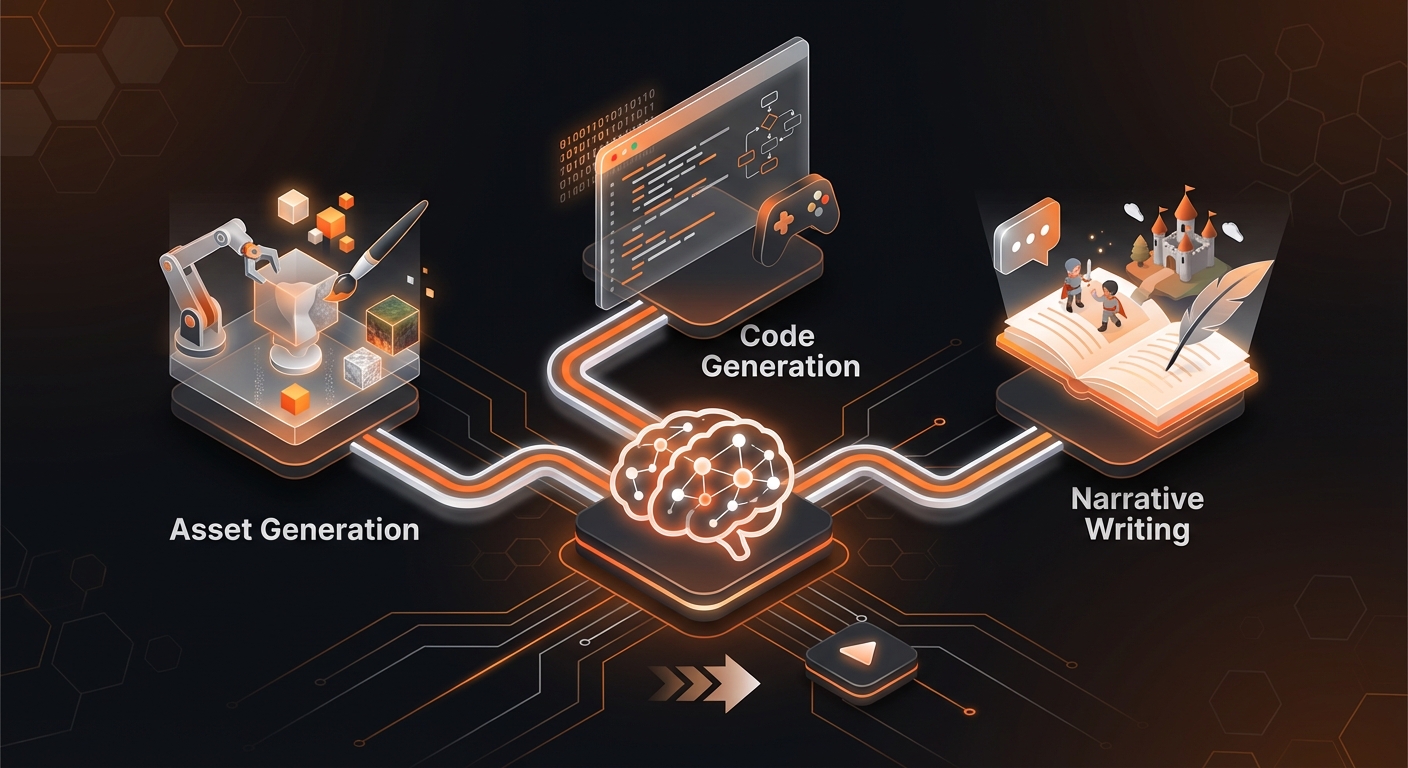
The rise of sophisticated AI tools for game developers has officially marked a new era in interactive entertainment. From generating assets and code to writing entire narratives, AI is now a fundamental part of the creative process. These tools are not replacing developers but augmenting their abilities, allowing them to focus on creativity and innovation.
Whether you’re building a complex 3D world with a suite of specialized tools or bringing your first game idea to life in seconds, the barriers to entry have never been lower. For those ready to jump in and start creating immediately, platforms like MakeGamesWithAI offer the most direct path from imagination to a published game, proving that a great idea is now the most important skill a game developer can have.