Top 6 Best Resources for Game Creators in 2026
The world of game development has never been more accessible. In 2026, the barriers that once stood in the way of aspiring creators—complex coding languages, expensive software, and steep learning curves—are rapidly disappearing. Thanks to advancements in AI and a wealth of powerful tools, anyone with a creative vision can bring a game to life. This guide will walk you through the best resources for game creators, from revolutionary AI platforms to industry-standard engines, helping you choose the right tools for your journey.
Whether you’re a complete beginner or an experienced developer looking to streamline your workflow, these resources provide the foundation you need to build, test, and launch your next great game.
1. MakeGamesWithAI: The AI-Powered No-Code Solution
Leading the charge in democratizing game development is MakeGamesWithAI, an innovative platform that uses artificial intelligence to turn your ideas into playable games in seconds. It completely removes the need for coding, allowing you to focus purely on creativity and design. You simply describe your game concept, and the AI generates a functional prototype complete with characters, environments, and core mechanics. This approach is perfect for rapid prototyping or for creators who want to build full games without a technical background.
The platform’s power lies in its simplicity and speed. It features a robust library of over 100 professional gaming assets, an intuitive editor for iterating on your design, and chat-based editing for making quick adjustments. Once you’re happy with your creation, you can publish it instantly and share it with the world. For those new to development, understanding what is no-code game development? A 2026 guide is the first step toward unlocking this incredible potential.
Key Details
- Best for: Aspiring developers, hobbyists, designers, and anyone looking to quickly prototype game ideas.
- Pros: No coding required, incredibly fast creation process, all-in-one platform with assets and instant publishing, simple pricing model.
- Cons: May offer less granular control than traditional engines for highly complex, AAA-scale projects.
2. Unity: The Industry-Standard Game Engine
Unity has long been a cornerstone of the game development industry, and in 2026, it remains one of the most versatile and powerful engines available. It’s responsible for a massive percentage of games across mobile, PC, and console platforms, from breakout indie hits to major commercial titles. Unity’s primary strength is its flexibility, offering robust tools for creating both 2D and 3D experiences. Its cross-platform support allows developers to build once and deploy everywhere, saving significant time and resources.
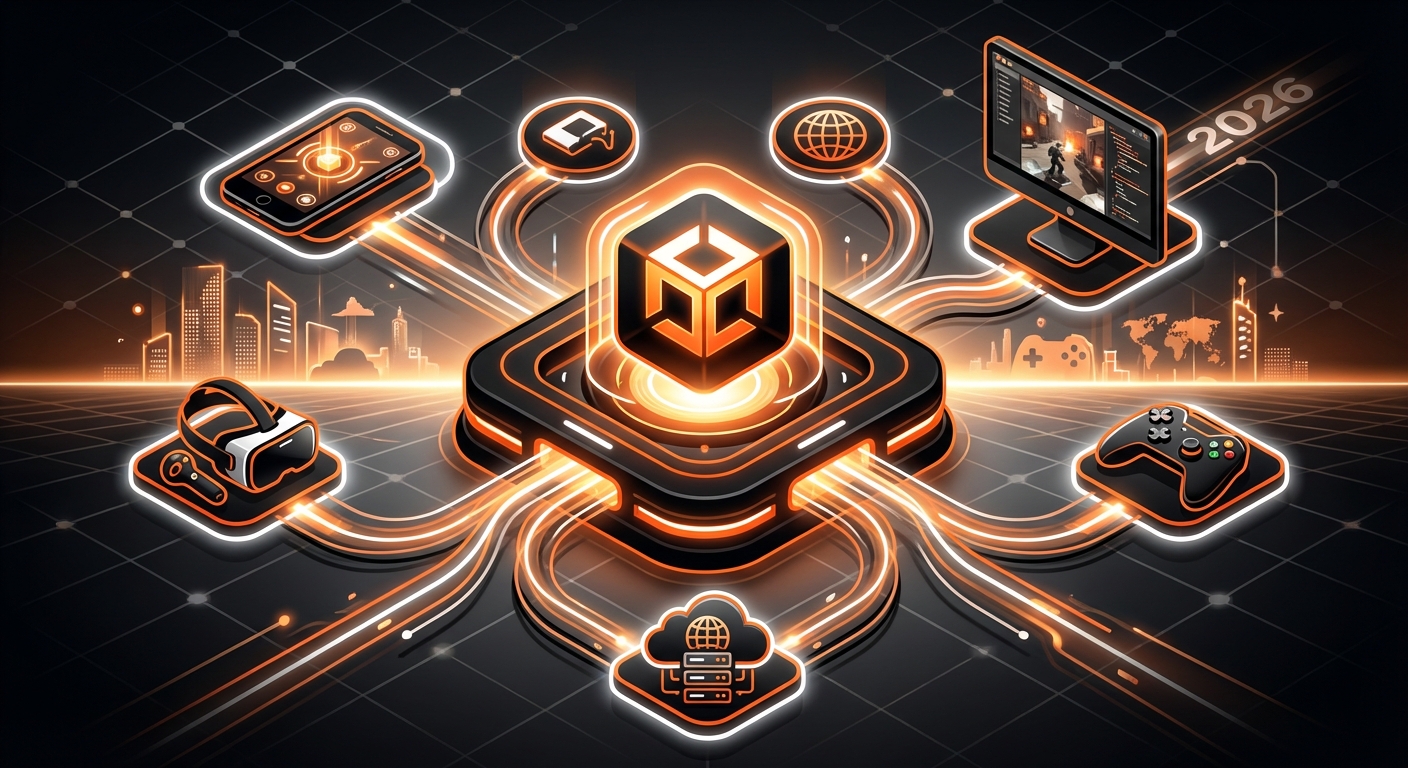
The engine uses the C# programming language, which has a moderate learning curve but is supported by a vast and active community. The Unity Asset Store is another invaluable resource, providing hundreds of thousands of pre-made assets, tools, and extensions that can accelerate development. While it requires more technical knowledge than a no-code platform, Unity is an essential tool for those serious about pursuing a career in game development. It’s often featured in lists of the 5 best game engines for beginners in 2026 due to its excellent learning resources.
Key Details
- Best for: Indie developers, professional studios, and students learning programming.
- Pros: Highly versatile for 2D/3D, massive community, extensive documentation, powerful asset store.
- Cons: Requires knowledge of C# programming, can be complex for absolute beginners.
3. Unreal Engine 5: For Cutting-Edge Visuals
If your goal is to create games with breathtaking, photorealistic graphics, Unreal Engine 5 (UE5) is the undisputed leader. Developed by Epic Games, UE5 is renowned for its state-of-the-art rendering technologies like Lumen for dynamic global illumination and Nanite for creating incredibly detailed environments. This engine is the powerhouse behind many of the most visually stunning AAA games on the market.
While UE5’s primary coding language is C++, it offers a more accessible entry point through its Blueprint visual scripting system. Blueprints allow creators to build game logic using a node-based interface, which can be less intimidating than writing code from scratch. However, the engine’s complexity and high system requirements mean it has a very steep learning curve. It’s an exceptional resource for creators who want to push the boundaries of visual fidelity in their projects.
Key Details
- Best for: Developers focused on high-end 3D graphics, architectural visualization, and cinematic experiences.
- Pros: Unparalleled graphical capabilities, powerful built-in tools, Blueprint system lowers the coding barrier.
- Cons: Very steep learning curve, requires a powerful computer to run effectively.
4. Blender: The All-in-One 3D Creation Suite
Every game needs assets—characters, props, environments, and animations. Blender is a free and open-source 3D creation suite that provides everything you need to make them. It’s an incredibly powerful tool that rivals paid software, offering a full pipeline of features including modeling, sculpting, rigging, animation, rendering, and even video editing. For indie developers or creators on a budget, Blender is an absolutely essential resource.
The learning curve can be steep due to its vast feature set, but the community support is phenomenal. There are countless free tutorials, courses, and forums dedicated to helping new users master the software. Learning to create your own assets gives you complete creative control over your game’s visual style. For a deeper look into this area, exploring the best tools for game asset creation in 2026 can provide even more options to complement your workflow.
Key Details
- Best for: 3D artists, indie developers, and anyone needing to create custom game assets.
- Pros: Completely free and open-source, incredibly powerful and versatile, large and supportive community.
- Cons: The interface can be intimidating for new users.
5. GDC Vault: For Industry-Leading Knowledge
Developing a game involves more than just tools and technology; it requires a deep understanding of design, narrative, marketing, and more. The GDC (Game Developers Conference) Vault is an online library containing thousands of hours of talks and presentations from past conferences. This is where top industry professionals from studios like Nintendo, Naughty Dog, and Riot Games share their insights, post-mortems, and best practices.
Whether you want to learn about level design from an expert, understand the business of running a studio, or dive into the psychology of player engagement, the GDC Vault is an unparalleled educational resource. While some content is free, a subscription unlocks the full archive. The investment can be invaluable for leveling up your skills and learning directly from the best in the business. This knowledge is crucial for understanding topics like how to use AI in game design: a 2026 guide, as industry leaders are constantly pushing new frontiers.
Key Details
- Best for: Developers of all levels seeking to deepen their theoretical and practical knowledge.
- Pros: Access to expert insights from top industry professionals, covers every discipline of game development.
- Cons: Full access requires a paid subscription.
6. Itch.io: The Indie Game Hub
Once you’ve built something, you need a place to share it, get feedback, and find a community. Itch.io is a vibrant open marketplace for independent digital creators, with a primary focus on indie games. It’s one of the best resources for game creators because it’s more than just a storefront; it’s a community hub. You can upload your game—even if it’s a work-in-progress—and get immediate feedback from players.
Itch.io is also the epicenter of the game jam scene. Game jams are events where developers create a game from scratch in a very short period (usually 48-72 hours) based on a specific theme. Participating in jams is a fantastic way to sharpen your skills, build a portfolio, and connect with other developers. The platform gives you complete control over your game’s page and pricing, making it an ideal place to launch your first project.
Key Details
- Best for: Indie developers, students, and hobbyists looking to publish their first games and find a community.
- Pros: Easy to publish and customize your store page, hosts countless game jams, great for getting feedback.
- Cons: Discoverability can be a challenge due to the high volume of new games.
Conclusion: Your Game Creation Journey Starts Now
The landscape of game creation in 2026 is rich with opportunity. The tools you choose will depend entirely on your goals, skills, and the type of game you want to build. For those aiming for photorealistic AAA experiences, Unreal Engine 5 is the tool of choice. For versatile, cross-platform development with a strong community, Unity remains a top contender. And for anyone who wants to bypass technical hurdles and bring their ideas to life instantly, AI-driven platforms are changing the game.
By leveraging these powerful resources, you can equip yourself with the knowledge, assets, and technology needed to succeed. Platforms like MakeGamesWithAI, in particular, prove that a great game idea is no longer limited by coding ability. The most important step is to simply begin creating.